Artemis Reimagined: NASA's Bold New Path to a Sustainable Lunar Presence
The dream of returning humanity to the Moon, embodied by NASA's ambitious Artemis program, has just received a significant strategic overhaul. As the world eagerly anticipates the historic Artemis II mission, set to carry Canadian astronaut Jeremy Hansen among its crew, NASA has unveiled major changes to its subsequent lunar exploration plans. These adjustments, far from being setbacks, are being framed as critical de-risking maneuvers designed to solidify the path towards a successful human landing on the Moon's surface by 2028. NovaPress dives deep into what these changes mean for the future of lunar exploration.
The Original Vision: A Swift Return
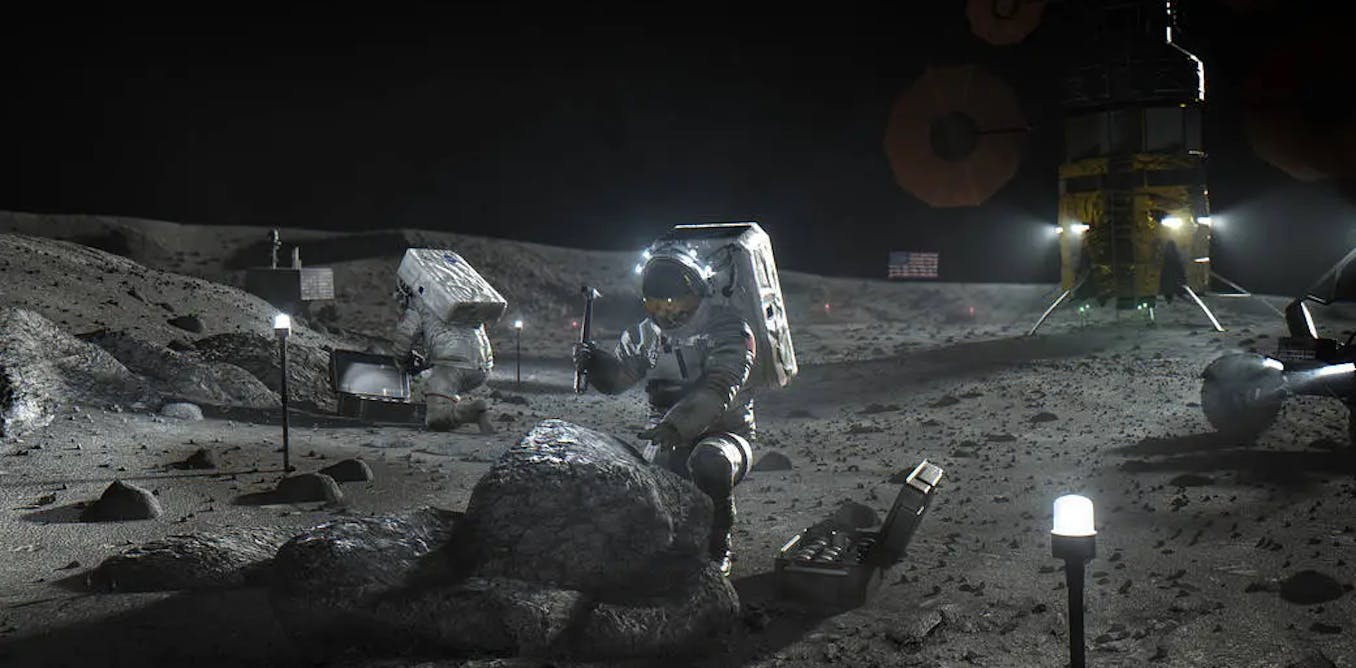
Initially, the Artemis program was designed to be a rapid-fire sequence of missions, culminating in Artemis III, which aimed to land the first woman and first person of color on the lunar south pole. This aggressive timeline, while inspiring, relied heavily on the swift development and flawless integration of several cutting-edge, complex systems: the Space Launch System (SLS) rocket, the Orion spacecraft, new advanced spacesuits, and crucially, the Human Landing System (HLS) — a vehicle designed to ferry astronauts from lunar orbit to the surface and back.
The Strategic Pivot: De-Risking the Descent
The core of the announced changes centers around a recalibration of the Artemis III mission. While specific details from the full NASA announcement are still unfolding, the overarching theme is a shift from an integrated, single-mission landing approach to a more modular, phased strategy. This implies that elements originally intended for Artemis III, particularly the Human Landing System, might now undergo additional testing or be split across multiple precursor missions or even different phases of the same mission.
This strategic pivot acknowledges the immense engineering challenges inherent in returning humans to the Moon safely and sustainably. Developing the HLS, for instance, involves unprecedented complexity, from rendezvous and docking in lunar orbit to precise soft landings on an uncharted, resource-rich, and often shadowed south pole. Ensuring the reliability and safety of these systems is paramount, and NASA appears to be prioritizing thoroughness over speed.
Why the Change? A Deep Dive into the Challenges
Space exploration is a high-stakes endeavor where the margin for error is virtually nonexistent. Several factors likely contributed to NASA's decision:
- Human Landing System (HLS) Development: The lunar landers, developed by commercial partners like SpaceX (Starship HLS) and Blue Origin (Blue Moon), are monumental engineering feats. Integrating these novel vehicles into the broader Artemis architecture and ensuring their operational readiness requires extensive testing and validation. The original timelines may have proven overly optimistic for such groundbreaking technology.
- New Generation Spacesuits: The development of the next-generation Extravehicular Mobility Units (xEMUs) for lunar surface operations has also faced its own set of challenges. These suits are critical for astronaut safety and mobility in the harsh lunar environment.
- Budgetary & Political Realities: Large-scale government programs are always subject to budget cycles and political shifts. Adapting timelines can sometimes be a pragmatic response to these external pressures, ensuring sustained funding and political buy-in.
- Safety First: Ultimately, NASA's primary mandate is astronaut safety. Any perceived risk in hardware development or mission execution must be addressed before committing human lives. The agency's historical caution, learned from both successes and tragedies, underpins this decision.
Implications for 2028 and Beyond
While the immediate impact might feel like a delay to some, NASA firmly believes these changes increase the likelihood of a successful human mission to the Moon by 2028. By taking a more measured approach, they aim to avoid costly delays or, worse, mission failures stemming from insufficient testing or premature deployment of critical systems.
For international partners, including Canada's ongoing involvement with Artemis II, these adjustments reinforce NASA's commitment to a robust and reliable program. The focus on establishing a sustainable lunar presence – building infrastructure like the Gateway space station and leveraging lunar resources – remains paramount. A safer, more thoroughly tested path to the Moon ultimately serves this long-term vision better.
Commercial partners, too, will likely see this as an opportunity for more iterative development and testing, allowing them to refine their HLS designs and operational procedures. This collaboration is crucial, as the future of deep space exploration hinges on public-private partnerships.
NovaPress Analysis: A Prudent, Necessary Evolution
From our vantage point at NovaPress, NASA's decision represents a prudent and necessary evolution of the Artemis program. While the allure of a quick return to the Moon is strong, the complexities of operating in deep space demand meticulous planning and execution. Prioritizing risk reduction and thorough testing is not a sign of weakness but rather a testament to NASA's unwavering commitment to safety and the long-term success of human spaceflight.
The "shake-up" should be viewed not as a detour, but as a strategic course correction, ensuring that when humanity finally plants its boots back on the lunar regolith, it does so with the highest possible degree of confidence and the foundational infrastructure for a truly sustainable future beyond Earth. The Moon, and eventually Mars, awaits a more prepared and resilient human presence.