The Last Glimmer: Why March 2026's 'Blood Moon' Eclipse is a Must-See Generational Event
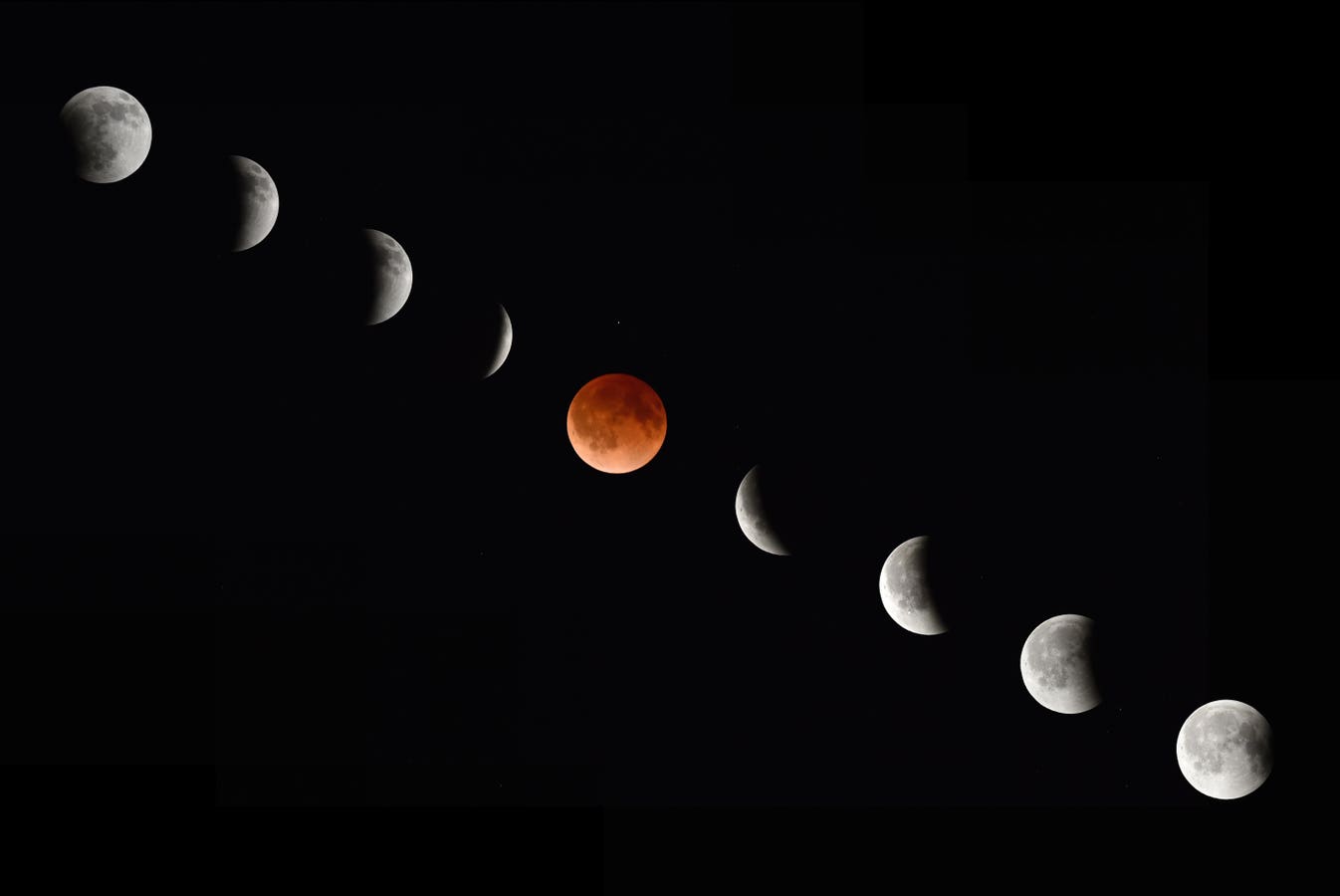
As dawn approaches on March 3, 2026, the night sky will stage a breathtaking celestial ballet, one that truly lives up to its enigmatic moniker: the 'Blood Moon'. This isn't just another lunar event; it's a total lunar eclipse of profound significance, marking the full Worm Moon's dramatic plunge into Earth's shadow. For 58 minutes, the Moon will be bathed in a haunting copper-red hue, a spectacle that, once witnessed, will become a treasured memory, for reasons far beyond its sheer beauty.
Understanding the 'Blood Moon' Phenomenon
A 'Blood Moon' is not a harbinger of doom, but rather a stunning demonstration of celestial mechanics. It occurs during a total lunar eclipse when the Earth positions itself directly between the Sun and the Moon, casting a complete shadow over our natural satellite. What prevents the Moon from disappearing entirely is Earth's atmosphere. Sunlight, bending around our planet's edges, filters through the atmosphere, scattering blue light more effectively than red light. This allows the longer-wavelength red and orange light to reach the Moon's surface, painting it in shades of crimson and copper.
The intensity and exact shade of red can vary based on atmospheric conditions on Earth at the time of the eclipse – factors like dust, clouds, and even volcanic ash can influence the Moon's appearance. It's a living canvas, reflecting our own planet's dynamic state back to us across hundreds of thousands of miles.
Why March 3, 2026, is Uniquely Important
While lunar eclipses are not exceedingly rare, a total lunar eclipse visible across a wide swath of the globe is always a special occasion. However, the March 2026 event holds a particular weight for observers in the United States and indeed, across a broader spectrum of the world. This total lunar eclipse will be the last total lunar eclipse anywhere on Earth for a considerable period.
This singular fact elevates the upcoming 'Blood Moon' from a fascinating astronomical event to a truly generational one. For many, especially younger enthusiasts and budding astronomers, this could be their last opportunity for years, possibly even a decade or more, to witness a full lunar eclipse where the Moon completely disappears into the Earth's umbra and takes on its iconic blood-red hue. It underscores the fleeting nature of such cosmic alignments and the preciousness of seizing these moments when they occur.
The Worm Moon and Cultural Context
The full Moon in March is traditionally known as the 'Worm Moon', named by Native American tribes for the time when the ground thaws and earthworms begin to reappear, signaling the start of spring. The confluence of this natural seasonal marker with such a significant celestial event adds another layer of depth to the experience. Historically, lunar eclipses have been viewed with awe, trepidation, and wonder across various cultures, often inspiring myths, prophecies, and scientific inquiry. From ancient Babylonians meticulously charting their occurrences to modern astronomers predicting them with pinpoint accuracy, the sight of a darkened, reddened Moon has always captivated humanity.
Preparing for the Spectacle
While detailed exact times for every U.S. state will be crucial for optimal viewing, the beauty of a lunar eclipse is its accessibility. Unlike solar eclipses, it requires no special eye protection and can be safely viewed with the naked eye. Binoculars or a small telescope will, of course, enhance the experience, bringing out the subtle details of the Moon's surface and the nuances of its deep red coloration. Find an open space away from city lights, set your alarm for the early hours of March 3, 2026, and prepare to be mesmerized.
Beyond the Red Glow: Future Implications and Scientific Value
Beyond its visual majesty, this total lunar eclipse offers invaluable opportunities for citizen science and professional astronomical observation. Eclipses help refine our understanding of Earth's atmosphere, its composition, and how light interacts with it. For scientists, data collected during these events can contribute to atmospheric modeling and even studies of exoplanetary atmospheres, offering insights into how we might detect and characterize alien worlds. For the public, it serves as a powerful reminder of our place in the cosmos, sparking curiosity and fostering a deeper appreciation for the wonders of space.
Don't miss the chance to witness this 'Last Glimmer' – a rare and unforgettable total lunar eclipse that promises to be a highlight for stargazers and casual observers alike. Mark your calendars for March 3, 2026, and look to the skies!