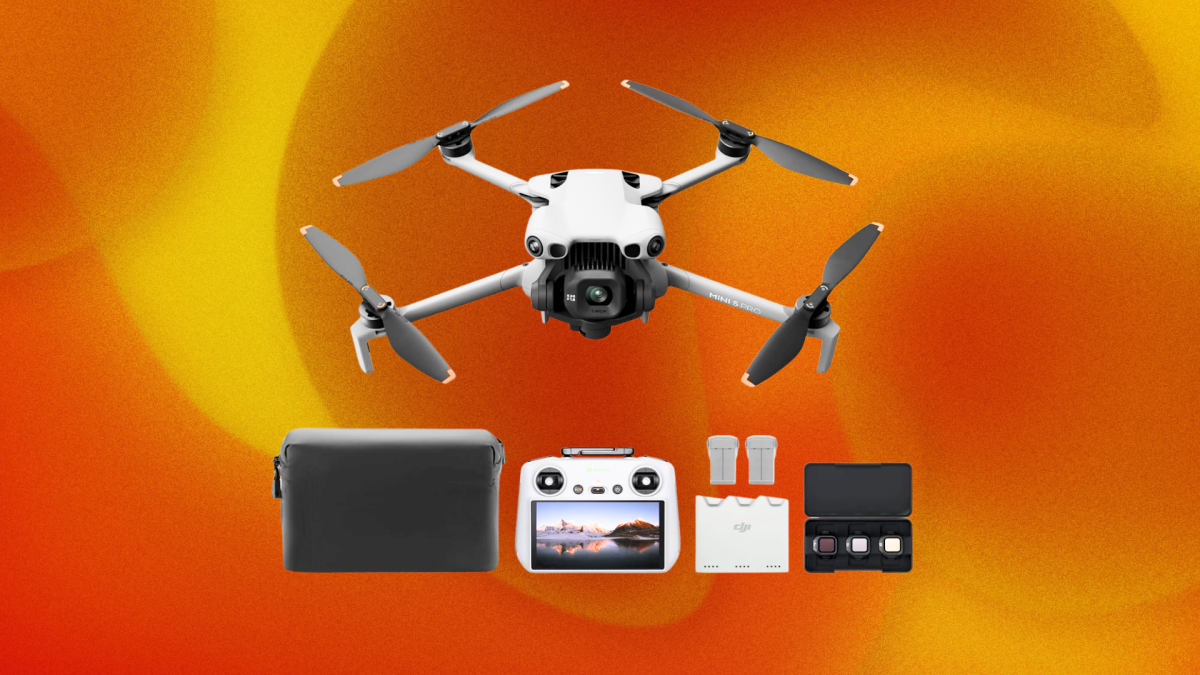
Unlocking the Night Sky: How DJI Mini 5 Pro's Advanced Features Are Revolutionizing Aerial Perspectives
The world of aerial photography and videography is constantly evolving, driven by innovations that push the boundaries of what's possible. This weekend's 30% off sale on the DJI Mini 5 Pro isn't just an opportunity to snag a cutting-edge drone; it's a gateway to understanding the next wave of drone capabilities, particularly in low-light and dynamic capture scenarios. NovaPress delves deep into why features like nighttime obstacle sensing, night RTH, and a remarkable 225° gimbal rotation aren't just incremental upgrades, but game-changers for creators and professionals alike.
Illuminating the Darkness: Nighttime Obstacle Sensing and Night RTH
Historically, flying drones after dusk presented significant challenges and risks. Reduced visibility dramatically increased the likelihood of collisions, making complex maneuvers or even simple navigation precarious. The DJI Mini 5 Pro directly addresses this with its groundbreaking nighttime obstacle sensing. This isn't merely an enhancement; it's a paradigm shift, enabling the drone to perceive and react to its environment in conditions that would render older models effectively blind. Utilizing advanced sensor arrays and sophisticated algorithms, the Mini 5 Pro maps its surroundings in near-total darkness, ensuring a level of safety and operational confidence previously unimaginable.
Complementing this is 'Night RTH' (Return-To-Home), a critical safety feature that ensures the drone can autonomously return to its launch point, even when visual contact is lost or light conditions deteriorate unexpectedly. This dual innovation extends the operational window for drone pilots dramatically, opening up entirely new creative avenues for nocturnal urban landscapes, wildlife observation, security monitoring, and even search and rescue operations where low light is often a factor. The ability to perform "serious shenanigans" – as the sale description playfully suggests – now extends beyond the golden hour, allowing for truly unique, cinematic sequences previously constrained by daylight.
Unleashing Creative Freedom: The 225° Gimbal Rotation
Beyond its nocturnal prowess, the DJI Mini 5 Pro introduces an unprecedented 225° gimbal rotation. For context, most consumer drones offer a much more limited range, often around 90-120 degrees vertically, requiring pilots to carefully position the entire drone to achieve desired camera angles. The Mini 5 Pro shatters these limitations, providing an expansive field of view that rivals professional cinematic equipment. This wider range translates directly into unparalleled creative flexibility. Imagine tracking a subject from a low angle as it moves upwards, or capturing a sweeping panoramic view that transitions seamlessly from ground-level detail to an expansive sky, all without needing to reorient the drone itself.
This feature is a boon for filmmakers and content creators, allowing for more dynamic, complex shots with less effort and fewer compromises. It minimizes the need for intricate flight paths, freeing the pilot to focus on the narrative and composition. From unique "worm's-eye" perspectives looking straight up, to aggressive tracking shots that follow action far above the horizon, the 225° gimbal unlocks a new dimension of aerial storytelling, truly making the drone an extension of the creative vision rather than a technical hurdle.
Market Implications and the Future of Aerial Tech
The DJI Mini 5 Pro, especially with its current aggressive pricing, sets a new benchmark in the prosumer drone market. By integrating advanced safety features for night operations with expanded creative controls, DJI is not just selling a drone; it's democratizing capabilities previously reserved for high-end, often larger and more expensive, professional rigs. This accessibility will undoubtedly spur innovation in drone content creation, encouraging more pilots to experiment with challenging lighting and dynamic compositions.
Furthermore, these advancements hint at the future trajectory of drone technology. We can expect subsequent models across the industry to prioritize sophisticated environmental awareness, autonomous flight capabilities, and increased camera versatility. The Mini 5 Pro's features are a testament to the ongoing convergence of AI, sensor technology, and mechanical engineering, all working in concert to make aerial capture safer, more intuitive, and infinitely more creative. For NovaPress, it's clear: the sky, even the night sky, is no longer the limit for aspiring drone pilots and seasoned professionals alike.