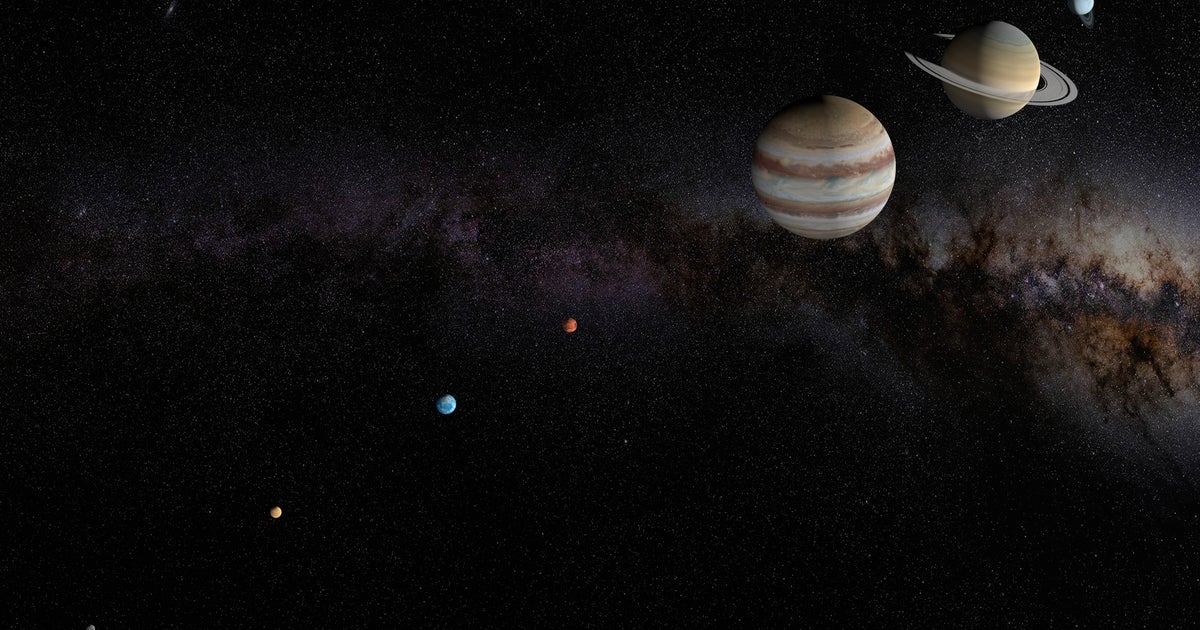
Beyond the Horizon: Unpacking the Rare Six-Planet 'Parade' Over California
The night sky above California is set to become a stage for an extraordinary celestial ballet this Saturday evening. Stargazers and curious onlookers alike are gearing up to witness a truly rare phenomenon: a "planetary parade" featuring six of our solar system's magnificent worlds. This isn't merely a visual treat; it's a profound reminder of the intricate cosmic mechanics that govern our universe, offering a fleeting glimpse into the grand architecture of our solar neighborhood.
What Exactly is a 'Planetary Parade'?
While the term "planetary parade" conjures images of perfectly straight lines, it's essential to understand the scientific context. A planetary alignment, or parade, refers to an event where multiple planets appear to gather closely together in a small sector of the sky as viewed from Earth. Due to their varied orbital paths, speeds, and inclinations, such close conjunctions are not common. For six planets to be visible simultaneously, even if spread across a wider arc, is a testament to the dynamic and ever-shifting positions of our solar system's residents. This Saturday, observers in California will have a prime vantage point to witness Mercury, Venus, Mars, Jupiter, Saturn, and potentially Uranus or Neptune, making their appearance, though specific visibility will depend on local conditions and time of night.
The Mechanics Behind the Marvel
Planets orbit the Sun at different speeds and distances, akin to runners on concentric tracks. Mercury, the closest, zips around in just 88 Earth days, while outer giants like Saturn take nearly 30 years. It's the unique convergence of these independent cycles that creates these "parades." These events are a product of gravitational forces and the laws of celestial mechanics laid down by Newton and Kepler. They are entirely predictable by modern astronomy, a far cry from the omens and portents they were once considered in ancient times. Observing such an alignment reinforces our understanding of orbital dynamics and the incredible precision of the cosmos.
Historical Context and Human Fascination
Throughout history, humanity has gazed at the stars with a mix of wonder, fear, and scientific curiosity. Planetary alignments have often held significant cultural and spiritual importance, interpreted as signs of change, divine messages, or predictors of future events. From ancient Babylonian astronomers charting the heavens to Mayan priests integrating celestial cycles into their calendars, the movements of planets have profoundly influenced human civilization. Today, while we understand these events through the lens of scientific rigor, the primal awe they inspire remains. They connect us to a long lineage of stargazers and remind us of our place in the vastness of the universe.
Future Implications and Opportunities for Discovery
Beyond the immediate visual spectacle, what can these alignments teach us? For astronomers, such events are opportunities to study planetary atmospheres, moon transits, and even gravitational interactions with greater clarity, especially when multiple bodies are within the same field of view. While this particular parade is an observational phenomenon from Earth, understanding the intricate dance of our solar system's planets is crucial for future space missions, orbital mechanics, and even the search for exoplanetary systems where similar multi-planet configurations might exist. Each alignment offers a chance to refine our models and deepen our understanding of planetary formation and evolution.
How to Witness the Spectacle
For those in California and other regions with clear skies, the key to witnessing this planetary parade lies in timing and location. Look towards the west shortly after sunset on Saturday evening. While some planets like Venus and Jupiter are often bright and easy to spot, others like Mercury (low on the horizon) and the ice giants (requiring binoculars or a telescope) will demand darker skies away from light pollution. Find an unobstructed view, give your eyes time to adjust to the darkness, and bring a star chart or a reliable stargazing app to help identify the planets. This is a moment to slow down, look up, and connect with the cosmic wonders unfolding above us.
The upcoming planetary parade is more than just a rare astronomical event; it's an invitation to marvel at the universe's grandeur. As these six celestial bodies align in our night sky, they offer a powerful reminder of the beauty, predictability, and profound mystery that define our cosmos. Don't miss this chance to be part of a truly historic stargazing experience.