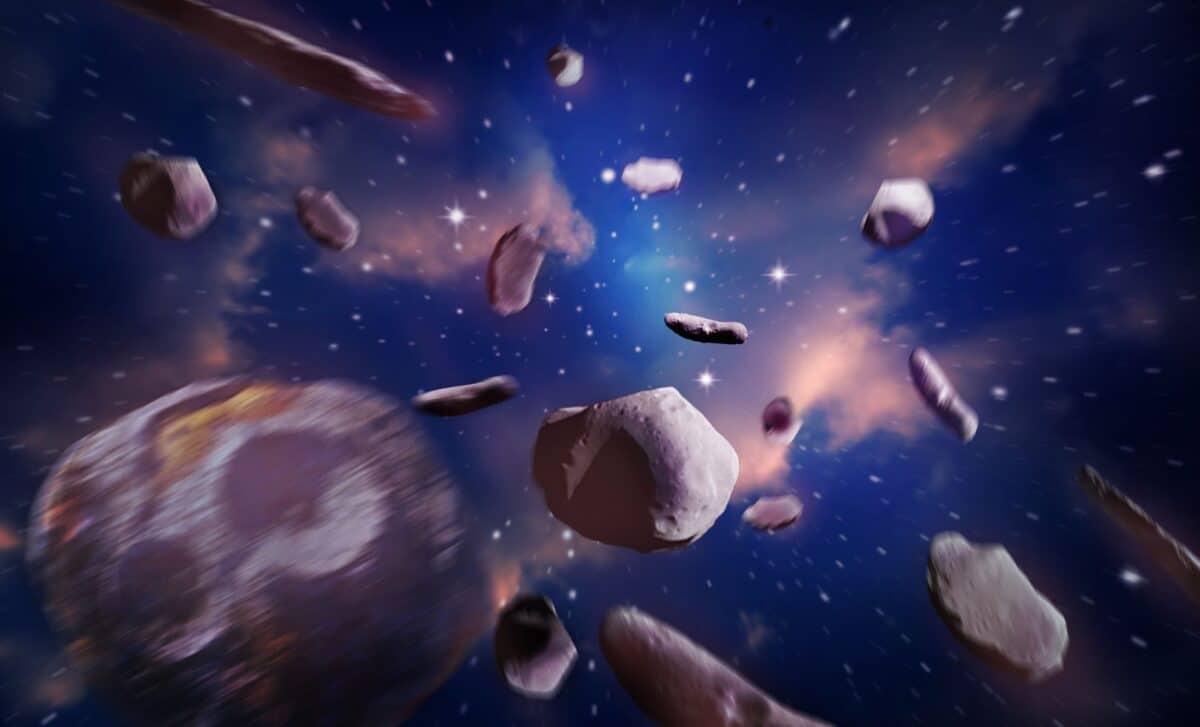
Microbial Miners: How Bacteria and Fungi on a Meteorite are Reshaping Space's Future
For centuries, the vastness of space has represented an insurmountable barrier to resource acquisition. Now, a groundbreaking experiment conducted aboard the International Space Station (ISS) suggests that the tiniest organisms might hold the key to unlocking the cosmos's immense wealth, fundamentally altering the trajectory of deep space missions.
The Astronomical Challenge of Terrestrial Reliance
Humanity's ambitions in space are grand, from lunar outposts to Martian colonies and beyond. Yet, every single component, every gram of fuel, every piece of infrastructure currently must be launched from Earth – a logistical and financial nightmare. The cost of lifting materials into orbit is prohibitive, limiting the scale and sustainability of long-duration missions. This reliance has spurred decades of research into In-Situ Resource Utilization (ISRU), the practice of living off the land in space. Asteroids and meteorites, rich in everything from water ice to precious metals like platinum group elements and rare earths, represent colossal floating reservoirs of potential. The challenge, however, has always been finding an efficient and viable method to extract these invaluable resources.
19 Days in Orbit: A Microbial Revolution
Enter the unsung heroes of this new frontier: microbes. In an experiment that sounds like science fiction, a team of international scientists orchestrated a remarkable demonstration aboard the ISS. They placed various strains of bacteria and fungi on a small meteorite sample, allowing these microscopic engineers to operate in the unique microgravity environment of space. For 19 days, these organisms were left to their task, quietly engaging in a process known as bioleaching – a technique already employed on Earth to extract metals from low-grade ores.
What transpired over those days wasn't just promising; it was truly surprising. The microbes didn't just survive the harsh conditions; they thrived and, more importantly, efficiently extracted significant quantities of metals from the meteorite. This success validates the long-held hypothesis that biological processes could be harnessed beyond Earth's atmosphere, offering a less energy-intensive and potentially more environmentally friendly alternative to traditional mining methods.
The Science of Space Bio-Mining
Bioleaching fundamentally relies on microorganisms producing acids or enzymes that dissolve metal compounds from rock. On Earth, this process is influenced by gravity, which helps in the separation of liquids and solids. The critical unknown for space applications was how these microbes would perform in microgravity, where fluid dynamics are drastically different, and cellular processes can be affected. The ISS experiment provided crucial insights, demonstrating that certain microbial strains possess an astonishing adaptability, maintaining their metabolic efficiency even in the absence of significant gravitational pull.
The implications of this successful demonstration are profound. It suggests that future space habitats and deep-space probes could be equipped with compact bio-mining facilities. Imagine a future where an asteroid-mining vessel doesn't require heavy, complex machinery for pulverization and chemical processing, but instead deploys bioreactors filled with specialized bacteria to do the work. This not only reduces the mass and complexity of mining operations but also potentially the energy footprint.
Reshaping the Future of Deep Space Missions
The ability to extract raw materials directly from celestial bodies marks a paradigm shift for space exploration. No longer would missions be limited by the resources carried from Earth. Instead, they could become self-sustaining, harvesting metals for constructing habitats, fabricating spare parts, or even synthesizing propellants. This could drastically reduce mission costs, extend mission durations, and enable more ambitious human endeavors deeper into the solar system.
From establishing permanent lunar bases to enabling human expeditions to Mars and beyond, the vision of space infrastructure built from extraterrestrial resources inches closer to reality. The next steps involve scaling up these experiments, identifying the most efficient microbial strains for various types of extraterrestrial rocks, and developing automated bioreactor systems capable of operating autonomously in deep space environments. Challenges remain, including mitigating radiation exposure for microbes, managing waste products, and ensuring long-term operational stability.
NovaPress Outlook: A New Dawn for Space Resources
The era of microbial miners has dawned. This pioneering experiment on the ISS provides compelling evidence that the smallest life forms might just be our biggest asset in conquering the cosmos. As we look towards a future where humanity expands its presence beyond Earth, the quiet, tireless work of bacteria and fungi could well be the engine driving this extraordinary journey. NovaPress will continue to track these developments, as the stars inch closer to our grasp, thanks to these tiny, yet mighty, organisms.