The Billion-Year Secret: How an Australian Gold Prospector Uncovered a Fragment of the Early Solar System
In the historic goldfields of Victoria, an ordinary weekend pursuit led to an extraordinary scientific discovery, reminding us that the most profound secrets can lie hidden in plain sight, or in this case, in a rock that simply refused to break.
The Prospector's Persistent Puzzle
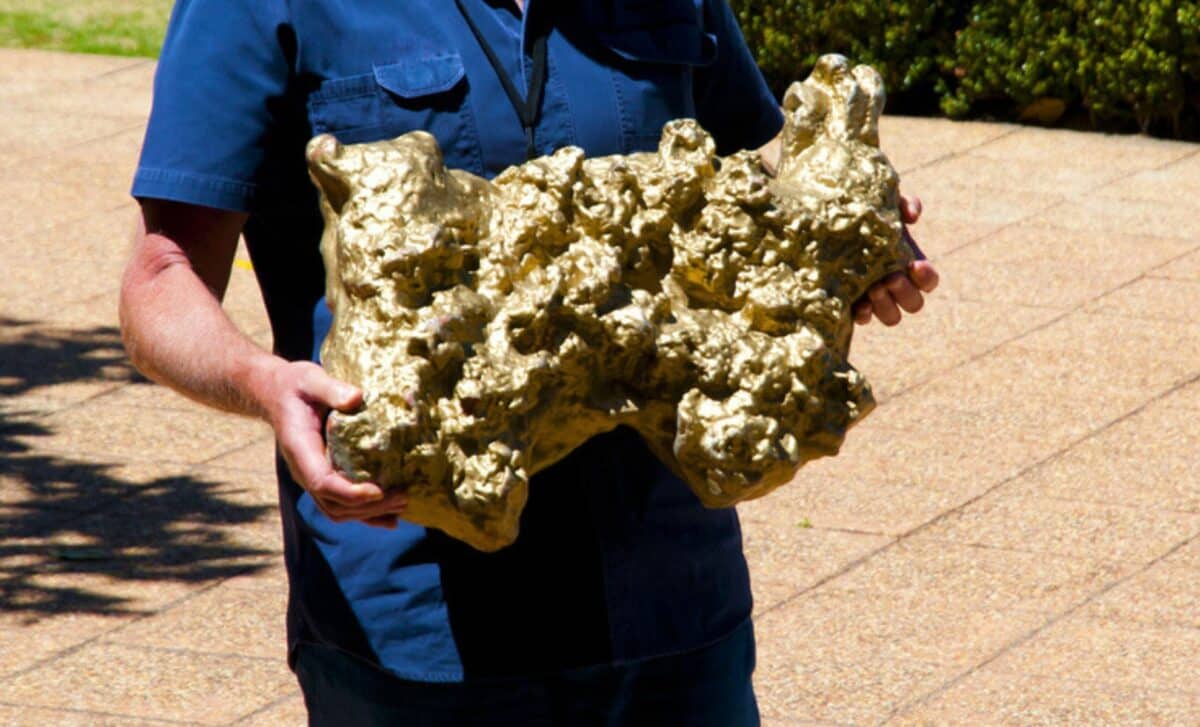
David Hole, like many enthusiasts in Maryborough, a small town northwest of Melbourne, spent his weekends with a metal detector, sifting through the earth that once yielded fortunes. His pursuit was a familiar one: the glint of gold, the thrill of discovery. In 2015, his detector screamed, signaling a substantial find. What he unearthed wasn't the malleable, lustrous metal he sought, but a dense, reddish-yellow rock, unusually smooth and heavy, that weighed a hefty 17 kilograms (37 pounds). Initially convinced he had a massive gold nugget, albeit a strangely robust one, Hole brought his prize home, unaware he had just collected a piece of primordial history.
A Rock of Unbreakable Resolve
The peculiar nature of Hole's find soon became apparent. Excited by its potential value, he attempted to open the rock. What followed was a testament to the object's resilience. Diamond saws, usually capable of slicing through the hardest materials, merely scratched its surface. Industrial drills, pneumatic hammers, even dousing it in acid, proved futile. The rock remained stubbornly intact, a solid, unyielding enigma. A sledgehammer, a tool of brute force, only bounced off its exterior, leaving it unscathed. This extraordinary resistance was the first hint that Hole’s "gold" was something far more remarkable.
From Geological Curiosity to Cosmic Treasure
Frustrated but intrigued, Hole kept the rock for years, displaying it at home. It wasn't until 2018 that he decided to take it to the Melbourne Museum. There, geologists immediately recognized its alien characteristics. The rock’s dimpled, sculpted surface, known as regmaglypts (thumbprints), and its glossy, melted crust, called a fusion crust, are classic indicators of a meteorite. Further analysis confirmed their suspicions: it was indeed a meteorite, specifically a rare H5 ordinary chondrite, a type of stony meteorite that contains small, rounded mineral grains called chondrules, which formed in the early solar system.
A Window to the Early Solar System
This particular meteorite, now known as the "Maryborough Meteorite," is estimated to be 4.6 billion years old, predating Earth itself. It offers scientists an invaluable pristine sample of the material that formed our planets. Unlike terrestrial rocks, meteorites haven't undergone the same geological processes of heating, melting, and erosion. They are time capsules, preserving clues about the conditions and chemical composition of the solar nebula from which our sun and planets coalesced. Each fragment, like this one, provides insights into the building blocks of our solar system, the chaotic collisions that shaped it, and potentially, the origins of life itself.
The Broader Implications of Cosmic Finds
The Maryborough Meteorite underscores the immense scientific value of amateur discoveries. While professional meteorite hunters scour polar ice sheets and deserts, an ordinary weekend prospector, driven by the allure of gold, inadvertently unearthed a scientific marvel in a populated region. This event serves as a potent reminder that our planet is constantly showered with extraterrestrial material, much of which remains undiscovered. It highlights the importance of public awareness and collaboration with scientific institutions, ensuring that such significant finds contribute to our collective understanding of the universe rather than remaining an unexplained curio in a backyard.
Furthermore, the ongoing study of the Maryborough Meteorite and others like it continues to push the boundaries of astromineralogy and cosmochemistry. Each new analysis refines our models of planetary formation, the delivery of water and organic compounds to early Earth, and the potential for life beyond our world. Such discoveries bridge the vastness of space with our terrestrial existence, offering tangible proof of our cosmic origins.
A Legacy Etched in Stone
David Hole’s unexpected journey from gold prospector to accidental cosmic explorer illustrates a profound truth: sometimes, the greatest treasures are not those that gleam with earthly luster, but those that carry the silent, ancient whispers of the universe. The Maryborough Meteorite, once a stubborn rock in a backyard, now stands as a testament to persistence, curiosity, and the boundless wonders that await discovery, both beneath our feet and in the unfathomable depths of space.