Echoes of Ancient Love: New Genetic Insights Uncover Surprising Dynamics of Human-Neanderthal Encounters
For millennia, the shadowy intersections between Homo sapiens and Neanderthals have fueled both scientific inquiry and popular imagination. We've known for some time that these two distinct human lineages didn't just coexist; they interbred, leaving a subtle yet significant genetic legacy in modern non-African populations. However, the precise nature of these ancient couplings — who mated with whom, and under what circumstances — has largely remained a mystery, cloaked in the mists of tens of thousands of years.
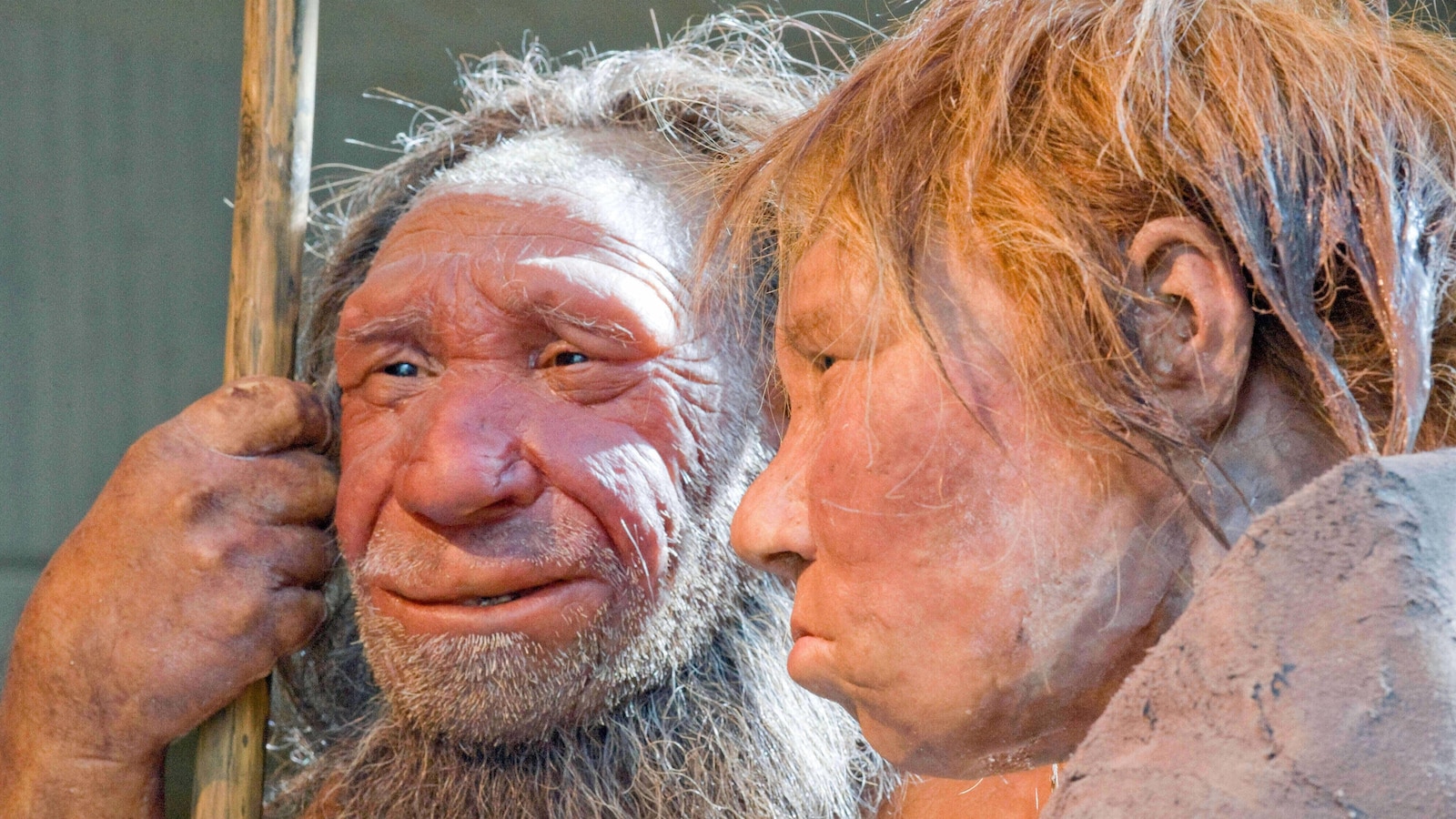
Now, a groundbreaking new genetic analysis, highlighted by ABC News, is peeling back these layers of uncertainty, suggesting a surprisingly asymmetrical pattern to these ancient linkups. The study indicates that encounters may have occurred more frequently between female Homo sapiens and male Neanderthals. This revelation doesn't just add a fascinating detail to our understanding of prehistory; it profoundly reshapes our perspective on the social dynamics, migratory patterns, and even the survival strategies of our direct ancestors.
Unpacking the Asymmetry: A Genetic Fingerprint
Previous genetic studies confirmed the presence of Neanderthal DNA in modern humans, typically ranging from 1% to 4%. This DNA is distributed across our genome, but certain areas show more or less Neanderthal contribution. The latest analysis delves deeper into these patterns, scrutinizing specific genetic markers to infer the probable directionality of successful reproductive events. By meticulously examining mitochondrial DNA (which is inherited solely from the mother) and Y-chromosome DNA (inherited solely from the father), alongside autosomal DNA, researchers can reconstruct a more nuanced picture of ancestral pairings.
The finding that female Homo sapiens and male Neanderthals might have coupled more often than the reverse scenario presents a compelling puzzle. What factors could have driven such a pattern? Was it a matter of demographics, where one group had a numerical advantage in certain regions? Could it have been social structures, where one group was more accepting of outsiders or where one gender was more prone to seeking mates beyond their immediate kin? Or perhaps, environmental pressures forced groups into closer proximity, leading to opportunistic pairings.
The 'Why' Remains Elusive, But Hypotheses Emerge
While the genetic data robustly points to 'who' might have been pairing up, the 'why' remains a tantalizing mystery that sparks myriad hypotheses. One possibility relates to group dynamics and migration. If groups of Homo sapiens women were, for various reasons, integrated into Neanderthal communities – perhaps through capture, trade, or voluntary relocation due to resource scarcity – this could explain the genetic signature. Conversely, if Neanderthal women joining Homo sapiens groups was less common, or if the offspring of such pairings faced genetic incompatibilities that reduced their survival or fertility, this could also contribute to the observed asymmetry.
Another perspective considers potential biological or reproductive advantages. Some theories suggest that early human populations might have had slight demographic advantages or different social mating systems that favored such pairings. It's also conceivable that offspring from specific pairings had differing fitness levels. For instance, some research has hinted at issues with male hybrid fertility, which could selectively filter certain genetic contributions over generations, but further study is needed to validate such complex biological interactions.
Future Implications for Our Understanding of Humanity
This new genetic analysis does more than just fill in a blank in our species' romantic history; it fundamentally deepens our understanding of human dispersal, adaptation, and the complex tapestry of our genetic heritage. Knowing the likely directionality of ancient couplings allows scientists to model migration patterns and cultural exchanges with greater precision. It prompts new questions about the social structures of both Homo sapiens and Neanderthal groups, challenging us to look beyond simplistic narratives of 'us vs. them'.
Moreover, by understanding the specific contributions of each lineage, we can better explore how Neanderthal genes may have influenced modern human traits, from immunity to skin and hair color, as well as susceptibility to certain diseases. This genetic dialogue across millennia continues to resonate within us, making every new discovery about our ancient ancestors a discovery about ourselves.
The journey into our past is far from over. As genomic technologies advance, we can expect even more intricate details to emerge, painting an ever-richer portrait of the diverse and dynamic relationships that forged the lineage we call human.