Beyond the Brink: Dissecting the 'Positive' U.S.-Iran Nuclear Talks and the Shadow of War
In a world perpetually on edge, where the specter of conflict looms large, any glimmer of diplomatic progress between two long-standing adversaries is scrutinized with unparalleled intensity. Recent reports indicating that U.S.-Iran nuclear talks were 'positive' have sent ripples across geopolitical landscapes, offering a fleeting moment of hope amidst a backdrop of escalating tensions. Yet, this positivity comes with a profound caveat: the outcome of these discussions may, as sources suggest, determine whether the Trump administration opts for military intervention.
The High-Stakes Intrigue: Players and Context
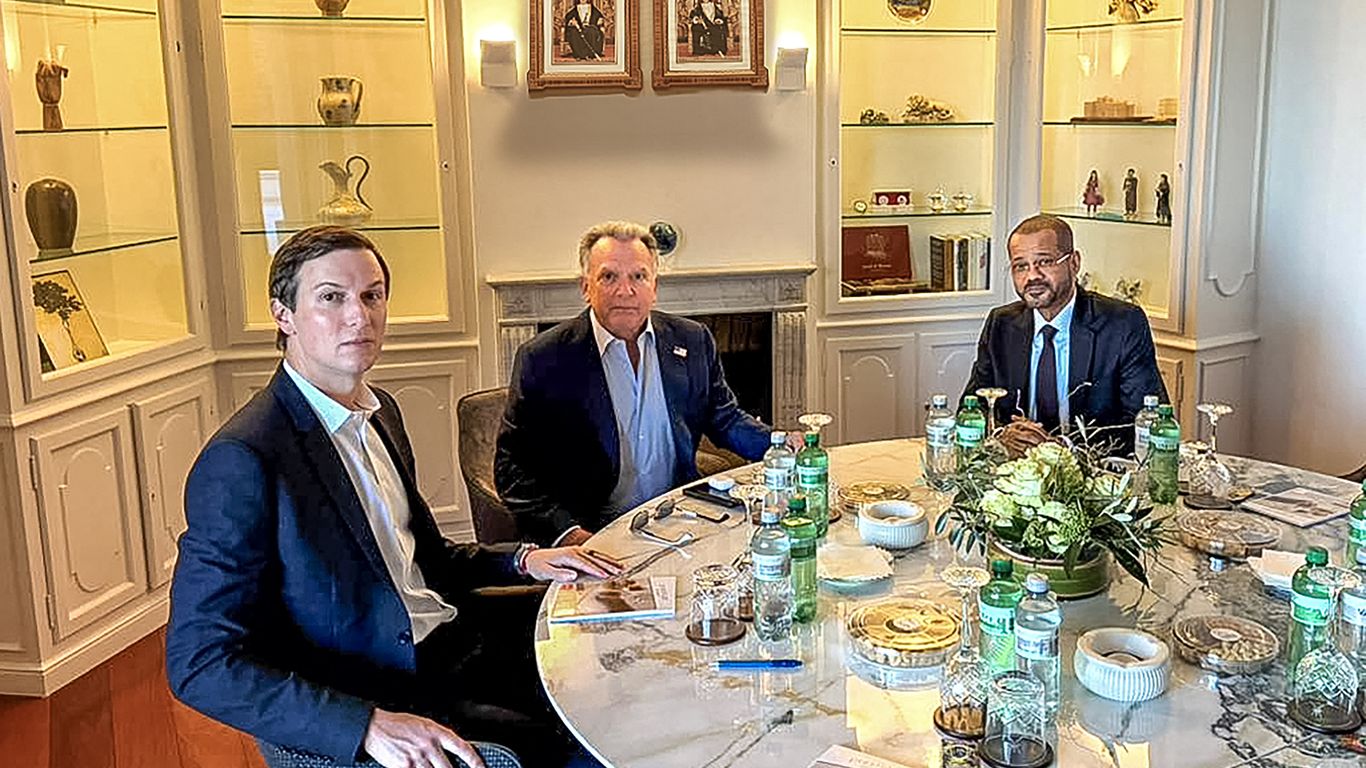
The notion of 'positive' talks between Washington and Tehran is, in itself, a significant development, particularly given the frosty relations that have characterized the Trump presidency. For hours, in both morning and afternoon sessions, President Trump's envoys, Steve Witkoff and Jared Kushner, engaged directly with Iranian Foreign Minister Abbas Araghchi. This high-level engagement, largely conducted away from the public eye, underscores the urgency and gravity of the situation.
To understand the weight of these talks, one must recall the trajectory of U.S.-Iran relations. President Trump's unilateral withdrawal from the Joint Comprehensive Plan of Action (JCPOA), commonly known as the Iran Nuclear Deal, in 2018, shattered years of painstaking diplomacy. This move was followed by a 'maximum pressure' campaign, reimposing crippling sanctions on Iran's economy. In response, Tehran began to incrementally roll back its commitments under the nuclear deal, escalating uranium enrichment and fueling fears of a renewed arms race in the Middle East.
Defining 'Positive': A Diplomatic Nuance
The term 'positive' in diplomatic parlance is often a loaded one, open to multiple interpretations. It could signify a genuine breakthrough – perhaps an agreement on a framework for de-escalation, or a commitment to further, more substantive negotiations. Alternatively, it might simply mean that both sides were willing to listen, that the discussions did not immediately collapse, or that a channel of communication was successfully maintained. In the context of U.S.-Iran relations, even the latter could be deemed a positive step, preventing an immediate rush towards conflict.
The involvement of Witkoff and Kushner, rather than career diplomats, adds another layer of complexity. While they may bring a fresh perspective and direct line to the President, their lack of traditional diplomatic experience could also pose challenges in navigating the intricate nuances of Iranian foreign policy and regional dynamics. Nonetheless, their presence suggests a directness in communication that might bypass traditional bureaucratic hurdles.
The Shadow of War: Future Implications
The critical implication highlighted by Axios – that the outcome of these talks could determine 'whether Trump opts for war' – is a stark reminder of the knife-edge balance in the region. Should these discussions genuinely pave the way for de-escalation, it could avert a catastrophic military confrontation that would destabilize the entire Middle East, impact global oil supplies, and potentially draw in other international actors.
- For Regional Stability: A successful diplomatic path could ease tensions in the Persian Gulf, reducing proxy conflicts and maritime incidents.
- For U.S. Foreign Policy: It could be seen as a pragmatic shift for the Trump administration, demonstrating a willingness to engage, even with adversaries, to avoid war.
- For Iran: De-escalation might offer a pathway to relief from crippling sanctions, though internal hardliners may resist any perceived concessions.
Conversely, if these 'positive' talks fail to translate into concrete steps or if they are merely a temporary reprieve, the pressure on the Trump administration to consider military options could intensify. The 'maximum pressure' campaign, without a diplomatic off-ramp, could be perceived as having run its course, leaving military action as the only remaining leverage in the eyes of some hawks.
Obstacles on the Diplomatic Road
Even if the talks were genuinely constructive, numerous obstacles lie ahead. The deep-seated distrust between the U.S. and Iran, hardened over decades, cannot be easily dismantled. Domestically, both leaders face significant political pressures from hardliners who view any compromise as a betrayal. Furthermore, a comprehensive deal would need to address not only Iran's nuclear program but also its ballistic missile capabilities and its regional influence through proxy groups – issues that Iran considers non-negotiable aspects of its national security.
Conclusion: A Fragile Hope
The 'positive' U.S.-Iran nuclear talks represent a fragile moment of hope in a fraught relationship. While the precise nature and depth of this positivity remain unclear, the mere act of high-level engagement between Washington and Tehran, particularly with the explicit implication for war or peace, is immensely significant. The world now watches with bated breath, understanding that the discussions unfolding behind closed doors are not just about nuclear centrifuges, but about the very future of stability in one of the planet's most volatile regions. The path to a lasting resolution is undoubtedly long and arduous, but for now, the absence of immediate escalation is a fragile victory in itself.