When Every Second Counts: Mike Fincke's Medical Emergency and the Evolving Protocols of Spaceflight
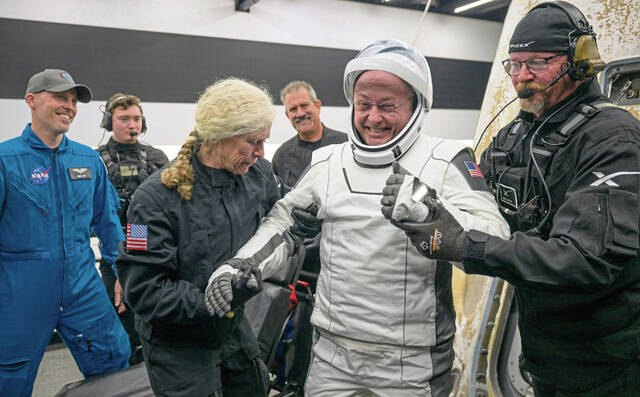
For months, the early return of SpaceX Crew-11 in January remained shrouded in speculation, a rare premature conclusion to a mission typically marked by meticulous planning and execution. This week, however, the veil was lifted by none other than the astronaut at the heart of the matter: Pittsburgh area native, Mike Fincke. In a candid statement, Fincke revealed he was the one who experienced a medical event, necessitating the crew's expedited return to Earth. This unprecedented transparency not only provides closure but also opens a critical dialogue about the inherent risks of space travel and the future of long-duration human missions.
The Revelation: A Glimpse Behind the Curtain
Fincke's announcement on NASA's website on Wednesday wasn't just a personal disclosure; it was a profound insight into the real-time challenges faced by astronauts far from Earth. While the specifics of his medical condition remain private, the fact that an event could trigger an emergency abort for an entire crew underscores the fragile balance between human endurance and the unforgiving vacuum of space. The decision to bring Crew-11 home early, a move undoubtedly made with the utmost caution, highlights NASA's unwavering commitment to crew safety above all other mission objectives.
The Unique Calculus of Space Medicine
Medical emergencies on Earth are complex; in orbit, they are exponentially so. Astronauts operate in an environment where gravity's absence affects everything from fluid shifts and bone density to immune response and organ function. Diagnostic tools are limited, surgical capabilities non-existent, and the nearest hospital is millions of miles away. Every ache, every unusual symptom, carries a weight of concern that is absent in terrestrial settings. Fincke's event serves as a potent reminder that even the most rigorously screened and trained individuals are not immune to physiological challenges, particularly when exposed to the extreme stresses of spaceflight.
NASA's Ironclad Commitment to Safety
The early return of Crew-11 wasn't a failure, but a testament to the robust safety protocols developed by NASA over decades. The agency's decision-making framework is designed to prioritize crew well-being, even if it means altering or shortening missions. This involves continuous monitoring of astronaut health, pre-set emergency procedures, and the readiness of recovery teams. Fincke's case demonstrates that these systems are not theoretical but are actively employed, evolving with each new mission and unforeseen circumstance. The ability to make the difficult call to return early is a critical component of ensuring the long-term viability of human spaceflight.
Implications for Humanity's Deep Space Ambitions
As humanity sets its sights on returning to the Moon with Artemis and eventually venturing to Mars, the implications of events like Fincke's become even more profound. These future missions will entail unprecedented durations in deep space, far beyond the rapid return capabilities offered by low Earth orbit. The distances involved mean that medical issues will have to be managed in situ, with limited real-time support from Earth. This necessitates significant advancements in onboard medical diagnostics, treatments, and even autonomous medical systems. The 'doctor in a box' concept, advanced surgical robotics, and comprehensive pharmacological countermeasures will be essential for keeping crews healthy on journeys that could last years.
Fincke's experience underscores the urgent need to refine and expand our understanding of space medicine and to develop innovative solutions for potential health crises far from home. It's a stark reminder that while technology can take us to distant worlds, the human body remains the most vulnerable, and critical, component of any deep space mission.
Transparency, Trust, and the Human Factor
The timing and nature of Fincke's disclosure are also significant. By stepping forward and openly sharing his experience, he reinforces the values of transparency that are vital for public trust in space exploration. In an era where misinformation can proliferate rapidly, such candor from an astronaut and NASA itself is invaluable. It humanizes the astronauts, reminding us that these extraordinary individuals, though paragons of courage and skill, are still susceptible to human frailties. Their willingness to face these risks and to share their stories further inspires awe and respect for the challenges they undertake on behalf of all humanity.
Conclusion: Forward to the Stars, with Caution and Care
Mike Fincke's medical event and his subsequent revelation are not a setback for space exploration, but rather a crucial learning opportunity. They highlight the ongoing evolution of space medicine and safety protocols, pushing engineers and scientists to innovate even more robust solutions for human well-being in the cosmos. As we venture further into the solar system, understanding and mitigating the physiological risks will be as critical as developing advanced propulsion or life support systems. The journey to the stars is a testament to human ambition, but it must always be pursued with an unwavering commitment to the safety and health of those who dare to make the leap.