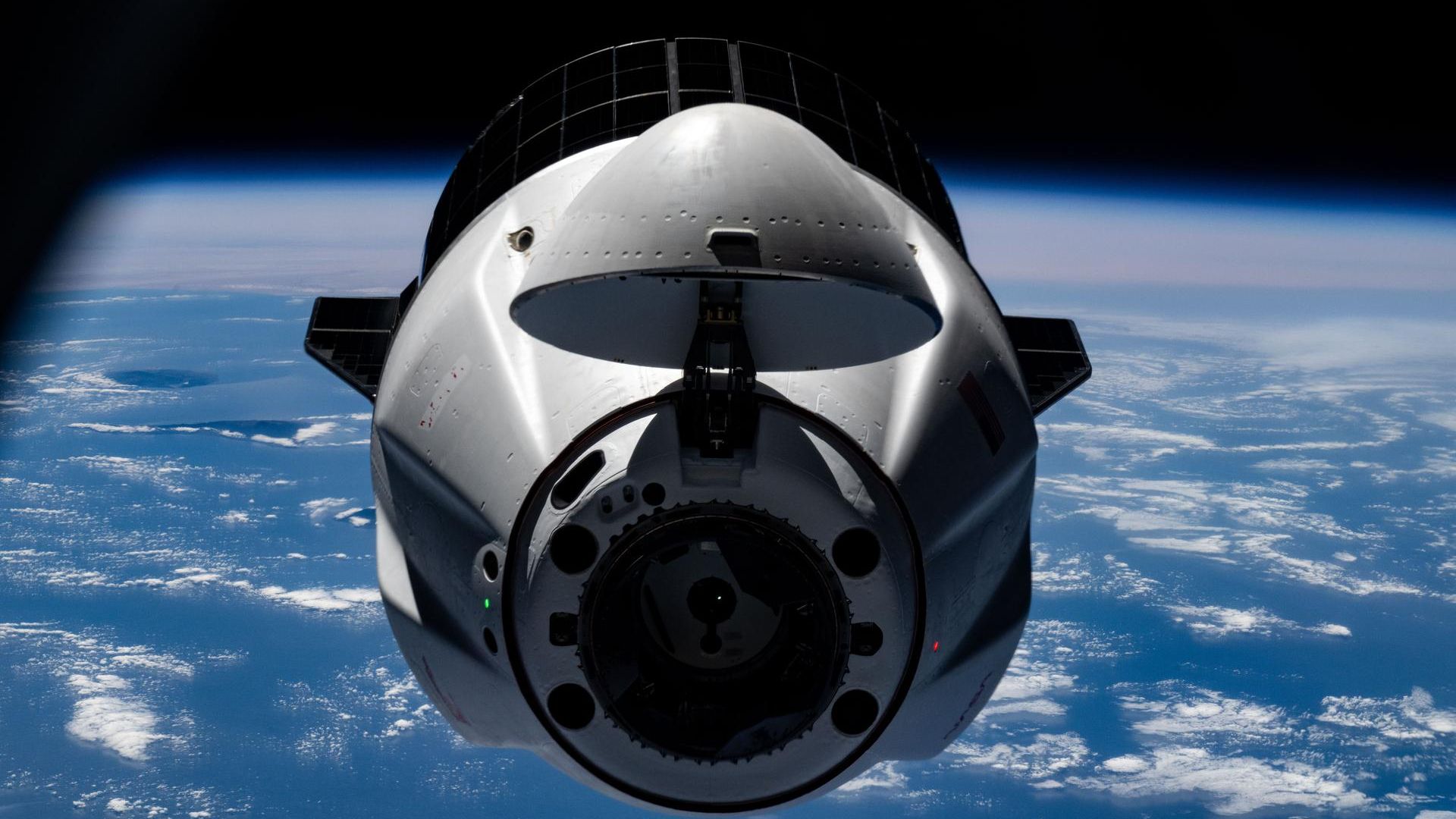
SpaceX Dragon's Historic Reboost Mission: A New Era for Commercial Space Capabilities
As the SpaceX Dragon cargo capsule embarks on its journey back to Earth today, its mission transcends mere resupply. This return marks the conclusion of a historic flight that saw a commercial spacecraft perform a critical reboost of the International Space Station, signaling a pivotal shift in orbital operations and commercial space capabilities.
A New Role for Dragon: More Than Just a Delivery Service
For years, the SpaceX Dragon capsule has been synonymous with vital cargo delivery to and from the International Space Station (ISS). Its reliable service has been a cornerstone of NASA's commercial resupply program, ensuring astronauts have the supplies, equipment, and scientific experiments needed to sustain life and research in orbit. However, this particular mission, culminating in its undocking today (February 26th) at 12:05 p.m. ET, added an unprecedented chapter to its legacy: the first-ever reboost of the ISS by a U.S. commercial spacecraft.
The Critical Dance of Orbital Maintenance
The International Space Station, a marvel of human ingenuity orbiting some 250 miles (400 kilometers) above Earth, is constantly fighting a subtle but relentless battle against atmospheric drag. Even in the vacuum of space, trace amounts of atmosphere exert a tiny drag force, causing the station to slowly lose altitude. To counteract this, periodic reboosts are essential, pushing the ISS back to a higher, stable orbit. Traditionally, this vital maneuver has been predominantly performed by Russia's Progress cargo spacecraft or, less frequently, by European or Japanese vehicles equipped with propulsion capabilities.
SpaceX's successful demonstration of the Dragon's reboost capability fundamentally alters this dynamic. Utilizing its onboard thrusters, designed primarily for maneuvers and re-entry, Dragon effectively became a powerful orbital tug, proving its versatility extends far beyond its initial design parameters for cargo transport.
Strategic Implications and Reduced Reliance
The significance of this achievement cannot be overstated. In an increasingly complex geopolitical landscape, having multiple independent capabilities for critical ISS operations enhances resilience and flexibility. For NASA, this provides an invaluable alternative to relying solely on a single international partner for station keeping, mitigating potential risks associated with political tensions or technical issues with other vehicles.
Furthermore, this event underscores the growing maturity and capabilities of the commercial space sector. What was once the exclusive domain of national space agencies is now increasingly being shared and innovated upon by private companies. SpaceX, with its proven track record in launch and crew/cargo transport, continues to push the boundaries of what's possible, demonstrating an integrated approach to space operations that includes not just getting to orbit, but also maintaining it.
Paving the Way for Future Orbital Infrastructure
Looking ahead, Dragon's reboost capability is more than just a technical feat; it's a harbinger of future orbital infrastructure. As the ISS approaches the end of its operational life, plans are well underway for commercial space stations to take its place. These future platforms will require their own independent means of orbital maintenance, and technologies demonstrated by Dragon today will be crucial. This mission offers a glimpse into a future where commercial spacecraft are not just transporters, but active, multi-functional participants in the daily life of orbital habitats.
A Legacy of Innovation Returns Home
As the Dragon capsule plunges back through Earth's atmosphere, eventually splashing down, it leaves behind a legacy that has redefined its role in space. This historic mission solidifies SpaceX's position as a pivotal player in the ongoing story of human spaceflight and commercialization. It's a testament to engineering ingenuity, strategic foresight, and the relentless pursuit of expanding humanity's presence and capabilities in the cosmos. The "delivery truck" of space has just proven it can also be the "tow truck," ushering in a new era of possibilities for commercial space exploration.