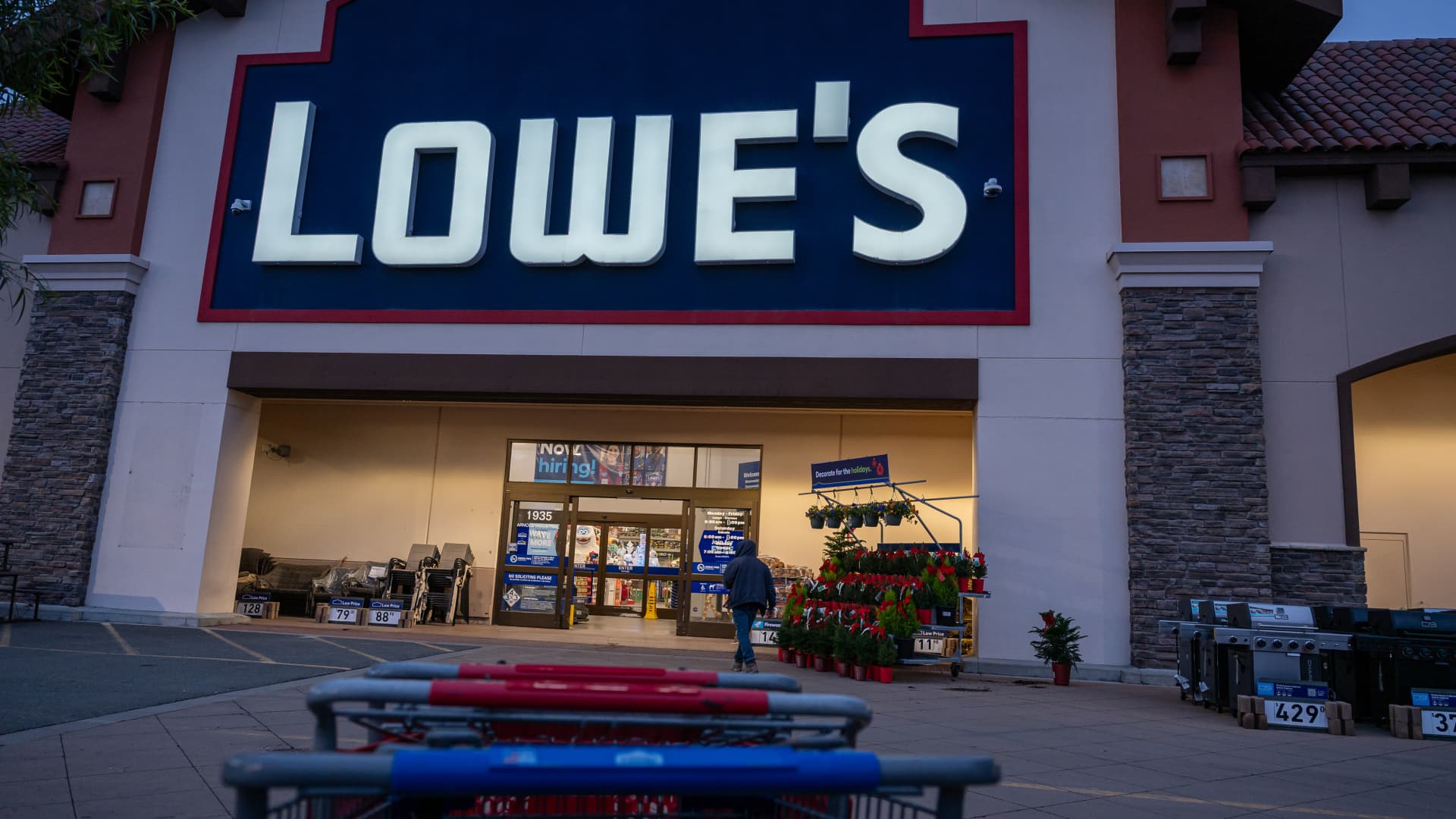
Lowe's Defies Economic Headwinds: A Deep Dive into the Retailer's Surprising Q4 Surge
In an economic landscape often characterized by caution and tightened belts, Lowe's has painted a vibrant picture of resilience, posting more than 10% sales growth in its fourth quarter. This remarkable performance comes at a time when the broader housing market is experiencing a significant slowdown, with sluggish turnover and dampened home improvement demand. Wall Street's expectations were not just met, but decisively topped, prompting a closer look at how this retail giant is charting a path of growth against the current.
Navigating a Treacherous Housing Market
For months, the housing market has been grappling with elevated interest rates, a scarcity of affordable inventory, and a general cooling of the frantic pace seen during the pandemic. These factors typically translate directly into reduced home sales and, consequently, a dip in home improvement spending. New homeowners are less likely to undertake large renovation projects, and existing homeowners might delay upgrades if they're not looking to sell soon. Yet, Lowe's managed to not only survive but thrive, signaling a strategic mastery that warrants detailed analysis.
The 'Pro' Customer Advantage: A Strategic Bedrock
One of the most compelling explanations for Lowe's stellar performance likely lies in its nuanced approach to customer segmentation, particularly its unwavering focus on the "Pro" customer – professional contractors, builders, and remodelers. While the average DIYer might scale back on discretionary projects, professional tradespeople continue to drive demand for essential materials, tools, and bulk supplies. These customers often have ongoing projects, are less sensitive to short-term economic fluctuations for their core business, and value reliability, availability, and efficiency above all else. Lowe's strategic investments in dedicated Pro services, tailored loyalty programs, efficient in-store pickup options, and robust supply chains designed for bulk orders appear to be paying significant dividends.
Operational Excellence and Inventory Acumen
Beyond customer focus, operational excellence is undoubtedly a cornerstone of this success. In a market where supply chain disruptions can still pose challenges, Lowe's seems to have optimized its inventory management. Ensuring that high-demand items, especially those critical for professional projects, are consistently in stock minimizes lost sales and strengthens relationships with its most valuable customer base. Furthermore, efficient cost controls and streamlined logistics would have contributed to healthy margins even amidst competitive pricing pressures.
Future Implications: A Bellwether for Retail and Housing?
Lowe's Q4 earnings report is more than just a win for the company; it offers critical insights for the broader retail sector and even the housing market. For competitors like Home Depot, it sets a high bar and suggests that a diversified strategy, particularly one that heavily courts the professional segment, is crucial for sustained growth. For consumers, it hints at a potential shift in home improvement spending – perhaps a move towards essential repairs, maintenance, and value-added upgrades rather than large, speculative renovations.
This performance also underscores the idea that even in a seemingly challenging economic environment, specific niches or customer segments can still thrive if catered to strategically. Lowe's ability to pivot and adapt, securing impressive growth despite strong economic headwinds, positions it as a resilient force in the retail landscape. As the housing market continues to find its footing, Lowe's trajectory will be a closely watched indicator of both consumer sentiment and the power of strategic retail execution.