The Quantum Mind: How Light is Redefining Artificial Intelligence and Memory
In a groundbreaking revelation that blurs the lines between theoretical physics and the very future of computation, an international study has uncovered an astonishing connection: the ability of light to 'think' like the human brain. This discovery, emerging from a collaboration involving institutions like the Institute of Nanotechnology of the National Research Council, promises to reshape our understanding of artificial intelligence and memory, offering a luminous path forward for next-generation technologies.
Bridging the Divide: Quantum Physics Meets Artificial Intelligence
For decades, quantum physics and artificial intelligence have largely existed as separate, albeit equally profound, domains of scientific inquiry. Quantum mechanics delves into the bizarre rules governing the universe at its smallest scales, while AI seeks to replicate and enhance human cognitive abilities through algorithms and computational models. The idea that these two fields could intersect, particularly at the fundamental level of memory formation, seemed a distant dream.
Yet, this ambitious international collaboration has achieved precisely that. By meticulously observing the behavior of photons – the elementary particles of light – researchers have demonstrated that these quantum entities can exhibit properties remarkably akin to the theoretical models underpinning artificial neural networks, especially concerning how memory is stored and retrieved. It's a conceptual leap that suggests intelligence might be an emergent property not just of biological brains or silicon chips, but potentially, of light itself.
When Photons Mimic Neurons: The Mechanics of Light-Based Memory
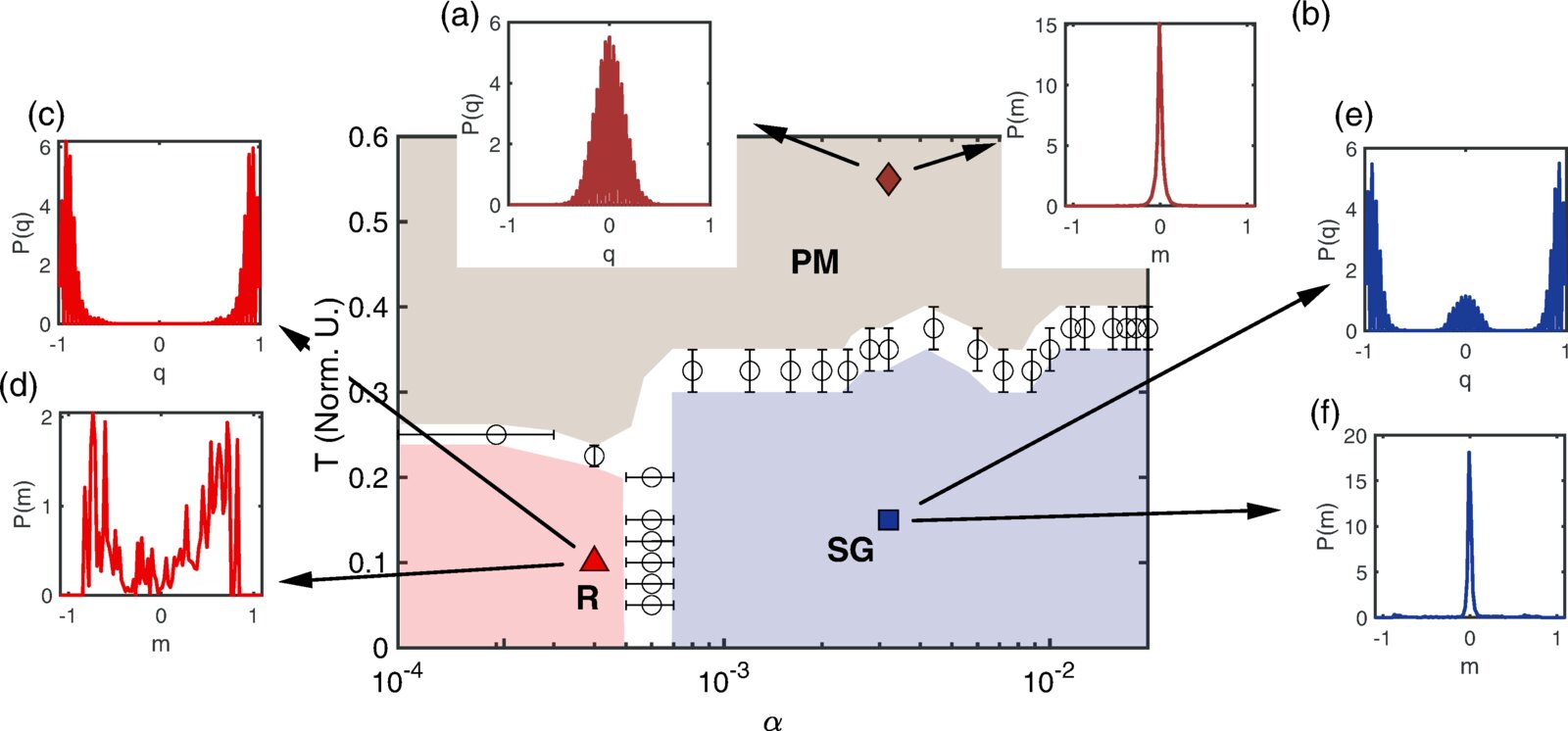
The core of this research lies in understanding how light can 'mimic' brain-like functions. Traditional AI models, inspired by neuroscience, rely on synaptic connections between artificial neurons to store information and learn. The strength of these connections dictates how information flows and is processed. The study has shown that photons, under specific conditions, can be engineered to create analogous 'synaptic' interactions, effectively forming a network where memories can be encoded and recalled.
This isn't merely a theoretical exercise. The implications point towards a future where computational tasks, especially those requiring massive parallel processing and rapid memory access – hallmarks of AI – could be performed not by electrons flowing through wires, but by light zipping through optical circuits. The efficiency gains could be monumental, potentially overcoming the energy consumption and speed limitations plaguing today's most advanced AI systems.
The Imperative for Innovation: Why This Matters Now
The current paradigm of artificial intelligence, while powerful, faces significant hurdles. The energy demands of large AI models are escalating, and the physical limits of silicon-based computing are becoming increasingly apparent. This new research offers a radical alternative: neuromorphic computing powered by light. By harnessing photons, which travel at the speed of light and interact with minimal energy loss, we could design AI systems that are orders of magnitude faster and more energy-efficient.
Moreover, this light-based approach might allow AI to process information in fundamentally different ways, potentially unlocking capabilities currently beyond our reach. Imagine AI that can learn and adapt with the instantaneous fluidity of light, processing vast datasets with unprecedented speed and minimal power input. Such advancements could accelerate discoveries in medicine, materials science, and climate modeling, among countless other fields.
The Horizon: Future Implications and Ethical Considerations
Looking ahead, this breakthrough paves the way for a new generation of optical computers and AI hardware. It could lead to the development of 'quantum AI' systems that leverage both the quantum properties of light and brain-inspired architectures. The vision of AI that truly thinks, learns, and even 'remembers' in a manner akin to biological brains, but at quantum speeds, is inching closer to reality.
As we stand at the precipice of such transformative technology, ethical considerations become paramount. The ability to imbue artificial systems with brain-like memory and processing capabilities demands careful thought regarding their societal impact, control, and alignment with human values. The light that illuminates our path to advanced AI also casts shadows of responsibility that must be addressed thoughtfully and proactively.
At NovaPress, we believe this international study is more than just a scientific paper; it's a beacon. It signals a paradigm shift in our understanding of intelligence, computation, and the profound interplay between the smallest particles of reality and the grandest aspirations of artificial minds. The future of AI, it seems, is bright.