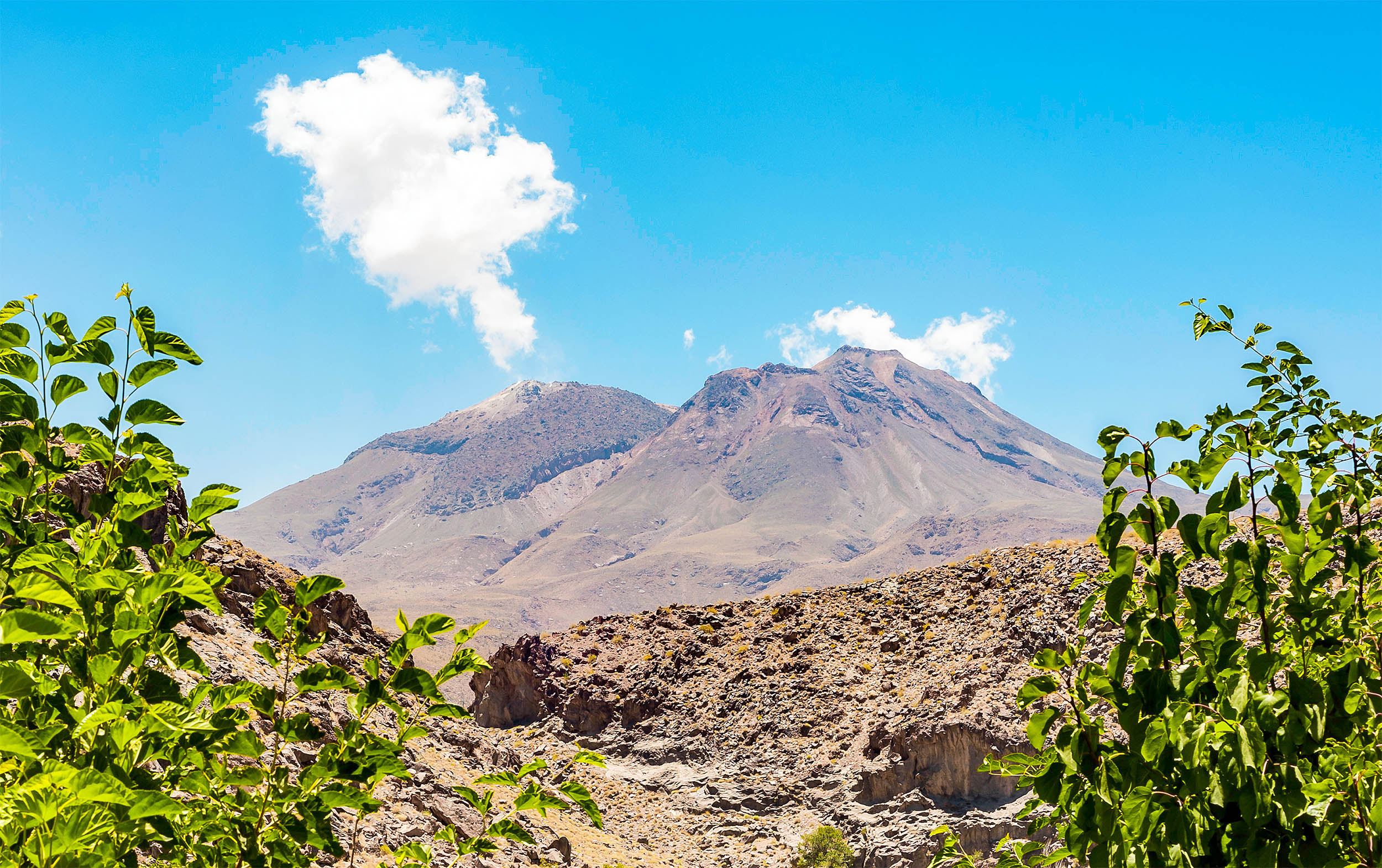
Awakening Giant: Taftan Volcano Stirs After 700,000 Years, What Does It Mean for Iran and Earth Science?
In a startling geological development, the Taftan volcano in southeastern Iran, silent for an astonishing 700 millennia, has begun to show signs of life, raising profound questions about its future and the dynamics of long-dormant stratovolcanoes.
The Subtle Tremor: A Monumental Discovery
Imagine a slumber spanning over 700,000 years – a period so vast it predates the emergence of modern humans. This is the timeline of the Taftan volcano, a majestic peak in the remote reaches of southeastern Iran. But recent satellite data has shattered this ancient silence. Over a mere ten months, Taftan’s summit has imperceptibly nudged upward by approximately 3.5 inches (9 centimeters). While this might seem negligible to the untrained eye, for geologists, it's a colossal signal: the volcano is waking up.
This unprecedented discovery, detailed in a new study, leverages the power of Interferometric Synthetic Aperture Radar (InSAR). InSAR technology allows scientists to detect ground deformation – even minute changes – by comparing satellite radar images taken at different times. The consistent pattern of uplift around Taftan’s caldera is a definitive indicator of subsurface activity, most likely caused by the intrusion of magma into its deep chambers.
Taftan's Tectonic Setting: A Region on Edge
Taftan volcano is situated in a geologically complex and active region. It lies within the Makran subduction zone, where the Arabian Plate is slowly diving beneath the Eurasian Plate. This ongoing collision is responsible for the formation of the Zagros Mountains and is a primary driver of seismic and volcanic activity in the wider Iranian plateau. While many volcanoes in Iran are extinct or dormant, Taftan’s reawakening adds a new layer of complexity to understanding the region's geohazards.
Stratovolcanoes like Taftan are known for their explosive potential, characterized by steep profiles and intermittent eruptions of viscous lava, ash, and pyroclastic flows. The last significant activity from Taftan was hundreds of thousands of years ago, meaning its internal plumbing system is likely to have been sealed by solidified rock over millennia. The current uplift suggests fresh magma is forcing its way through this ancient edifice, pressurizing the crust above.
Decoding the Signs: What Does Uplift Mean?
Volcanic uplift is a common precursor to eruptions, though it doesn't guarantee one. It signifies that magma is accumulating beneath the surface, causing the ground to swell. The rate and pattern of uplift, combined with other geophysical data like seismic activity and gas emissions, help volcanologists assess the likelihood and potential scale of an eruption.
For Taftan, the 3.5-inch rise in 10 months indicates a relatively rapid inflation. While this doesn't imply an immediate, cataclysmic eruption, it certainly warrants vigilant monitoring. Scientists will now be intensely focused on analyzing seismic tremor, gas outputs, and further ground deformation to understand the pace of magma ascent and the integrity of the overlying rock.
Implications for Iran and Global Earth Science
The reawakening of Taftan poses significant challenges and opportunities. For communities in southeastern Iran, particularly those in Sistan and Baluchestan Province, understanding the potential risks is paramount. While the region is sparsely populated compared to other volcanic zones, an eruption could still impact local infrastructure, air travel (due to ash clouds), and livelihoods. Emergency preparedness and early warning systems will be crucial.
Scientifically, Taftan represents an extraordinary natural laboratory. Studying a volcano emerging from such a prolonged dormancy provides invaluable insights into magma plumbing systems, the mechanisms of volcanic reawakening, and how crustal stresses interact with ascending magma. It allows researchers to test models of volcanic behavior and refine prediction capabilities, lessons that could be applied to other long-dormant or seemingly "extinct" volcanoes worldwide, including those with far greater population densities.
The Path Forward: Vigilance and Research
The story of Taftan is far from over. Its subtle movements are a potent reminder of Earth's dynamic and powerful forces. While the timeline for any potential eruption remains uncertain – it could be years, decades, or even centuries before a more significant event, or it could simply enter another period of quiescence – the current activity demands attention.
Continued satellite monitoring, coupled with on-the-ground geophysical measurements, will be essential in charting Taftan’s course. This remote Iranian peak, once a silent sentinel, has now become a focal point for volcanologists and a symbol of Earth's unpredictable, yet endlessly fascinating, geological heartbeat.