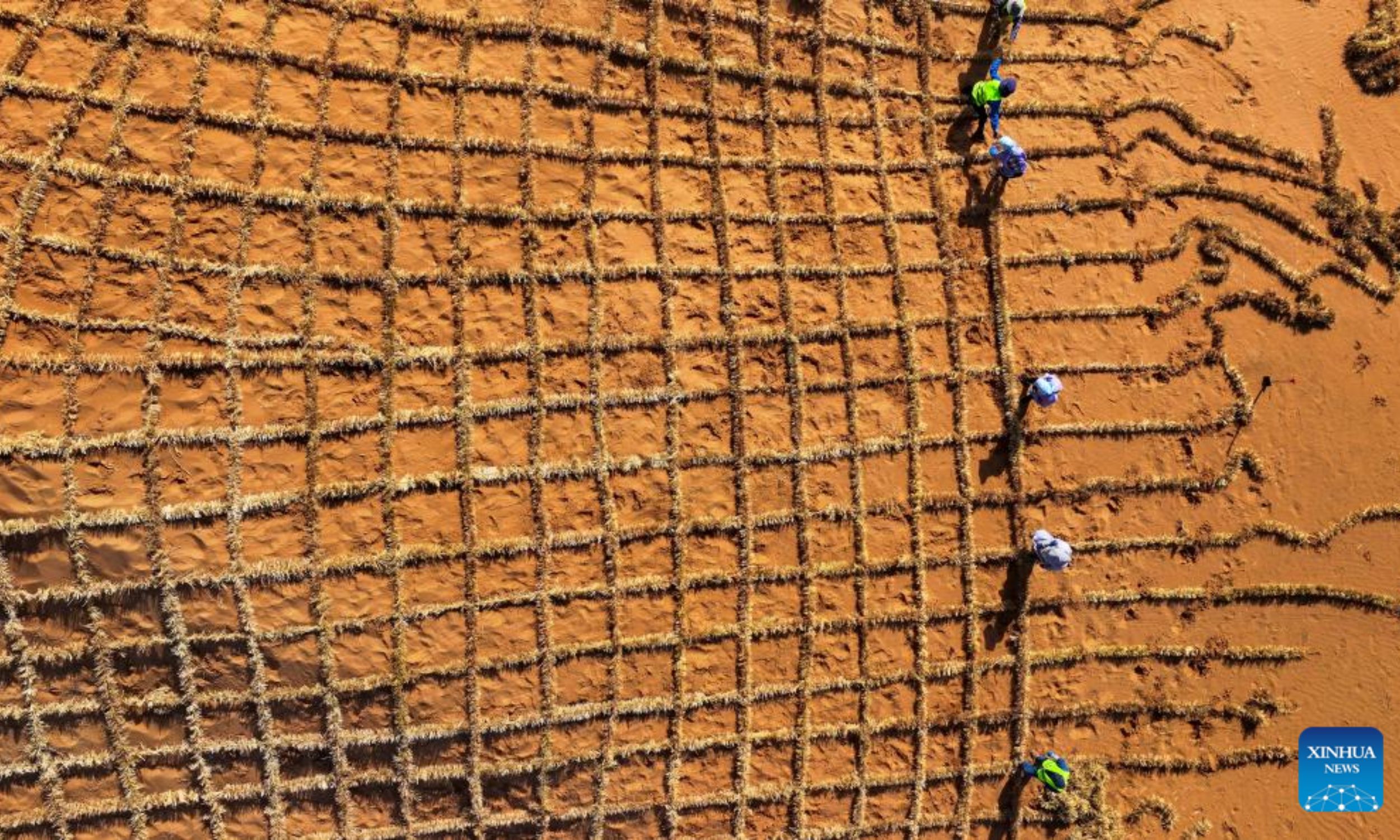
For centuries, the relentless march of desertification has swallowed arable land, displaced communities, and exacerbated climate change, presenting one of humanity's most daunting environmental challenges. Vast expanses of barren sand, once fertile plains, symbolize a grim future of scarcity. But what if this seemingly irreversible process could not only be halted but dramatically reversed? What if deserts could bloom, not over millennia, but in mere months?
China, a nation grappling firsthand with significant desertification across its northern and western regions, has emerged with a groundbreaking answer that could redefine our relationship with arid landscapes. Scientists there have harnessed the power of 3.5 billion-year-old microbes to transform loose desert sand into stable, fertile soil in an astonishingly short period – just ten months. This isn't mere incremental progress; it's a paradigm shift with profound implications for global food security, ecological restoration, and the fight against climate change.
The Ancient Architects of a Green Future
At the heart of this innovation lies a biological marvel: ancient microorganisms, carefully cultivated in laboratories. These microbes possess a unique ability to secrete a sticky, binding agent that acts like a natural glue. When introduced to loose desert sand, they work tirelessly to aggregate the individual grains, creating a thin, stable surface layer. This isn't just about making the sand stick together; it's about initiating a fundamental change in its physical properties.
Traditional desert restoration efforts often battle against the very nature of sand: its inability to retain water and its susceptibility to wind erosion. The microbial binding process directly addresses these issues. By forming a cohesive layer, the sand becomes less vulnerable to being blown away by strong winds, a critical step that prevents newly planted vegetation from being buried or exposed. More importantly, this stabilized substrate begins to mimic the properties of natural soil, improving water retention and nutrient cycling – essential prerequisites for plant growth.
From Barren Dunes to Budding Ecosystems
The process, refined by Chinese scientists, unfolds rapidly. Once the microbial layer is established, restoration teams gain a crucial window of opportunity. With the sand stabilized and its water-holding capacity enhanced, a diverse range of drought-resistant shrubs, grasses, and other vegetation can be planted. The microbes, in essence, provide the initial foundation, giving these pioneer plants the fighting chance they need to take root and thrive.
The described timeline of "just 10 months" is particularly staggering. In less than a year, a barren expanse of sand can begin its journey towards becoming a self-sustaining ecosystem. This speed is unprecedented in large-scale restoration, which typically measures progress in decades, if not centuries. Early results indicate not just the successful establishment of plants but also the gradual return of local fauna, showcasing the holistic potential of this method.
Global Implications and a New Hope
The ramifications of China's microbial breakthrough extend far beyond its borders. Desertification affects over a third of the Earth's land surface and impacts billions of people. This technology offers a tangible, rapid solution to:
- Combat Climate Change: By revegetating deserts, vast amounts of carbon dioxide can be sequestered from the atmosphere, turning unproductive land into carbon sinks.
- Enhance Food Security: Creating new arable land in previously barren regions could significantly boost agricultural output, providing food for a growing global population and alleviating pressure on existing farmlands.
- Restore Biodiversity: New ecosystems foster the return of native plant and animal species, rebuilding habitats lost to desert expansion.
- Support Economic Development: Arid regions, often marginalized, could see new opportunities for sustainable agriculture, ecotourism, and resource management.
- Prevent Displacement: By stabilizing landscapes and creating opportunities, this technology can help prevent communities from being forced to abandon their homes due to land degradation.
Challenges and the Road Ahead
While the promise is immense, scaling such an ambitious project globally presents its own set of challenges. Research will undoubtedly focus on the long-term sustainability of the microbial intervention, its adaptability to diverse desert environments, and potential ecological impacts, if any. The cost-effectiveness of large-scale deployment will also be a critical factor in determining its widespread adoption.
Nevertheless, China's pioneering work offers a powerful beacon of hope. It demonstrates that with innovative biological engineering, humanity can not only mitigate the damage inflicted upon our planet but actively reverse it. The vision of vast green belts replacing endless sand dunes, once a utopian dream, now appears to be a scientifically achievable reality, ushering in an era where deserts no longer signify an end, but a new beginning.