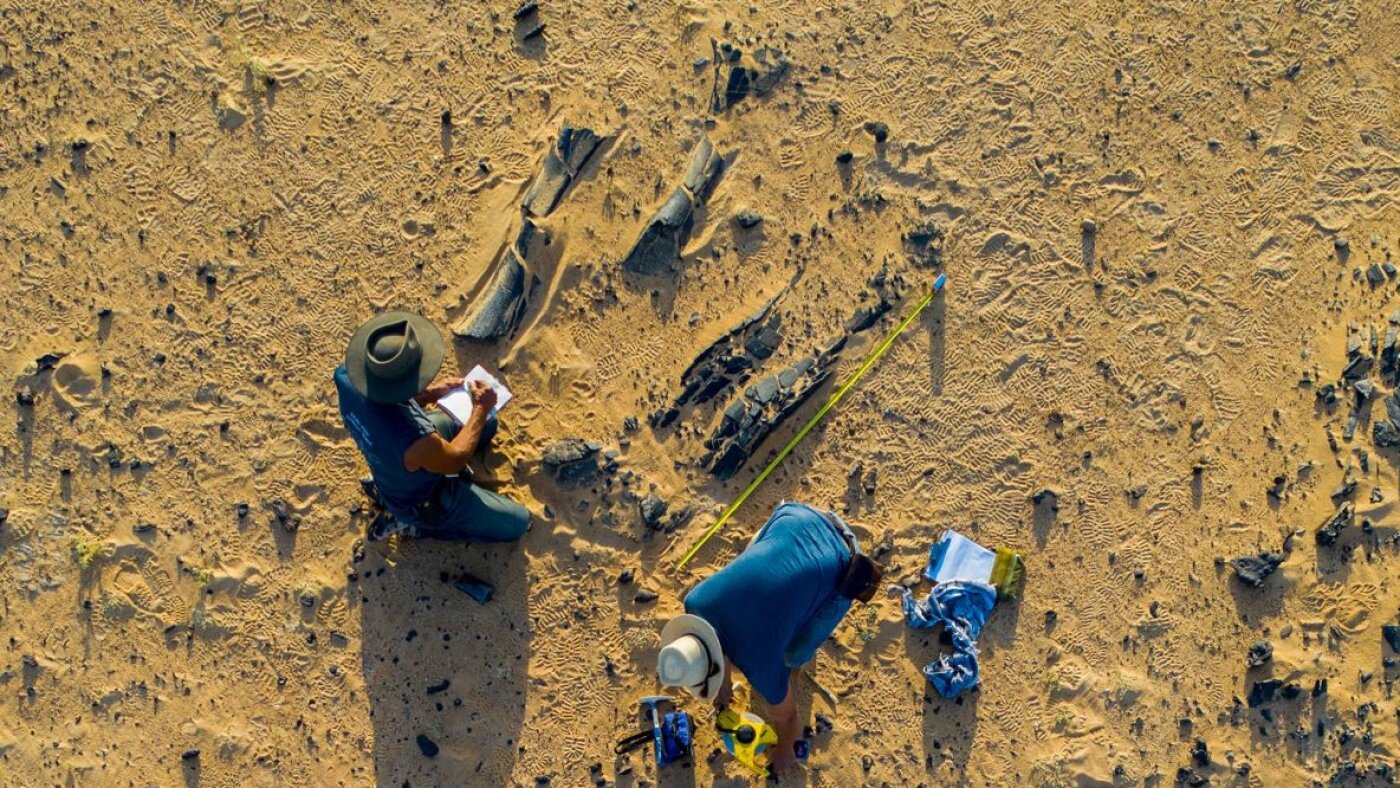
The world of paleontology has once again delivered a breathtaking surprise, redefining our understanding of prehistoric apex predators. An international team of dedicated scientists, working in the remote, fossil-rich landscapes of Niger, has unveiled a new species of dinosaur: Spinosaurus mirabilis. This colossal creature, whose name hints at its astonishing nature, boasts a combination of features that have left the scientific community both stunned and exhilarated – most notably, a massive horn protruding from its skull and a lifestyle intricately tied to aquatic environments.
A Century-Old Mystery Solved, a New Chapter Begins
The discovery marks a monumental moment, being the first time in over a century that scientists have identified a large, semi-aquatic theropod with such distinct cranial ornamentation. The last major revelations regarding spinosaurids largely centered on refining our understanding of previously known species, particularly the iconic Spinosaurus aegyptiacus. However, Spinosaurus mirabilis, or the "wonderful Spinosaurus," fundamentally expands the known diversity and morphological range within this fascinating family. Its unearthing in Niger points to a broader geographical distribution and potentially greater ecological specialization of spinosaurids across ancient Gondwana.
The Horned Hunter of Ancient Marshes
What truly sets Spinosaurus mirabilis apart is its striking physical characteristics. Imagine a predator of immense size, gracefully navigating the marshy estuaries and river systems of the Cretaceous period, not unlike a colossal crocodile. This particular species, however, possessed an enormous, presumably bony, horn-like structure on its skull. While its precise function remains a subject of ongoing research, paleontologists speculate it could have served multiple purposes: a formidable weapon for intra-species combat or defense against rival predators, a striking display for attracting mates, or even an anchor for powerful jaw muscles aiding in its primary hunting strategy – piscivory.
Its semi-aquatic nature is further evidenced by skeletal features consistent with a life spent predominantly in water. Its bone density, specialized teeth designed for gripping slippery prey, and perhaps even a sail-like structure along its back (common to other spinosaurids, though specific to mirabilis's variant is still under study) would have made it an unparalleled fish-hunter. It likely ambushed its prey in murky waters, using its powerful jaws and distinctive horn to incapacitate or retrieve its next meal.
Reimagining Cretaceous Ecosystems in Africa
The habitat of Spinosaurus mirabilis – the lush, marshy areas of ancient Niger – paints a vivid picture of a bustling ecosystem. This environment would have been teeming with large fish, turtles, and other aquatic life, providing a rich larder for a specialized predator like the "wonderful Spinosaurus." Its presence suggests a highly productive aquatic environment, capable of sustaining massive carnivores whose primary diet deviated significantly from terrestrial prey hunters like tyrannosaurs.
This discovery forces us to re-evaluate the complex food webs and competitive dynamics of Cretaceous Africa. The existence of a giant, horned, fish-eating dinosaur living alongside other large predators – some terrestrial, some perhaps semi-aquatic but with different hunting strategies – highlights the incredible biodiversity and ecological partitioning that existed millions of years ago. It suggests that evolutionary pressures pushed these animals into highly specialized niches, leading to a stunning array of forms and functions.
Future Implications and Unanswered Questions
The unearthing of Spinosaurus mirabilis is not merely an addition to the dinosaur encyclopedia; it is a catalyst for new avenues of research. Scientists will now delve deeper into understanding the evolutionary trajectory of spinosaurids, examining how environmental changes might have driven the development of such unique adaptations, including the prominent horn. Comparative studies with other spinosaur species will undoubtedly reveal more about their shared ancestry and divergent paths.
Questions abound: What was the exact composition of its diet? How did its horn develop ontogenetically? Did it live solitarily or in family groups? As more fossils are uncovered from Niger and surrounding regions, each piece of bone or tooth will contribute to a more complete mosaic of this extraordinary creature and the world it inhabited. The ongoing exploration promises further revelations, potentially unearthing even stranger and more specialized dinosaurs that once roamed our planet.
Conclusion: A Testament to Nature's Endless Innovation
Spinosaurus mirabilis stands as a powerful testament to the endless innovation of natural selection. Its discovery is a triumph for modern paleontology, offering a rare glimpse into a previously unappreciated facet of dinosaur life. As NovaPress continues to track these groundbreaking finds, we celebrate the dedicated scientists who painstakingly piece together the ancient narrative of Earth, reminding us that even after centuries of study, our planet's past still holds magnificent secrets waiting to be unearthed.