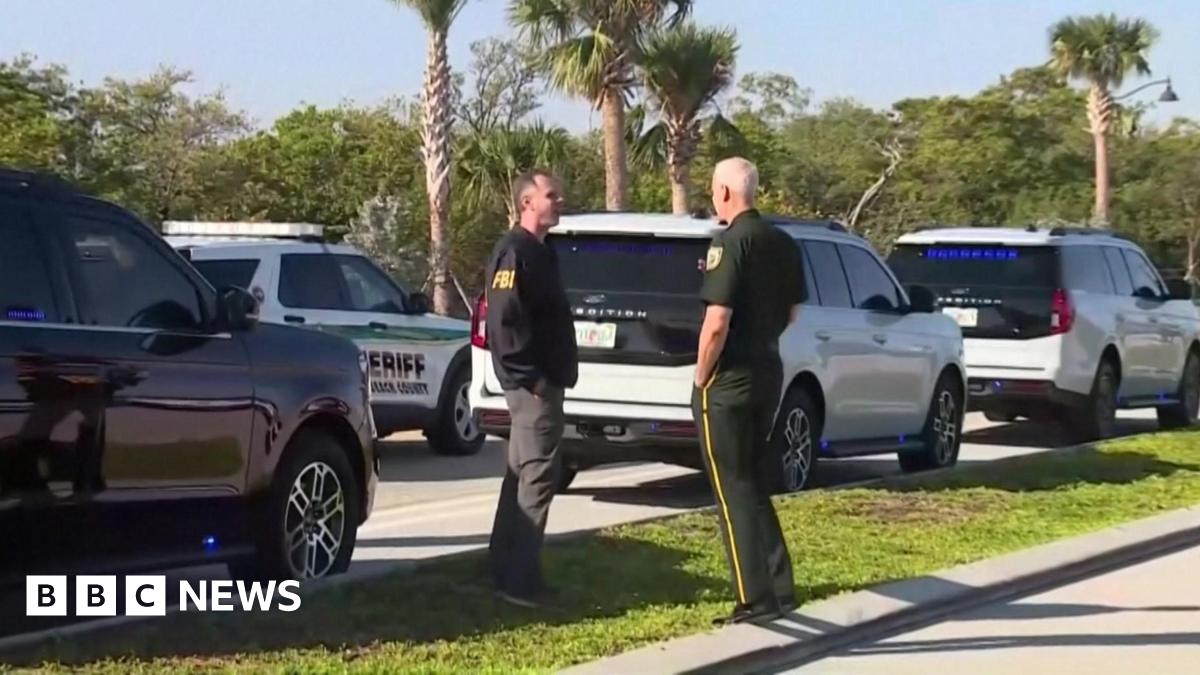
The recent incident at Donald Trump's Mar-a-Lago residence, where an individual carrying a shotgun and a fuel can was killed after entering the secure perimeter, serves as a stark and unsettling reminder of the persistent threats faced by high-profile political figures, even when they are not physically present. While authorities quickly confirmed that the former President was in Washington D.C. at the time, the breach itself, at one of the most heavily protected private residences in the United States, demands a deeper analysis of security protocols, societal undercurrents, and the evolving nature of threats.
The Anatomy of a Breach: Beyond the Headlines
Mar-a-Lago is not merely a private club; it functions as a secondary presidential residence, albeit a former one, placing it under the rigorous protection of the Secret Service. The layers of security typically involve multiple perimeters, advanced surveillance, and a highly trained contingent of agents. The fact that an armed individual managed to penetrate these defenses, regardless of the ultimate outcome, raises serious questions about vulnerabilities that may extend beyond this specific location.
Initial reports indicate the suspect was carrying a shotgun and a fuel can, suggesting a potential intent for both violence and arson. The swift response that led to the individual's death underscores the Secret Service's commitment to neutralizing threats, but the sheer audacity of the attempt is what truly resonates. It highlights the determination of some individuals to bypass seemingly impenetrable security, forcing a re-evaluation of current strategies.
Contextualizing the Threat: A Volatile Landscape
This incident does not occur in a vacuum. The current political climate in the United States is marked by intense polarization, heightened rhetoric, and, unfortunately, an increased incidence of politically motivated violence or threats. From attacks on political offices to threats against public officials, the environment has grown increasingly volatile. The Mar-a-Lago breach, therefore, can be seen as another symptom of this broader societal tension, where disaffected or radicalized individuals may perceive direct action against symbols of power as a legitimate, albeit gravely misguided, course of action.
Furthermore, the unique status of Mar-a-Lago as both a secure residence and an active social club presents inherent complexities for security. While guests undergo screening, the constant flow of people, even within defined perimeters, adds a layer of challenge that differs from a solely private, secure estate. Balancing accessibility with stringent security demands is a perennial challenge for such high-profile venues.
Future Implications: A Call for Re-evaluation
The Secret Service will undoubtedly conduct a thorough review of the incident, examining every facet of the security failure. This could lead to a reinforcement of existing protocols, the implementation of new technologies, or adjustments to personnel deployment, not just at Mar-a-Lago but potentially at other protected sites. The incident serves as a critical stress test for the agency's protective mission, prompting an essential reassessment of vulnerabilities.
Beyond immediate security adjustments, this event contributes to a broader narrative about the security of public figures and institutions in an era of digital amplification and widespread discontent. It reinforces the need for continuous vigilance, not only from security agencies but also from the public in identifying and reporting suspicious behavior. The psychological impact of such breaches, both on the protected individuals and the broader public's sense of security, is significant and long-lasting.
Conclusion: A Lingering Warning
While the immediate threat at Mar-a-Lago was neutralized without harm to the former president or his staff, the incident's echoes will resonate far beyond the news cycle. It stands as a potent warning about the persistent and evolving nature of threats against public figures and institutions. It underscores the critical importance of adaptable, robust security measures, alongside a societal commitment to de-escalation and peaceful discourse, to safeguard the fabric of democracy and the safety of its leaders.