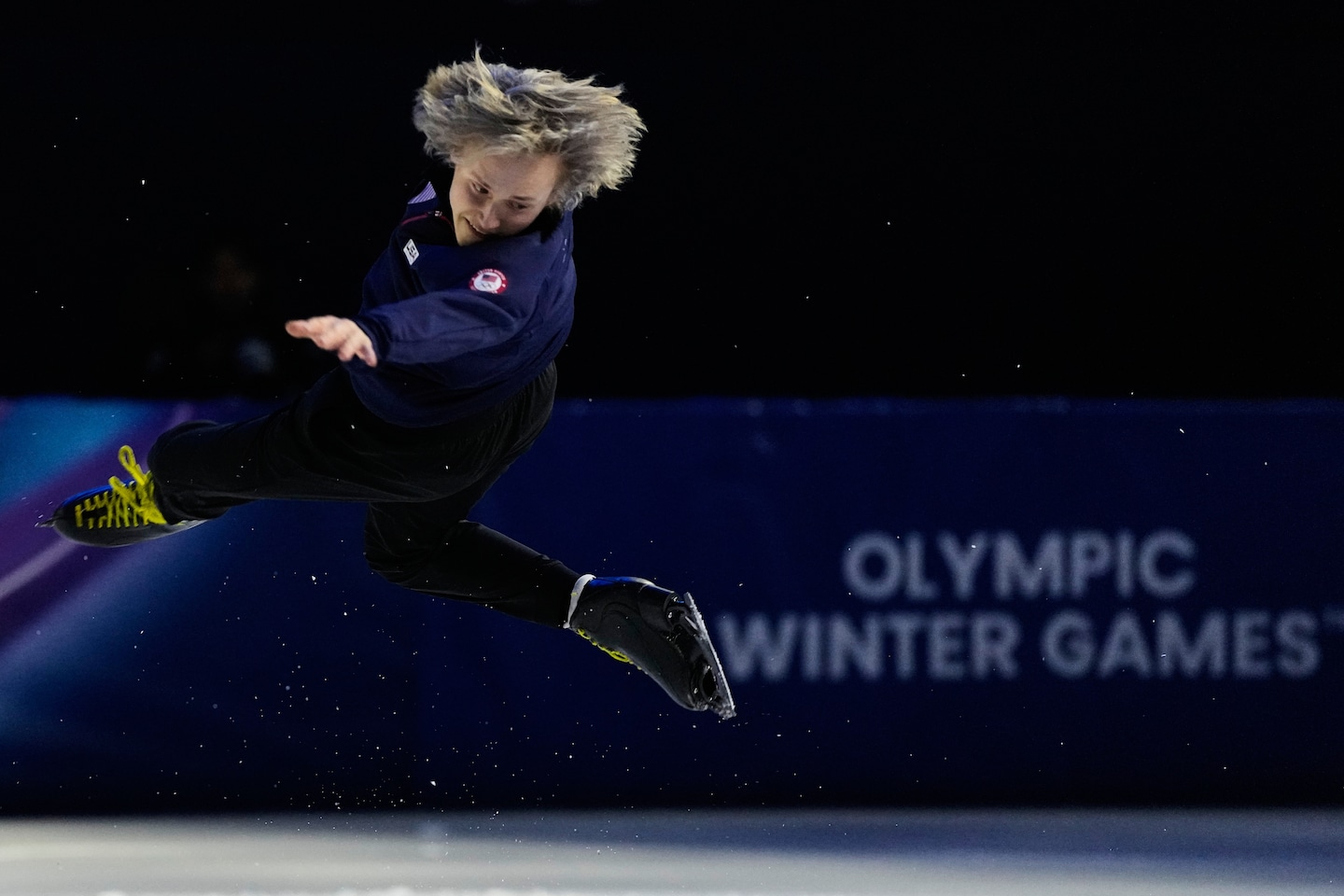
Milan bore witness to a profound moment in sports history, not one marked by gold medals or record-breaking feats, but by the quiet triumph of the human spirit. Ilia Malinin, the prodigious American figure skater, returned to the very Olympic ice that had once felt so "cruel" to him. Yet, this time, the narrative was entirely different. The suffocating weight of expectation, the pressure he vividly described as "devouring him," was conspicuously absent, paving the way for a performance that transcended mere competition.
The Ghost of Past Pressures
For elite athletes like Malinin, the Olympic stage is a double-edged sword: the pinnacle of ambition and the crucible of immense mental strain. His previous Olympic outing, while a testament to his undeniable skill, was overshadowed by the invisible opponent of self-doubt and the crushing burden of national hopes. The public eye, the media scrutiny, and the internal drive for perfection can coalesce into a force that, as Malinin himself alluded, consumes the joy and spontaneity inherent in the sport. This prior experience left an indelible mark, a chapter of his career defined by what *could* have been under different psychological circumstances.
A Gala of Liberation: Finding Freedom on the Ice
The figure skating gala, held after the competitive events, offers a unique sanctuary. Here, the rigid scoring, the technical demands, and the relentless pursuit of perfection are momentarily suspended. It is a space for celebration, for artistry, and crucially, for unbridled expression. For Malinin, this specific gala was more than just an exhibition; it was an act of profound liberation. With no medals at stake, the arena transformed from a battleground into a canvas, inviting him to reconnect with the pure, unadulterated love for skating that first drew him to the sport.
The Prophetic Performance Piece
What made Malinin's return particularly poignant was the piece he performed – an “emotional piece” that, remarkably, had been created months in advance. The serendipity of its perfect fit for this moment of personal redemption is striking. It speaks to the intuitive nature of art and the subconscious journey of an athlete. This wasn't a routine hastily assembled to reflect his Olympic experience; rather, it felt like a premonition, a pre-written chapter of his evolving story. The performance, therefore, wasn't just technically brilliant; it was a deeply personal narrative unfolding in real-time, resonating with every skater who has ever battled internal demons on the world stage.
The Changed Skater: A New Chapter Begins
Malinin’s descriptor of himself as a "changed skater" is perhaps the most significant takeaway from this experience. This transformation isn't about new jumps or improved spins; it's about a fundamental shift in perspective and mental fortitude. By facing the Olympic ice again, stripped of its competitive ferocity, he symbolically conquered his past anxieties. He performed for himself, for the sheer joy of movement and expression, rather than for judges or accolades. This newfound internal freedom, if he can harness it, could be the key to unlocking even greater potential in his competitive future.
Implications for the Future: Artistry Meets Athleticism
This pivotal moment for Malinin carries broader implications for figure skating. It highlights the often-overlooked psychological toll of elite sport and the vital role of mental well-being in an athlete's career. Can Malinin integrate this gala experience – this sense of liberation and authentic expression – into his high-stakes competitive programs? If so, he stands poised to become not just a technical powerhouse, but a truly transcendent artist on ice, capable of conveying profound emotion while executing breathtaking athleticism. His journey reminds us that true victory often lies not in the medals won, but in the personal growth achieved and the freedom found within oneself.