The Timeless Depths of Gilindire: Unveiling Turkey's Subterranean Lake and Its Ancient Secrets
Beneath the bustling shores of Turkey’s southern coastline lies a portal to a forgotten world. Not a portal through time, but through rock and water, leading to a hidden lake that has held geological secrets in its cold embrace for millennia. The journey to its surface alone is an endeavor, requiring a descent of 560 steps into the earth. What lies 30 meters beneath its placid surface, unseen by human eyes for epochs, has now been brought to light by a specialized team of divers.
A Geological Marvel: Gilindire Cave's Enduring Mystery
Gilindire Cave, often known as the 'Cave of Aynaligöl' in Mersin, Turkey, is more than just a cavern; it is a profound testament to the Earth's slow, powerful artistry. Formed over vast geological timescales, its chambers are a symphony of stalactites and stalagmites, intricate draperies, and flowstones, all sculpted by the relentless drip of mineral-rich water. The cave's unique appeal, however, resides in its expansive subterranean lake, a body of water so isolated and pristine that its depths promised revelations of an unparalleled nature.
For years, the lake’s surface tantalized researchers, hinting at a world preserved below. The logistical challenges of reaching and exploring such an environment are immense, requiring not just expert diving skills but also a deep understanding of cave diving protocols and specialized equipment to navigate the constricted spaces and the absolute darkness.
The Descent: 560 Steps to a Submerged Frontier
The expedition itself was an extraordinary feat of human perseverance and technological capability. The 560 steps, a serpentine descent into the earth's belly, serve as a physical and psychological gateway, preparing explorers for the alien beauty that awaits. Once at the lake's edge, the real challenge began. A team of highly specialized divers, equipped with rebreathers to minimize disturbance to the delicate ecosystem and powerful lights to pierce the perpetual gloom, embarked on their mission.
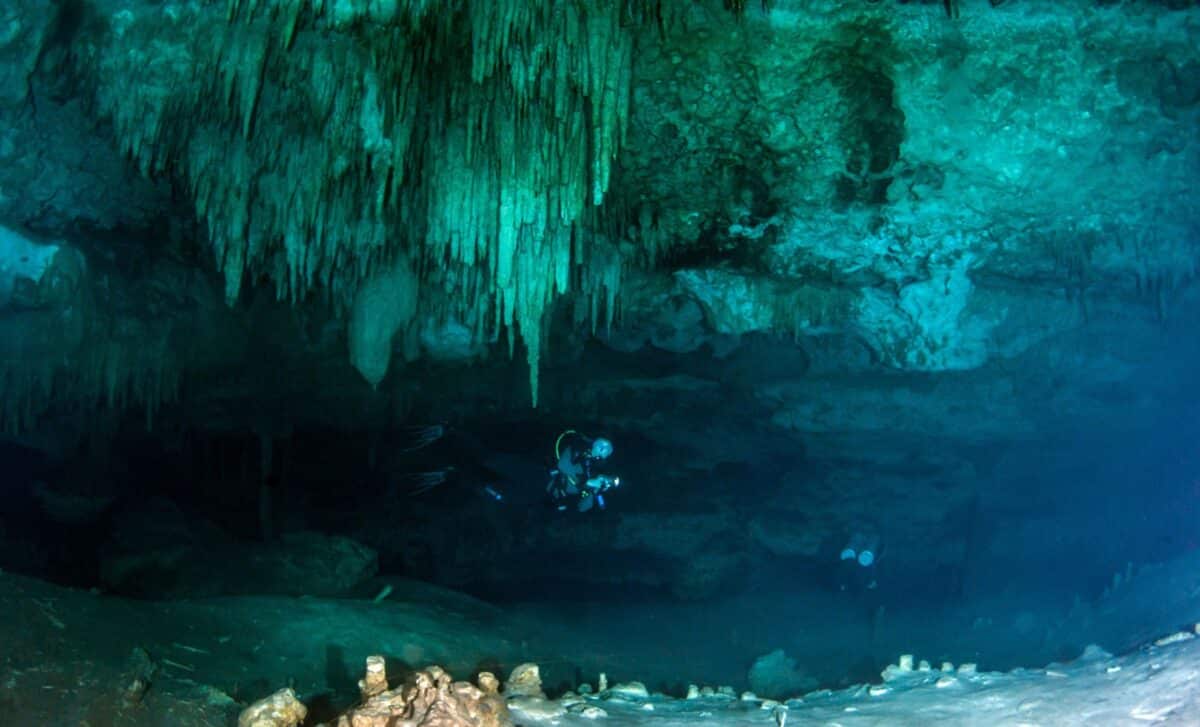
Plunging 30 meters into the cold, clear waters, the divers were met with a sight that transcended mere geological curiosity. What they discovered was not just a lake, but an inverted landscape – a drowned forest of formations that had once stood proud in air before the cave filled with water. The clarity of the water, undisturbed by currents or surface life, offered unparalleled visibility, allowing for detailed documentation of these submerged wonders.
Unprecedented Discoveries: Stalactites in Subaqueous Silence
The primary discovery was the meticulously preserved stalactites and other speleothems that lay submerged. Unlike formations found in air, these underwater structures offered a unique window into past climatic conditions. Their growth patterns, composition, and even the levels at which they formed and subsequently ceased growing, provide invaluable data for paleoclimatologists. They are essentially geological time capsules, recording periods when the cave was dry and air-filled, followed by periods of inundation.
Beyond the stalactites, the team documented a diverse array of geological features, revealing the complex processes of solution and deposition that shaped the cave over millions of years. The exceptional preservation of these formations suggests a remarkably stable environment, largely untouched by external forces or significant seismic activity for extended periods.
Scientific Context and Future Implications
The findings from Gilindire Cave are not merely a collection of impressive underwater photographs; they represent a significant contribution to speleology, geology, and paleoclimatology. By analyzing the growth rings and isotopic composition of the submerged formations, scientists can reconstruct ancient rainfall patterns, temperature fluctuations, and even atmospheric CO2 levels, offering critical insights into Earth's past climate and how it has changed over millennia. This understanding is increasingly vital in the face of contemporary climate change.
Furthermore, such isolated subterranean aquatic environments often host unique extremophile life forms – organisms adapted to thrive in conditions of perpetual darkness, low nutrients, and unique chemical compositions. While the immediate report focused on geological findings, the potential for discovering novel microbial ecosystems in Gilindire's depths remains a tantalizing prospect for future biological research.
Preservation and the Path Forward
The revelations from Gilindire Cave underscore the critical importance of preserving such pristine natural wonders. These environments are incredibly fragile, and even minimal human impact can have lasting consequences. Conservation efforts must balance the scientific imperative of exploration with the ecological necessity of protection. The detailed documentation achieved by the diving team provides a baseline for monitoring the cave's health and ensuring its longevity for future generations of researchers and awe-struck visitors.
As scientists continue to analyze the data and samples retrieved from Gilindire's timeless depths, the cave will undoubtedly yield more secrets. It stands as a powerful reminder of the vast, unexplored wonders that lie beneath our feet, patiently waiting for humanity's gaze.