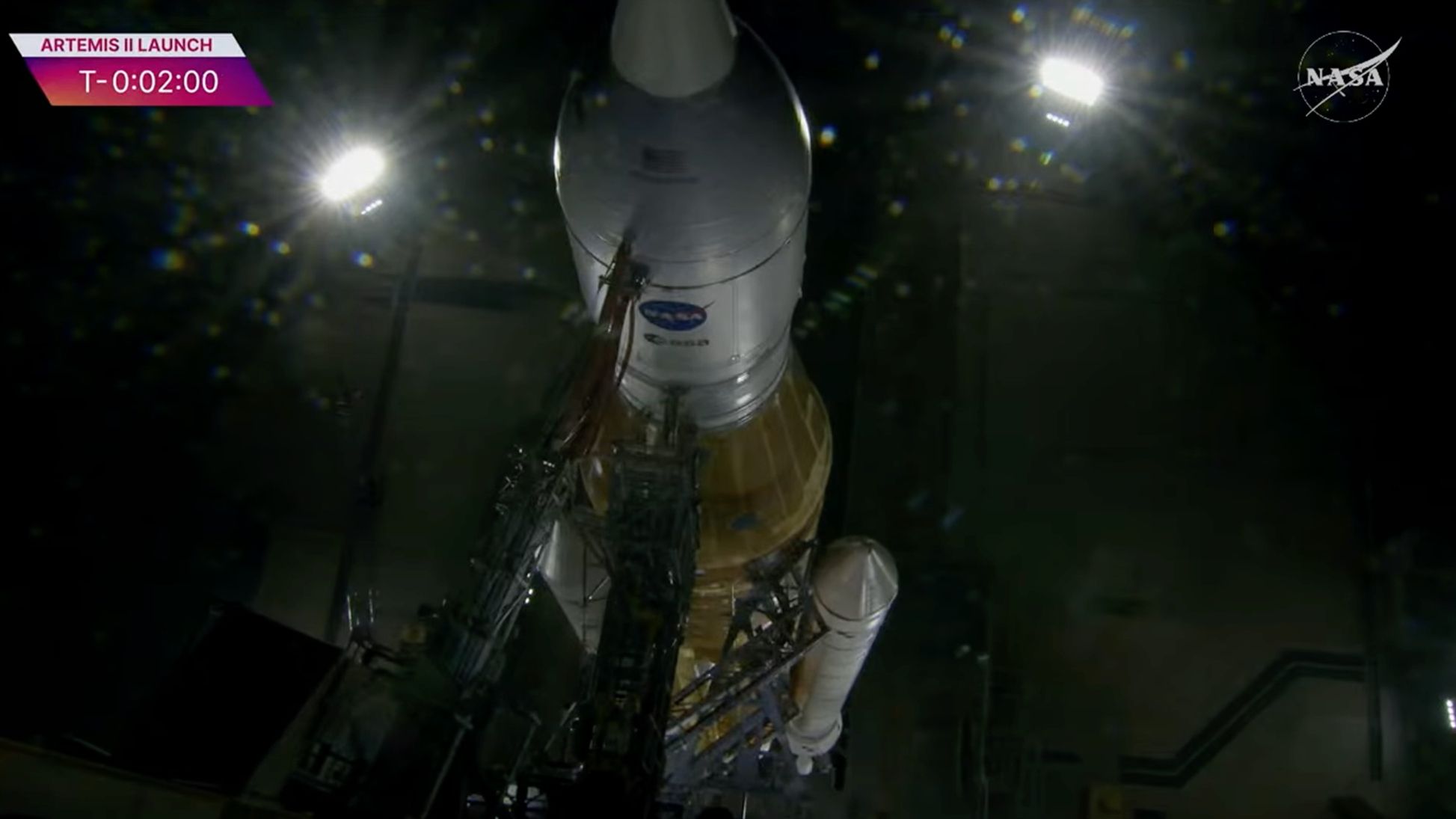
The air at Kennedy Space Center crackles with a blend of anticipation and relief. NASA's Artemis 2 mission, poised to send humans on a journey around the Moon for the first time in over 50 years, just cleared another monumental hurdle: its second critical fueling test. While official confirmation awaits a pivotal press conference this Friday, February 20th, at 11 a.m. ET, early indications suggest a resounding success. This isn't just a routine procedure; it's a complex, high-stakes ballet of engineering and precise operations, pushing humanity closer to its lunar ambitions.
Artemis 2: The Next Giant Leap
Artemis 2 isn't merely a repeat of Apollo. It represents a foundational step in NASA's ambitious Artemis program, which aims to establish a long-term human presence on the Moon and serve as a stepping stone for future crewed missions to Mars. This mission will carry four astronauts—Reid Wiseman, Victor Glover, Christina Koch, and Jeremy Hansen—on a journey that will loop around the Moon, testing the Orion spacecraft's systems and demonstrating the capabilities required for subsequent lunar landings. The success of each pre-flight test is paramount, ensuring the safety of the crew and the integrity of the mission.
The Cryogenic Challenge: Fueling a Lunar Giant
The core of the Space Launch System (SLS) rocket, the most powerful rocket ever built, relies on super-chilled cryogenic propellants: liquid hydrogen and liquid oxygen. Transferring tens of thousands of gallons of these volatile liquids into the rocket's massive core stage and upper stage is an inherently complex and hazardous operation. This second critical fueling test, often referred to as a "wet dress rehearsal," simulates the entire countdown sequence, including the loading and unloading of propellants, right up to the final seconds before ignition.
Why is this so critical? Cryogenic propellants must be kept at extremely low temperatures (liquid oxygen at -297°F and liquid hydrogen at -423°F) to remain in liquid form. Any leaks, temperature fluctuations, or pressure anomalies can have severe consequences. The test verifies not only the rocket's ability to hold the propellants but also the ground systems, the complex network of sensors, valves, and pipelines, and the readiness of the launch control team to execute a flawless countdown.
Early Indications of Success: What "It Sure Looked Like It" Means
The phrase "It sure looked like it" in preliminary reports, while informal, often stems from real-time data monitoring and operational observations. Engineers on the ground meticulously track thousands of data points during the fueling process – propellant levels, temperatures, pressures, valve positions, and structural responses. A "successful look" suggests that all systems performed within expected parameters, no major anomalies were detected, and the team executed procedures as planned. This level of confidence, prior to official pronouncements, is a strong indicator of a smooth operation, validating years of development and testing.
What's Next: The Road to Launch and Beyond
With this critical test seemingly behind them, the Artemis team will now meticulously analyze every byte of data gathered. The upcoming press conference on Friday will likely provide detailed insights into the test's full outcome, any minor issues encountered, and the next steps in the Artemis 2 timeline. If confirmed successful, this test significantly de-risks the mission, moving NASA closer to setting an official launch date for the crewed lunar flyby.
Beyond Artemis 2, this success bolsters confidence in the entire Artemis architecture, including the Orion spacecraft, the SLS rocket, and the ground infrastructure at Kennedy Space Center. Each step forward in the Artemis program reinforces humanity's renewed commitment to deep space exploration, promising a future where lunar outposts and Martian expeditions transition from science fiction to tangible reality.
The Moon beckons, and with each successful test, the echoes of a new era of space exploration grow louder. NovaPress will be following the press conference closely, bringing you the latest updates on this monumental journey.