Dual Shocks Rock Asia: Navigating US Rate Uncertainty Amidst Escalating Iran Tensions
The financial markets across Asia recently experienced a significant tremor, as most regional stocks took a hit. This downturn wasn't the result of a single, isolated event, but rather a complex interplay of two formidable global headwinds: persistent uncertainty surrounding U.S. interest rate policy and heightened geopolitical tensions emanating from Iran. Together, these factors have compelled traders to shed risk-driven assets, painting a cautious outlook for the foreseeable future.
The Shadow of U.S. Monetary Policy
For months, global markets have been on tenterhooks, meticulously dissecting every statement from the U.S. Federal Reserve. The recent dip in Asian stocks serves as a stark reminder of the profound impact U.S. monetary policy has beyond its borders. The specter of prolonged higher interest rates, or even the possibility of further rate hikes rather than the anticipated cuts, makes riskier emerging market assets less attractive. Investors, seeking safer havens and better yields, tend to pull capital from growth-oriented Asian economies, leading to currency depreciation and stock market declines.
This uncertainty creates a challenging environment for Asian central banks and policymakers. They must weigh the need to support domestic growth against the imperative to maintain currency stability and prevent capital flight, often constrained by the Fed's actions. The longer this ambiguity persists, the greater the drag on investor confidence and the more pronounced the market volatility across the region.
Geopolitical Volatility: The Iran Factor
Adding another layer of complexity, escalating geopolitical tensions involving Iran have significantly dampened global risk appetite. While geographically distant from many Asian financial hubs, instability in the Middle East carries far-reaching economic consequences. Disruptions to oil supply routes, potential spikes in crude prices, and the general increase in global political uncertainty directly impact economies heavily reliant on energy imports, like many in Asia.
Moreover, such tensions foster a 'flight to safety' mentality among investors, who reallocate funds from volatile regions to perceived safer assets, like U.S. Treasuries or gold. This exodus further exacerbates the downward pressure on Asian equities, regardless of individual market fundamentals. The interconnectedness of global markets means that regional conflicts can quickly ripple into global economic challenges, impacting trade, investment, and supply chains.
South Korea's Outperformance: An Anomaly Worth Watching
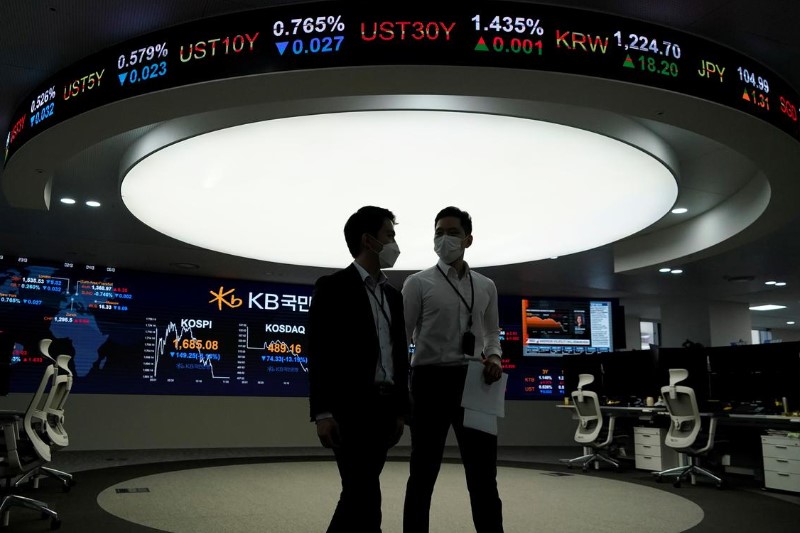
Amidst this broad regional decline, South Korea presented a compelling counter-narrative, notably outperforming its Asian counterparts. This resilience prompts a deeper look into the unique factors bolstering the Korean market. While specific domestic conditions, robust corporate earnings in key sectors like technology (semiconductors, AI), or targeted foreign investment could be at play, its ability to buck the trend is significant.
This outperformance might signal a decoupling, albeit temporary, driven by strong fundamentals in its export-oriented industries, which may be less sensitive to immediate shifts in global risk sentiment or, conversely, are seen as beneficiaries of long-term tech trends. Investors will be keen to observe if South Korea's resilience can be sustained, offering a potential blueprint for other economies navigating similar global headwinds.
Future Implications and Investor Outlook
The current market landscape demands a nuanced approach from investors. The dual threat of U.S. rate uncertainty and geopolitical strife is unlikely to dissipate quickly. For Asian markets, this means continued volatility and the potential for further corrections. Businesses will face increased costs due to higher borrowing rates and potential supply chain disruptions from geopolitical events.
Looking ahead, the path of global markets will heavily depend on key developments: clear signals from the U.S. Federal Reserve regarding its monetary policy trajectory, and de-escalation of tensions in critical geopolitical hotspots. Investors should focus on companies with strong balance sheets, sustainable earnings, and exposure to long-term growth trends, while maintaining diversified portfolios to mitigate risks. The coming months will test the resilience and adaptability of economies worldwide, with Asia standing at a critical juncture.