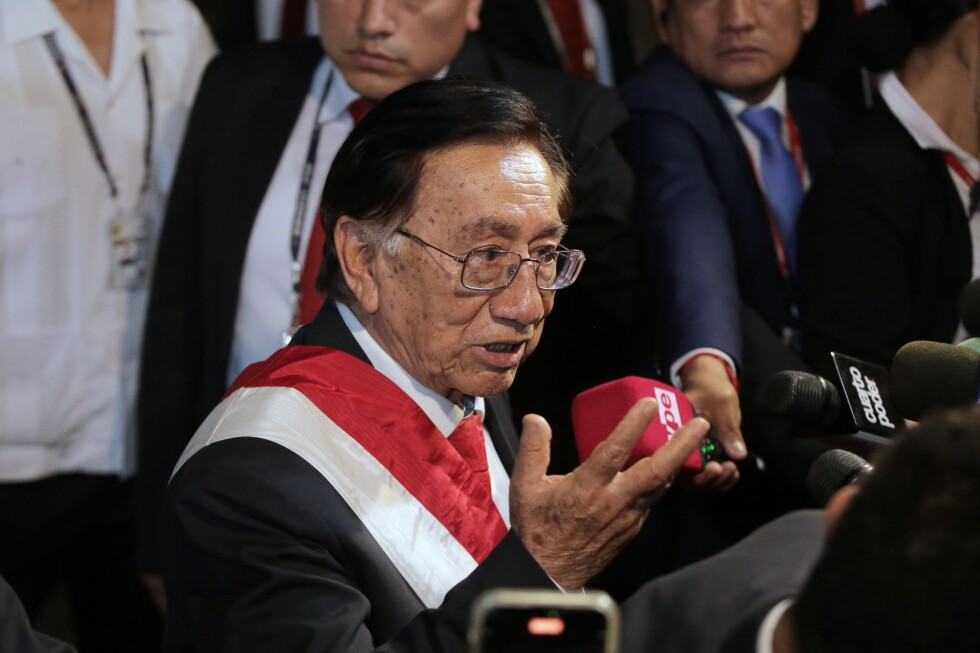
LIMA – In a stark illustration of its profound political instability, Peru has once again sworn in a new interim president, José María Balcázar. His ascension late Wednesday marks a somber milestone: Balcázar is the eighth individual to hold the nation's highest office in just a decade, replacing yet another leader ousted amid corruption allegations just four months into his term. This revolving door of power casts a long shadow over the Andean nation, raising critical questions about its democratic resilience and the future of its governance.
A Decade of Disarray: The Roots of Instability
The past ten years in Peru have been characterized by an almost unprecedented level of executive turnover. From Pedro Pablo Kuczynski's resignation in 2018 to Martín Vizcarra's impeachment, followed by a rapid succession of interim leaders like Manuel Merino, Francisco Sagasti, Pedro Castillo (also impeached), Dina Boluarte, and now Balcázar, the pattern is alarming. Each transition, often spurred by allegations of corruption, abuse of power, or legislative no-confidence votes, has eroded public trust and left the country in a state of perpetual political uncertainty.
The fundamental causes of this chronic instability are multi-faceted. Deep-seated corruption, often described as systemic, permeates various levels of government and society. Investigations into the Odebrecht scandal, for instance, implicated several former presidents, highlighting the pervasive nature of illicit financial practices. Furthermore, Peru's highly fragmented legislature, composed of numerous small parties with shifting alliances, often leads to gridlock and intense political rivalries rather than stable governance. This parliamentary dynamic frequently results in votes of no-confidence and attempts to impeach presidents, creating a cycle of executive vulnerability.
Balcázar's Precarious Path Forward
José María Balcázar, elected by a majority in the 130-member legislature, inherits a nation weary of political drama and hungry for stability. His immediate challenges are immense. First and foremost is the imperative to restore a semblance of trust between the government and its disillusioned populace. The public, having witnessed repeated cycles of promises and betrayals, is deeply skeptical of new leadership.
Beyond political legitimacy, Balcázar must confront significant socio-economic issues. Peru, a major producer of copper and other minerals, has often seen its economic growth overshadowed by social inequalities and a lack of effective public services. Protests over mining projects, land rights, and cost of living are common, demanding astute political management that previous administrations have struggled to provide. Furthermore, the persistent threat of further corruption allegations or legislative maneuvers against his own presidency will constantly loom, making long-term planning and effective governance incredibly difficult.
The Path to Stability: A Distant Horizon?
For Peru to break free from this cycle, fundamental institutional reforms are urgently needed. Strengthening independent judicial bodies, reforming campaign finance laws, and fostering a more mature and less confrontational political culture are crucial steps. However, achieving consensus on such reforms amidst the current climate of extreme polarization appears to be a formidable task.
As José María Balcázar steps into the presidential palace, the question is not merely how long he will last, but whether his interim tenure can somehow, against all odds, lay a foundation for genuine stability. Without addressing the deep structural issues that have plagued its political system for a decade, Peru risks remaining trapped in a perpetual state of governmental flux, with its democratic institutions increasingly fragile and its future uncertain.