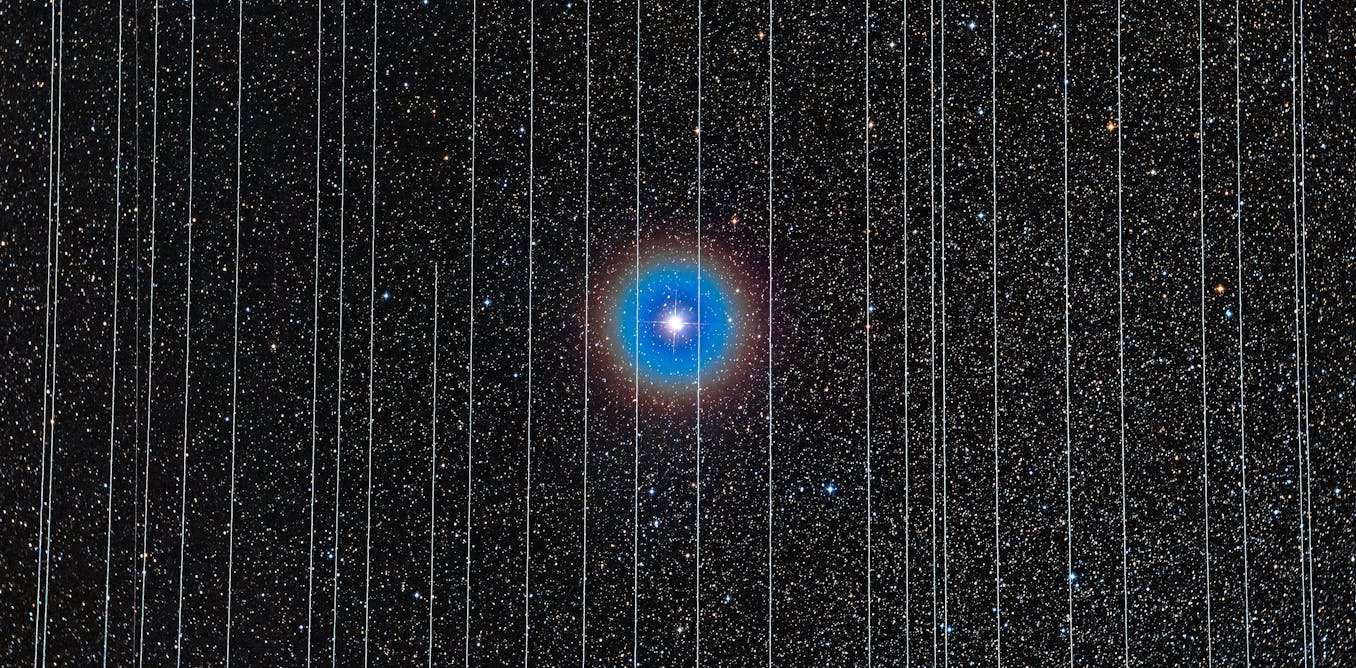
Orbital Overload: The Million-Satellite Rush and Earth's Looming Space Catastrophe
The silent frontier above us is growing crowded. With proposals like SpaceX’s ambition to launch up to one million satellites, humanity stands at a critical juncture, balancing technological advancement with the very real threat of turning Earth’s orbit into an unusable junkyard. NovaPress investigates the unseen costs and the urgent need for a new era of space stewardship.
The Unprecedented Megaconstellation Era
On January 30, 2026, a seemingly innocuous filing with the US Federal Communications Commission (FCC) by SpaceX sent ripples through the space community. The proposal was not for a few dozen, or even a few thousand, but for a staggering one million satellites. The purpose? To power data centres in space, promising unprecedented global connectivity and computational power. This isn't an isolated vision; numerous companies are eyeing similar megaconstellations, driven by the insatiable demand for ubiquitous internet and advanced space-based services.
While the benefits of such expansive networks – bridging the digital divide, enhancing remote sensing, and enabling new scientific endeavors – are undeniable, the sheer scale of these ambitions poses an existential threat to the orbital environment. Our celestial backyard, once vast and empty, is rapidly approaching a critical saturation point.
Kessler Syndrome: The Ticking Time Bomb
The concept of a "Kessler Syndrome" – a scenario where the density of objects in low Earth orbit (LEO) becomes so high that collisions generate enough space debris to trigger a cascade of further collisions – has long been a theoretical concern. Today, it's becoming an increasingly plausible reality. Every operational satellite, every spent rocket stage, and every fragment from past collisions contributes to a growing cloud of debris, some traveling at speeds exceeding 17,500 mph.
A single, small piece of debris can cripple or destroy an active satellite, generating thousands more fragments, accelerating the Kessler cascade. The consequences are dire: rendering entire orbital bands unusable for generations, isolating humanity from space, and even impacting critical terrestrial services reliant on satellites.
The Overlooked Impacts: Culture, Spirituality, and Environment
Beyond the immediate threat of collisions, the current regulatory frameworks and commercial incentives largely fail to account for a suite of profound, non-quantifiable impacts. These include:
- Astronomical Interference: Thousands of bright satellites traversing the night sky create streaks in long-exposure astronomical images, hindering scientific research and deep-space observation. Radio astronomy is also vulnerable to signal interference.
- Cultural and Spiritual Heritage: For indigenous cultures and communities worldwide, the night sky holds immense spiritual significance, serving as a celestial map, a storybook, and a connection to ancestral knowledge. A sky polluted by artificial light and constant movement diminishes this sacred heritage.
- Environmental Concerns: The constant launching and eventual de-orbiting (or uncontrolled re-entry) of thousands of satellites raises questions about atmospheric pollution from rocket exhaust and burning debris. The long-term effects of increased particulate matter in the upper atmosphere are poorly understood.
- Light Pollution: While ground-based light pollution is well-documented, the collective brightness of megaconstellations contributes to a growing artificial skyglow, impacting nocturnal wildlife and the human experience of true darkness.
These "externalities" are rarely factored into the cost-benefit analyses of satellite operators, leading to a profound misalignment between technological ambition and holistic planetary stewardship.
A Fragmented Future: The Regulatory Challenge
The international legal framework for space, primarily the 1967 Outer Space Treaty, was conceived in an era of nascent space exploration by a few state actors. It is woefully inadequate for the current commercial gold rush. There is no single international body with the authority to regulate satellite launches, orbital slots, or debris mitigation on a global scale. National agencies, like the FCC in the US, primarily focus on spectrum allocation and national security, often lacking the mandate or the coordinated global vision to address the larger environmental and cultural implications.
This regulatory vacuum creates a "tragedy of the commons" scenario, where individual actors pursue self-interest (launching more satellites) at the expense of the collective good (a clean, usable orbit for all).
Charting a Sustainable Path: Solutions and Stewardship
Preventing orbital catastrophe requires urgent, concerted action on multiple fronts:
- Enhanced Debris Mitigation: Mandating robust de-orbiting capabilities for all new satellites, strict disposal orbits, and active debris removal technologies for existing junk.
- International Collaboration: Developing comprehensive, legally binding international agreements for space traffic management, orbital slot allocation, and environmental impact assessments.
- Rethinking "Space Law": Updating the Outer Space Treaty to reflect the commercial reality and include provisions for environmental protection and accountability for space debris.
- Technological Innovation: Investing in ground-based and space-based tracking systems to improve Space Situational Awareness (SSA) and developing sustainable satellite designs.
- Holistic Impact Assessments: Integrating cultural, spiritual, and environmental considerations into the licensing process, rather than solely focusing on technical and economic factors.
The Future is Now
The ambition to connect every corner of the Earth and push the boundaries of technology is commendable. However, it must be tempered with responsibility. Earth's orbit is not an infinite resource; it is a shared commons, vital for scientific discovery, global communication, and our very future in space. Ignoring the warning signs and the non-economic impacts would be a profound act of shortsightedness, leaving a legacy of orbital chaos for generations to come. The time to act – to establish robust governance and embrace sustainable practices – is not tomorrow, but now.