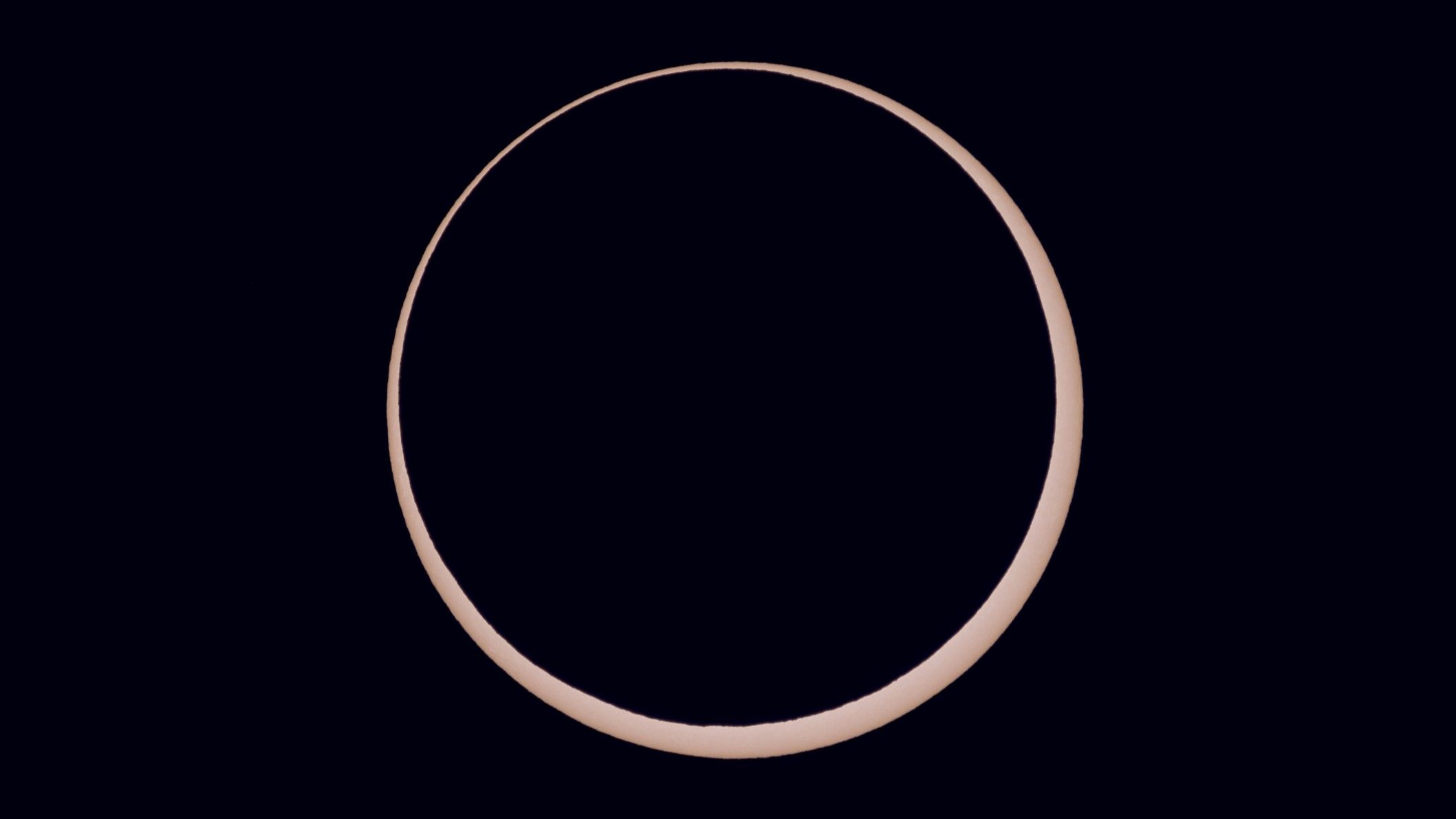
The Fiery Embrace: Unpacking the Spectacle and Science of Today's Annular Solar Eclipse
Today, February 17th, the celestial ballet between our Moon and Sun culminates in a breathtaking astronomical event: an annular solar eclipse. For observers in specific regions, the Sun will transform into a dramatic "ring of fire," a mesmerizing display that is as scientifically significant as it is visually stunning. NovaPress delves deep into the mechanics, implications, and sheer wonder of this rare phenomenon.
Understanding the "Ring of Fire": Annularity Explained
Unlike a total solar eclipse where the Moon completely obscures the Sun, an annular eclipse occurs when the Moon passes directly in front of the Sun but is too far from Earth to fully cover it. This happens because the Moon's orbit around Earth is elliptical, meaning its distance varies. When the eclipse occurs during the Moon's apogee (its farthest point from Earth), its apparent size in the sky is slightly smaller than the Sun's. The result? A brilliant halo of sunlight encircling the dark silhouette of the Moon, creating the iconic "ring of fire."
This celestial alignment requires precise orbital mechanics, making each annular eclipse a unique opportunity for observation and study. While not as dramatic as a total eclipse in terms of darkness, the annularity offers a distinct visual spectacle, a testament to the elegant predictability of the cosmos.
More Than Just a Show: The Scientific Value
Eclipses, whether total or annular, have long captivated humanity, inspiring myth, fear, and wonder. In modern science, they are invaluable tools. Annular eclipses, in particular, provide unique opportunities for researchers:
- Solar Corona Studies: While the corona is best viewed during a total eclipse, the sliver of sunlight during annularity can still offer insights into the Sun's limb and the outermost layers of its atmosphere.
- Atmospheric Research: The momentary dimming of sunlight affects Earth's atmosphere, offering scientists a chance to study changes in temperature, pressure, and ionospheric conditions.
- Precision Astronomy: Eclipses serve as natural laboratories for verifying gravitational theories and precisely measuring the positions and movements of celestial bodies. The exact timing and path of the Moon's shadow confirm our understanding of orbital mechanics.
- Public Engagement: Perhaps most importantly, events like today's "ring of fire" eclipse ignite public interest in astronomy and science, inspiring future generations of explorers and researchers.
Safety First: Observing the Celestial Spectacle
It is absolutely crucial to reiterate that looking directly at the Sun, even during an annular eclipse, without proper eye protection can cause permanent eye damage. The Sun's intense rays are never fully blocked during annularity. Therefore, special certified eclipse glasses (ISO 12312-2 international safety standard), solar filters for telescopes, or pinhole projectors are essential for safe viewing. Regular sunglasses are insufficient and unsafe.
Beyond Today: The Future of Eclipses
While today's annular eclipse is a memorable event, the cosmic dance continues. Upcoming eclipses, both total and annular, are already mapped out years in advance, each offering its own unique perspective on our solar system. These events remind us of our place in the vast universe and the constant, awe-inspiring motions that govern our celestial neighborhood. From ancient observations to modern scientific probes, eclipses remain powerful reminders of the universe's grandeur and the relentless march of time and orbital mechanics.
NovaPress encourages everyone, whether witnessing the "ring of fire" directly or following from afar, to appreciate the profound beauty and scientific lessons embedded in these magnificent astronomical occurrences. They are truly nature's grandest shows, offering both spectacle and significant data for our understanding of the cosmos.