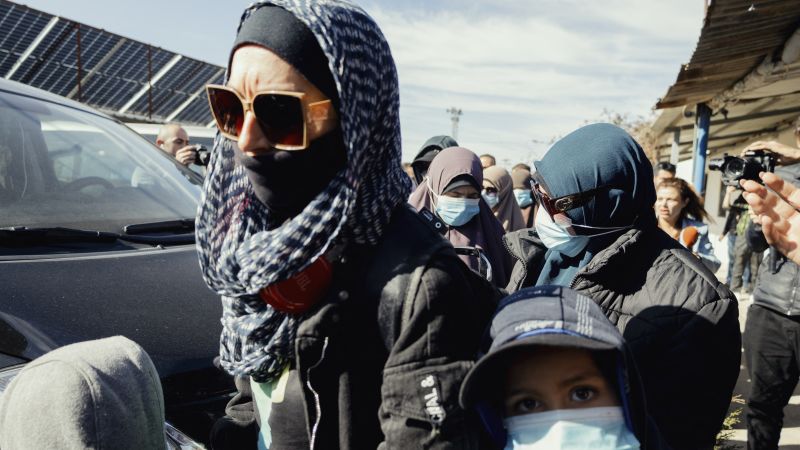
Australia's Unyielding Stance: National Security, Moral Dilemmas, and the ISIS Repatriation Conundrum
Prime Minister Anthony Albanese's recent declaration — "If you make your bed, you lie in it" — marks a definitive and stark shift in Australia's approach to citizens linked to Islamic State members stranded in Syrian detention camps. Following a reported failed escape attempt, the government's refusal to repatriate these individuals underscores a complex interplay between national security, ethical responsibilities, and the harsh realities of sovereign justice. This uncompromising position, while applauded by some as a necessary measure to protect national interests, reignites a fierce debate on the moral and legal obligations of a state towards its citizens, even those who have aligned with designated terrorist organizations.
The "Make Your Bed" Doctrine: A Hardline Stance
Albanese's blunt message is not merely a statement of policy; it's a philosophical declaration. It encapsulates a punitive approach, suggesting that individuals who actively chose to join or support a group like ISIS have forfeited their right to state protection and assistance when facing the consequences of their actions. This doctrine resonates with a segment of the public that believes national resources should not be expended on those perceived as traitors or threats. For the Australian government, the calculus appears clear: the risks associated with repatriating individuals potentially radicalized or trained by ISIS, and the burden on intelligence and security agencies, outweigh any perceived humanitarian obligation.
This stance contrasts sharply with earlier, albeit limited, efforts by the former Morrison government to repatriate a small number of women and children, often citing the vulnerable nature of children caught in dire circumstances. The current administration's position suggests a hardening of resolve, perhaps influenced by the perceived lack of gratitude or continued adherence to extremist ideologies by some returnees, or a response to the practical difficulties of deradicalization and reintegration.
National Security Imperatives vs. Legal Ambiguity
At the heart of Australia's decision lies a paramount concern for national security. Repatriating individuals with proven or alleged links to ISIS presents a multifaceted threat: the potential for domestic radicalization, the risk of planned attacks, and the strain on intelligence agencies tasked with monitoring and managing high-risk individuals. The logistics of screening, deradicalizing, prosecuting, and reintegrating these individuals are immense, fraught with legal complexities, and carry significant public safety implications.
However, legal scholars and human rights advocates often highlight the principle of non-derogation of citizenship. Denying entry or repatriation to citizens, even those who have committed heinous acts abroad, can lead to statelessness in some cases (though less so for adults with clear citizenship) and creates a legal grey area. Furthermore, the conditions in Syrian detention camps are notoriously brutal, raising concerns about fundamental human rights and the state's potential indirect complicity in prolonged suffering, particularly for children caught in the crossfire of their parents' choices.
International Precedent and the Global Dilemma
Australia is not alone in grappling with this thorny issue. Nations across Europe, as well as the United States and Canada, have faced similar dilemmas regarding their citizens who traveled to join ISIS. While some countries, like Germany and France, have undertaken limited repatriations, particularly for children and vulnerable women, others, such as the UK, have stripped individuals of their citizenship or adopted a similarly firm "no repatriation" policy. The global community remains divided, reflecting the tension between a state's responsibility to protect its citizens and its imperative to safeguard national security.
The lack of a unified international approach means that the burden often falls on local Syrian authorities, who lack the resources and legal frameworks to effectively manage the thousands of foreign fighters and their families. This inaction risks creating a breeding ground for future radicalization within these camps, potentially leading to a resurgence of extremist threats down the line.
Future Implications and the Long Shadow
Prime Minister Albanese's declaration casts a long shadow over Australia's future foreign policy and its interpretation of citizenship. It sets a strong precedent that aligns Australia with a more isolationist approach when it comes to citizens involved in foreign conflicts. While politically popular in the short term, this strategy invites questions about the long-term effectiveness of counter-terrorism efforts, especially if it leads to a pool of disenfranchised, radicalized individuals without any path back to their home countries.
The decision underscores a deep-seated public sentiment that those who betray their nation's values should face the severest consequences. However, it also highlights the profound ethical challenges that persist when a nation decides that some of its citizens are beyond the pale of its protective embrace, leaving them to an uncertain fate in a war-torn region. The "bed" they made may indeed be uncomfortable, but the implications of leaving them in it reverberate far beyond the borders of Syria, shaping Australia's identity on the global stage for years to come.