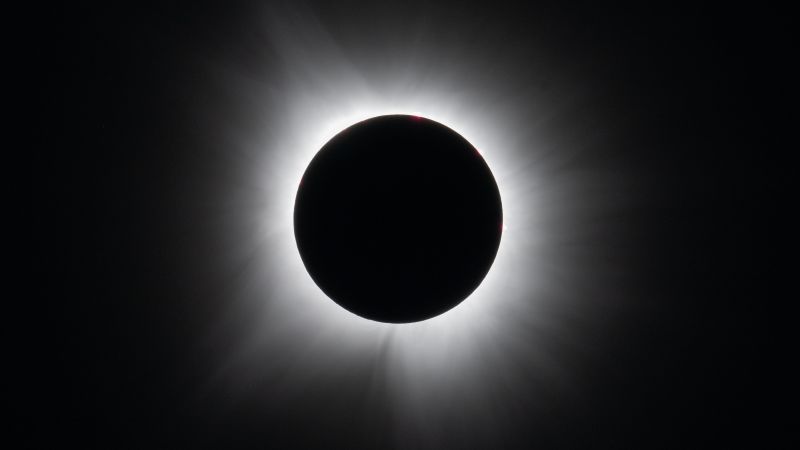
The Exclusive Spectacle: Unpacking the February 2026 'Ring of Fire' Solar Eclipse
As the celestial ballet continues its intricate dance, 2026 is set to begin with an extraordinary astronomical event: a “ring of fire” solar eclipse. Scheduled for Tuesday, February 17, this annular solar eclipse promises a breathtaking display, albeit for a highly exclusive audience. Deemed the first eclipse of the year, its rarity is underscored by the fact that only approximately 2% of the world's population will have the privilege of witnessing its full glory.
Understanding the 'Ring of Fire' Phenomenon
Unlike a total solar eclipse where the Moon completely obscures the Sun, an annular eclipse occurs when the Moon passes directly in front of the Sun but is too far from Earth to fully cover it. This distance means the Moon appears smaller than the Sun in our sky, resulting in a mesmerizing 'ring of fire' – a brilliant halo of sunlight encircling the Moon's silhouette. This ethereal display is a stark reminder of the precise cosmic alignment required for such events and the dynamic distances between our celestial neighbors.
The Path of Exclusivity: Antarctica and Beyond
The primary path of annularity for the February 2026 eclipse traverses the remote and majestic continent of Antarctica. This makes it a particularly challenging event for most casual observers to witness directly. Expedition cruises and scientific research stations in specific Antarctic regions will be ideally positioned for the best views. For the vast majority of the global population, the full 'ring of fire' will remain a distant marvel.
However, the spectacle won't be entirely confined to the icy expanses. A partial solar eclipse will be visible in broader regions, extending into parts of Africa and South America. Residents and visitors in South Africa, for instance, along with parts of other African nations and regions of South America, will experience the Moon taking a noticeable 'bite' out of the Sun. While not the full 'ring,' these partial views still offer a significant astronomical event and a chance to engage with the wonders of the cosmos, provided appropriate eye protection is used.
Scientific Insights from Celestial Alignments
Beyond the visual spectacle, solar eclipses provide invaluable opportunities for scientific research. Even annular eclipses, though less conducive to studying the solar corona than total eclipses, offer chances to observe phenomena like Baily's Beads (though less pronounced) and to conduct atmospheric studies. Researchers often deploy specialized equipment to measure changes in temperature, atmospheric pressure, and even animal behavior during these events, contributing to a deeper understanding of Earth's interaction with the Sun.
The precision required to predict and understand these events further underscores humanity's advancements in astronomy and celestial mechanics. Each eclipse serves as a powerful natural laboratory, allowing scientists to test models, refine predictions, and uncover new facets of our solar system's intricate workings.
Looking Ahead: The Cosmic Calendar of 2026
As the first eclipse of 2026, this 'ring of fire' sets the stage for what promises to be an active year for sky-gazers. While the February annular eclipse offers an exclusive viewing experience, it serves as a powerful reminder of the continuous, dynamic interplay of celestial bodies. For those unable to journey to the Antarctic or catch a partial view, this event builds anticipation for future eclipses and other astronomical phenomena that will grace our skies throughout the year and beyond.
The allure of a solar eclipse, whether total or annular, lies in its ability to momentarily halt our busy lives and draw our gaze skyward, connecting us to the grander scale of the universe. The February 2026 'ring of fire' is a testament to nature's awe-inspiring power, a rare and beautiful cosmic dance that, for a select few, will be an unforgettable experience.