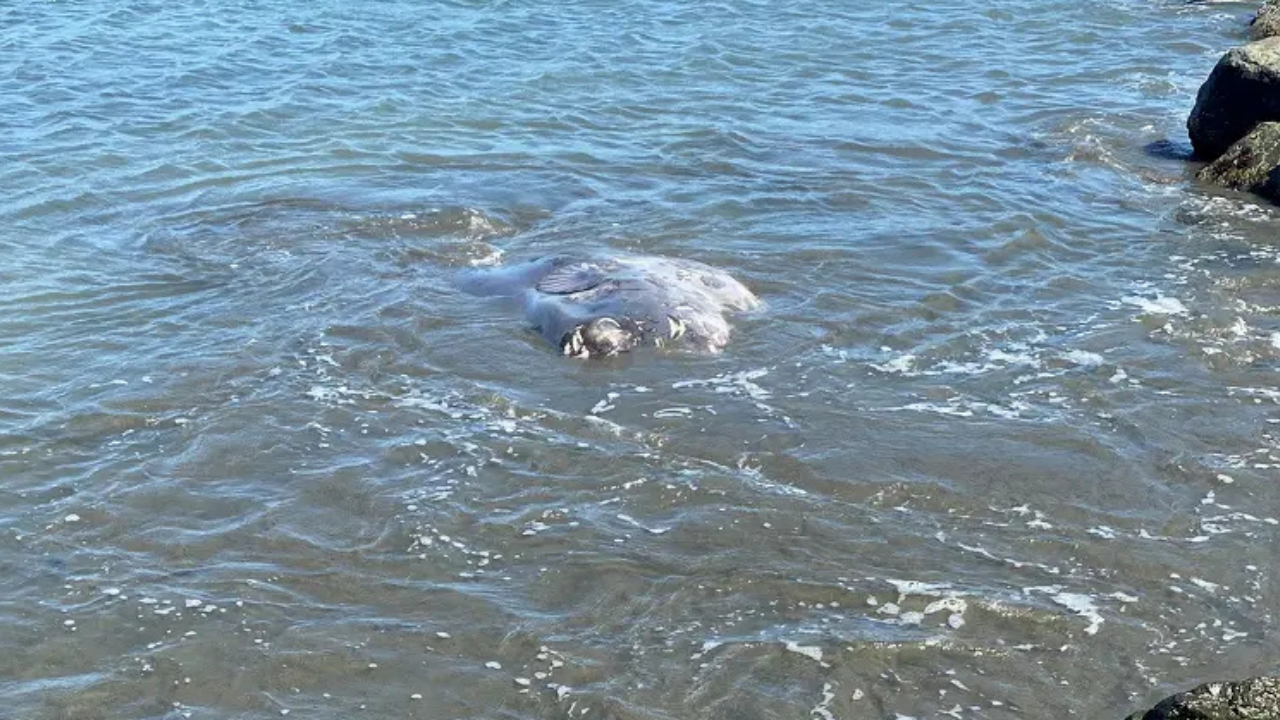
Ghost of the Deep: Unraveling the Mystery of a Rare Marine Enigma Washed Ashore
On a wind-swept Sunday in Northern California, what began as a routine community beach cleanup transformed into a scene of profound scientific wonder and public fascination. Nestled silently on the sand, exposed by the receding tide, lay a creature so rarely encountered by human eyes that its mere presence sparked a global conversation. This wasn't just another discovery; it was an unprecedented encounter with one of the planet's rarest marine animals, a ghost from the deep ocean now revealing its secrets on a U.S. shoreline.
The Enigmatic Visitor from the Abyss
The initial shock and awe among beachgoers quickly gave way to a call for scientific expertise. What lay before them was a specimen typically relegated to the dark, crushing pressures of the abyssal plain—an environment so alien to our own that it remains largely unexplored. These creatures are inherently rare, not just in their low population densities but in their elusiveness, living in conditions that make observation and study incredibly challenging. Their lives unfold in perpetual darkness, often at depths inaccessible to all but specialized submersibles, surviving on the sparsest of resources and adapting with unique biological mechanisms.
For this exceptionally rare animal to wash ashore presents a unique, albeit somber, opportunity. Scientists from various marine biology institutions were quickly mobilized to secure and analyze the specimen. Every detail, from its unusual morphology to its internal organs, offers invaluable data points that could redefine our understanding of deep-sea ecosystems, evolution, and the very limits of life on Earth.
A Window into Ocean Health: Ecological Context
The question that immediately arises is: what brought this deep-sea enigma to our shores? While natural causes such as old age, illness, or disorientation due to strong currents can lead to such strandings, scientists are also compelled to investigate potential anthropogenic factors. Is this an isolated incident, or a symptom of broader changes occurring within our oceans?
The deep ocean, once thought to be immutable, is increasingly affected by human activities. Climate change-driven shifts in ocean currents, warming waters, ocean acidification, acoustic pollution from shipping and sonar, deep-sea mining exploration, and plastic contamination could all play roles in disturbing these sensitive habitats. Researchers will conduct thorough necropsies, analyze oceanographic data preceding the stranding, and potentially examine the creature's tissues for pollutants, seeking clues that could link its fate to environmental disturbances. This rare find serves as a stark reminder of the interconnectedness of all marine environments, from the sunlit surface to the deepest trenches.
Scientific Goldmine: Implications for Research
The scientific bounty from this discovery is immense. Genomic studies of its DNA can unlock secrets about its evolutionary lineage, population genetics, and the unique adaptations it developed to thrive in extreme environments. Analysis of its stomach contents will provide crucial insights into deep-sea food webs, revealing what these creatures consume and how they fit into the abyssal ecosystem. Physiologists will study its unique biology to understand how it withstands immense pressure, cold temperatures, and limited light, potentially yielding breakthroughs in biomimicry or medicine.
Furthermore, studying this specimen can aid in habitat mapping and conservation efforts for deep-sea species. Understanding where such creatures live, their migratory patterns, and their vulnerabilities is crucial for protecting these largely unknown ecosystems from future threats. Every minute detail extracted from this animal contributes to a larger tapestry of knowledge about our planet's most mysterious domain.
Conservation in the Deep: Future Challenges
This profound discovery underscores a paradox: often, our first detailed encounters with deep-sea creatures occur when they are in distress or deceased. The vastness and inaccessibility of the deep ocean pose formidable challenges for conservation. How do we protect species and habitats that we barely understand and rarely see?
The answer lies in intensified research, increased funding for deep-sea exploration, and robust international cooperation. Protecting vulnerable deep-sea ecosystems from emerging threats like climate change, pollution, and the rapidly advancing deep-sea mining industry requires a concerted global effort. This unique stranding serves as a powerful call to action, demanding greater public awareness and stewardship for the 'last frontier' on Earth. It urges policymakers to enact proactive measures to safeguard these pristine, yet vulnerable, environments before it's too late.
NovaPress's Call to Action
At NovaPress, we believe this discovery is more than a fleeting curiosity; it's a profound reminder of the unfathomable wonders and delicate balance of our planet's largest habitat. The appearance of this deep-sea creature on a California beach compels us to reflect on our responsibility to protect the global ocean. We must support marine scientists, advocate for sustainable practices, and demand comprehensive ocean health initiatives. The mysteries of the deep are intrinsically linked to the health of our planet, and by understanding them, we better understand ourselves.
Let this 'ghost from the deep' be a beacon, guiding us toward a future where curiosity thrives, ecosystems are preserved, and the secrets of the ocean are revealed through respectful exploration, not through distress. Its story, though silently told on a sandy beach, resonates with an urgent message for all humanity.