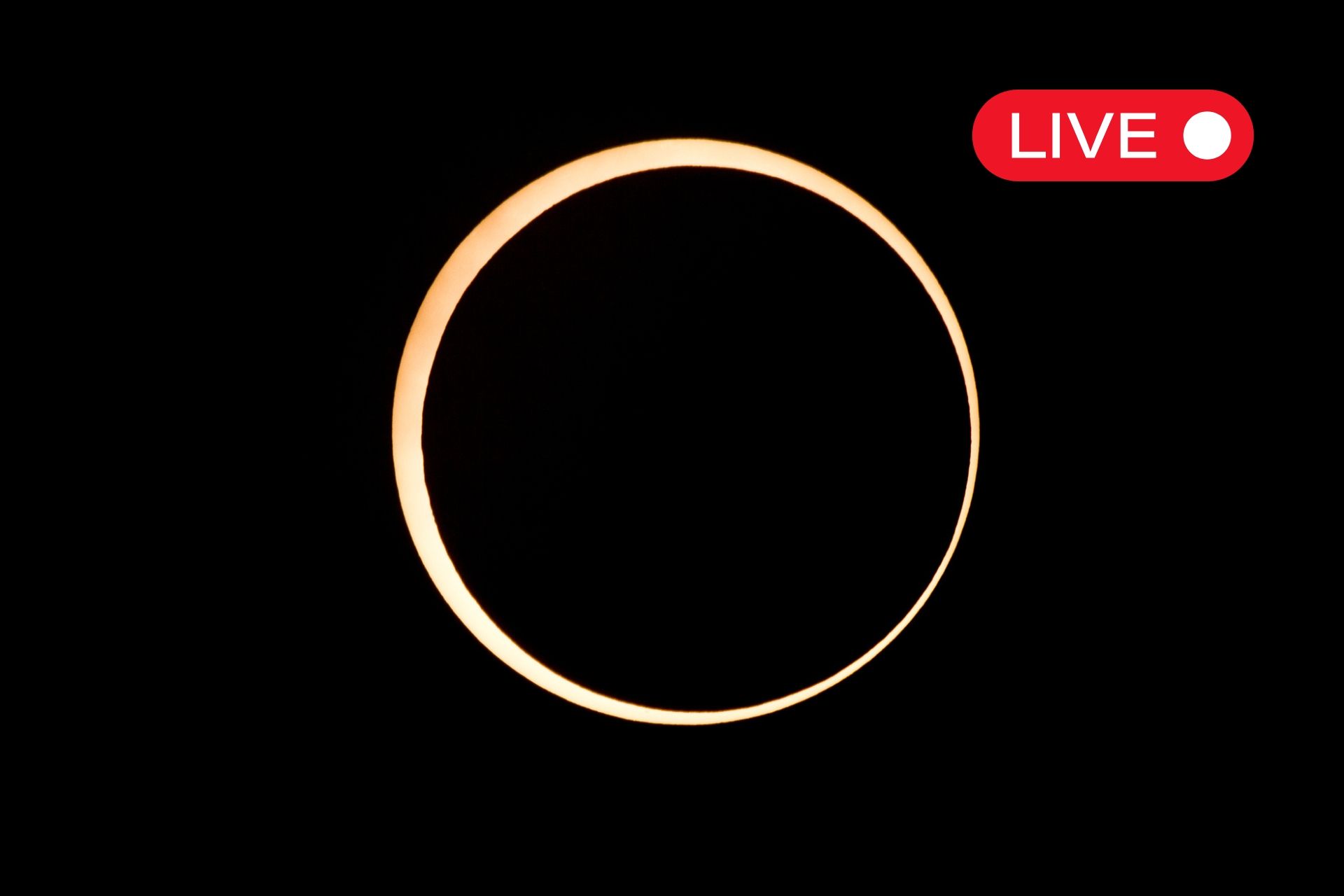
Beyond the Shadow: A Deep Dive into the 2026 'Ring of Fire' Annular Solar Eclipse
As the celestial ballet continues its timeless performance, the world eagerly anticipates one of its most captivating acts: the annular solar eclipse scheduled for February 17, 2026. This isn't just another astronomical event; it's a spectacle poised to transform our sun into a breathtaking "ring of fire," offering both a visual feast and invaluable scientific insights. At NovaPress, we delve deep into what makes this particular phenomenon so significant, its scientific underpinnings, and the profound implications for both stargazers and researchers.
Understanding the Annular Eclipse: A Dance of Distances
Unlike a total solar eclipse where the Moon completely obscures the Sun, an annular eclipse occurs when the Moon is farther from Earth in its elliptical orbit. This greater distance means the Moon appears smaller in the sky, unable to fully cover the Sun's disc. The result is a stunning halo of sunlight—a fiery annulus—around the Moon's silhouette. This precise alignment and the unique orbital mechanics of our solar system are what create this awe-inspiring visual effect, a testament to the predictable yet profound rhythms of space.
The Science Beneath the Spectacle
While the aesthetic appeal of a "ring of fire" is undeniable, annular eclipses also present unique scientific opportunities. Astronomers leverage these moments to study the outermost layers of the Sun, known as the corona, which is usually masked by the Sun's blinding brightness. Although not as comprehensive as during a total eclipse, the partial obscuration still allows for observations of solar features close to the limb, helping scientists understand solar flares, coronal mass ejections, and the dynamics of our star's magnetic field. Furthermore, these events are crucial for refining our understanding of orbital mechanics and the precise measurements of celestial bodies.
A Glimpse into Future Implications and Public Engagement
Eclipses, whether total or annular, consistently ignite public interest in astronomy and science. The 2026 "ring of fire" will undoubtedly inspire a new generation of sky-watchers and potential scientists. Such events underscore the importance of scientific literacy and safe observation practices. As we approach T-2 days (as per early reports, though the event is in 2026, the provided content contextually refers to this time leading up to it), educational campaigns will be vital to ensure viewers understand the necessity of certified solar filters to protect their eyes from permanent damage.
Looking beyond 2026, the study of eclipses continues to evolve. Future missions and advanced telescopic technologies promise even deeper insights into the Sun-Earth-Moon system. Each eclipse provides a data point, a confirmation, or a new question for researchers probing the mysteries of our universe. The 'ring of fire' is more than just a fleeting beauty; it's a critical component in humanity's ongoing quest to understand its place in the cosmos.
Prepare for the Cosmic Show
As February 17, 2026, draws nearer, NovaPress encourages everyone to mark their calendars and prepare for this extraordinary celestial event. Whether you're a seasoned astronomer or a curious observer, the annular solar eclipse promises a moment of shared wonder, a reminder of the universe's incredible power and beauty. Remember to prioritize safety above all else to fully enjoy this cosmic spectacle. Stay tuned to NovaPress for live updates and further in-depth analysis as we count down to the "ring of fire."