Seamless Handover in Orbit: New Crew Arrives at ISS, Securing Humanity's Continuous Presence
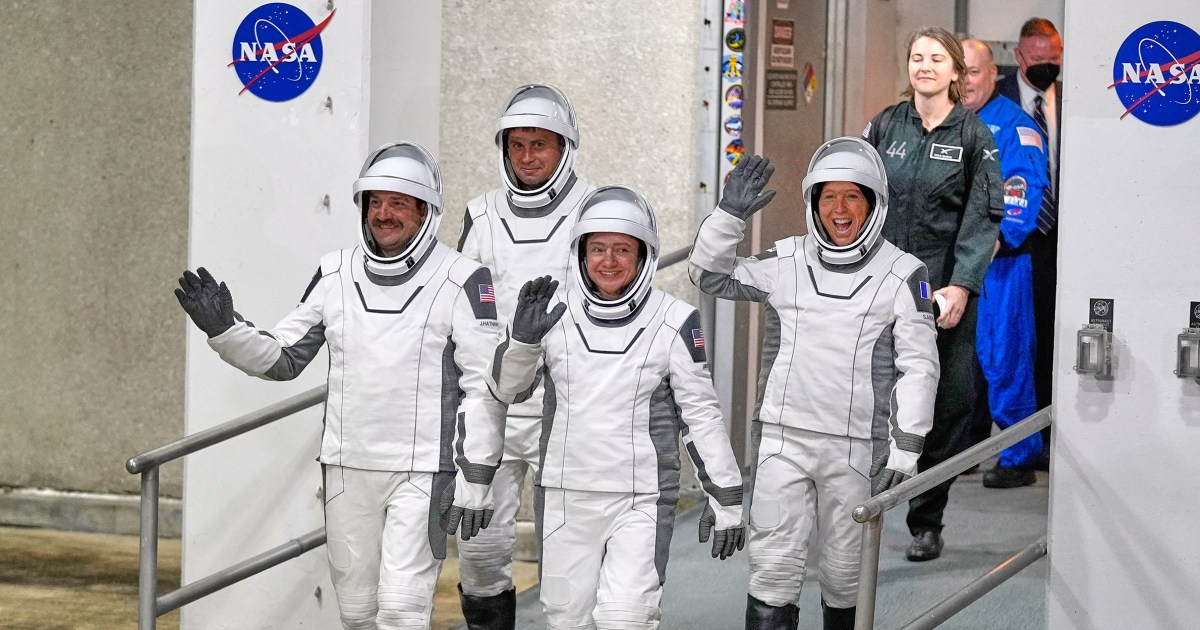
The International Space Station (ISS), humanity's orbital outpost, once again hums with renewed energy and purpose as a new quartet of astronauts successfully docked and entered the station on Saturday. This arrival marks a critical and welcome replenishment of the crew, ensuring the continuity of vital scientific research and the diligent maintenance of one of mankind's most ambitious engineering feats. Following the swift, albeit planned, departure of the prior crew, this seamless handover underscores the rigorous planning and resilient nature of international space operations.
A Welcome Arrival: Sustaining the Orbital Laboratory
The four new crew members, including two seasoned astronauts from the United States, were met with warm greetings from their predecessors, a tradition that symbolizes the unique camaraderie of those who venture beyond Earth's confines. Their arrival isn't merely a change of shift; it's the lifeblood of the ISS, ensuring that the station remains fully operational, its experiments continue uninterrupted, and its systems are meticulously managed. Without a constant human presence, the orbital laboratory, a testament to global cooperation and scientific ambition, cannot fulfill its mission.
The Crucial Role of Continuity in Space Exploration
Maintaining a continuous human presence in low-Earth orbit is paramount for several reasons. Firstly, the ISS serves as a unique microgravity research platform, enabling studies in biology, physics, astronomy, and human health that are impossible to conduct on Earth. These experiments are not episodic; many require long-term observation and consistent tending. The arrival of a new crew ensures that these critical scientific endeavors, often spanning months or even years, proceed without interruption, maximizing the return on investment for participating nations.
Secondly, the ISS is a complex piece of machinery, roughly the size of a football field, orbiting at 17,500 miles per hour. It requires constant monitoring, maintenance, and occasional repairs. Astronauts are the ultimate problem-solvers, capable of addressing issues that remote control cannot, from faulty equipment to performing intricate spacewalks. The presence of a full, capable crew guarantees the station's health and safety, safeguarding billions of dollars in infrastructure and decades of collective human effort.
Beyond the Horizon: The ISS as a Stepping Stone
While the immediate focus is on the operational success of the ISS, each crew rotation also serves a larger purpose in the grand narrative of human space exploration. The station is not just a destination; it's a proving ground. Technologies, procedures, and physiological responses developed and observed on the ISS are directly applicable to future long-duration missions to the Moon and Mars. Astronauts learn to live and work in confined, isolated environments, manage resources, and adapt to the challenges of spaceflight – lessons indispensable for future interplanetary journeys.
The diversity of the new crew, emblematic of the international partnerships that built and sustain the ISS, further highlights its role as a beacon of collaboration. In an increasingly complex world, the ISS stands as a powerful symbol of nations uniting for a common scientific and exploratory goal, transcending geopolitical boundaries. This latest crew exchange reaffirms that commitment, promising new discoveries and a continued push against the frontiers of human knowledge.
The Enduring Spirit of Exploration
As the new crew settles into their new home 250 miles above Earth, they carry forward a legacy of exploration, innovation, and international partnership. Their presence ensures that the lights of the ISS remain on, its laboratories active, and its potential for groundbreaking discoveries fully realized. This Saturday's arrival wasn't just a successful docking; it was a reaffirmation of humanity's enduring drive to explore, understand, and ultimately, to reach for the stars.