Mars' Organic Riddle: NASA Grapples with Evidence Beyond Abiotic Explanations
For decades, the tantalizing question of life beyond Earth has driven scientific exploration. Now, data from NASA's Curiosity rover on Mars is pushing the boundaries of our understanding, with researchers openly admitting they're running out of non-biological explanations for complex organic molecules found on the Red Planet. This isn't just another discovery; it's a profound challenge to our long-held assumptions about Mars and the ubiquity of life in the cosmos.
Curiosity's Groundbreaking Find
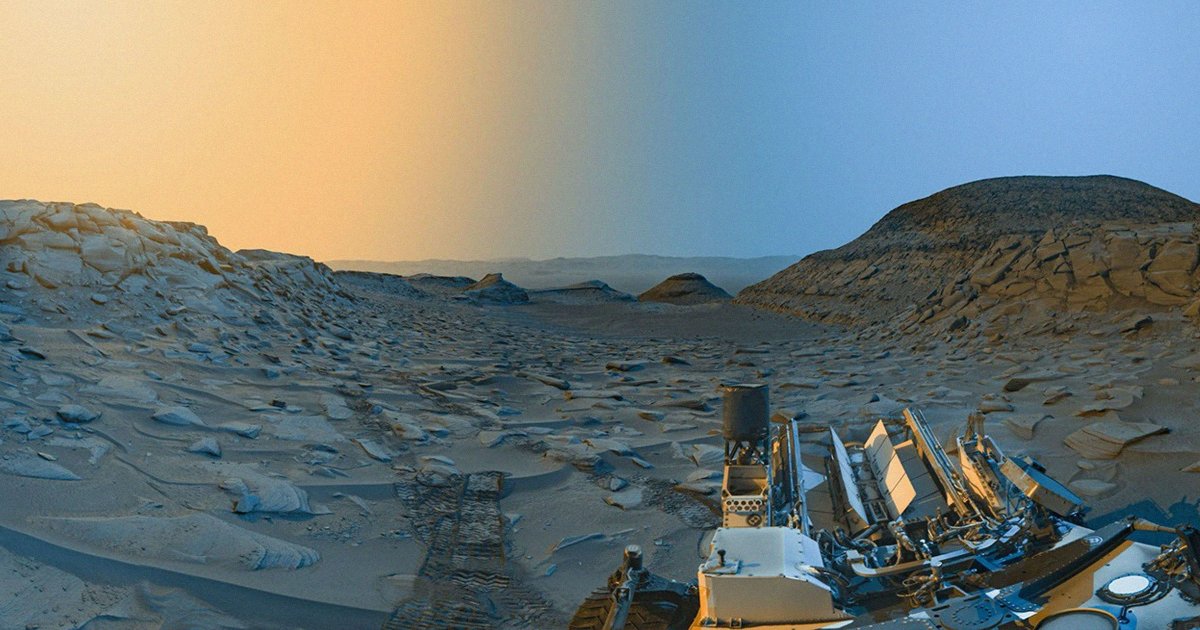
The story begins last year, when the intrepid Curiosity rover, meticulously exploring the Gale Crater – a suspected ancient lake bed – bored into the Martian surface. Its instruments detected long-chain organic molecules, specifically alkanes. These aren't just simple carbon compounds; they are intricate structures that, on Earth, serve as fundamental chemical building blocks for biological processes. Their presence in an environment once thought to be conducive to life immediately piqued the interest of astrobiologists.
What Are Alkanes and Why Do They Matter?
Alkanes are saturated hydrocarbons, meaning they consist solely of single-bonded carbon and hydrogen atoms. While some abiotic processes (non-biological) can produce simple organic molecules, the complexity and specific arrangements of the alkanes found by Curiosity are proving difficult to reconcile with purely geological or cosmic explanations. On Earth, similar long-chain alkanes are commonly associated with the decomposition of biological matter, like ancient plants or microbes, forming crude oil and natural gas.
The Scientific Conundrum: Beyond Abiotic Explanations
The core of the current scientific debate, highlighted by the Futurism report, is that these Martian alkanes "cannot be readily explained" by non-biological processes alone. Researchers are meticulously exploring every known abiotic pathway – from meteorite impacts carrying organic material to volcanic activity or hydrothermal synthesis. However, the sheer quantity, diversity, and structural complexity of the molecules unearthed by Curiosity are pushing these non-biological hypotheses to their limits. This doesn't definitively prove life, but it significantly narrows the field of alternative explanations, strengthening the biological case.
The Martian Context: A Habitable Past?
It's crucial to remember that Curiosity's exploration site, Gale Crater, was once a vast lake. This ancient environment provided liquid water, essential chemical elements, and energy sources – all key ingredients for life as we know it. Finding complex organic molecules within such a historically habitable zone further strengthens the argument that these molecules could be biosignatures, remnants of past microbial life that thrived when Mars was a warmer, wetter world.
The Path Forward: Confirming Life's Signatures
While compelling, the current findings are not definitive proof of Martian life. That benchmark requires the detection of specific isotopic ratios, chiral signatures (handedness of molecules), or direct cellular structures. However, this discovery provides critical impetus for future missions. NASA's Perseverance rover is currently collecting samples that will be returned to Earth, offering unprecedented opportunities for detailed laboratory analysis that Curiosity's onboard instruments cannot provide.
The upcoming analysis of returned Martian samples will be pivotal. Scientists will employ advanced techniques to search for definitive biosignatures that could confirm a biological origin for these alkanes. The implications of such a confirmation would be monumental, transforming our understanding of life's prevalence in the universe and potentially reshaping humanity's place within it.
Conclusion: A New Era of Astrobiology
The Curiosity rover's discovery of complex organic molecules that defy easy non-biological explanations marks a significant milestone in astrobiology. It pushes the scientific community closer to acknowledging the potential for ancient life on Mars and underscores the urgency of ongoing and future missions. As NovaPress continues to follow these groundbreaking developments, one thing is clear: the Red Planet is holding secrets that could soon rewrite the textbooks on life itself. The question is no longer if Mars harbored life, but when and what form it took, with each new discovery bringing us closer to a definitive answer.