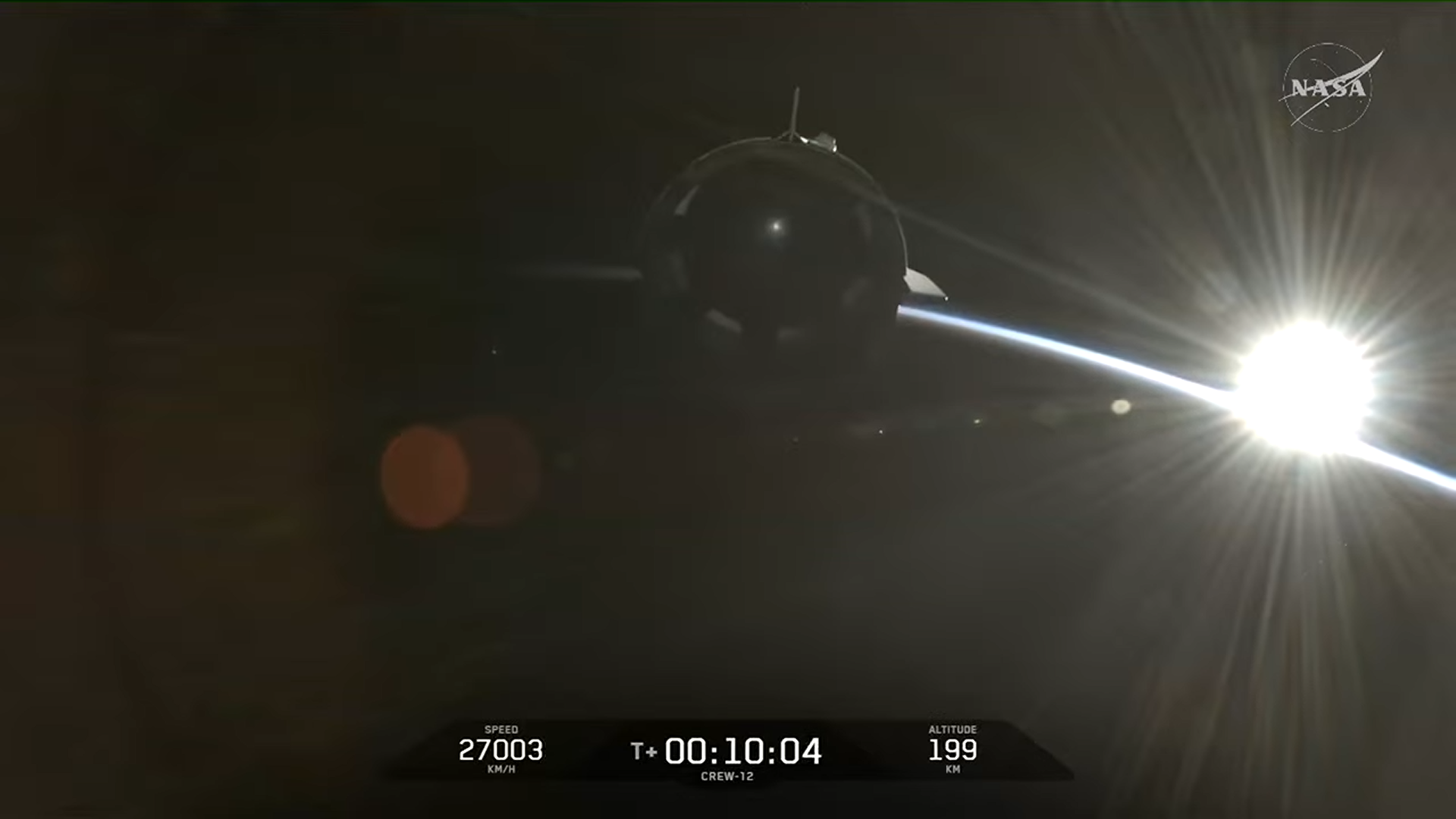
Valentine's Day in Orbit: Crew-12's Historic Docking Ignites Future of Space Exploration
As the world celebrated Valentine's Day on February 14, 2026, a different kind of rendezvous captured the imagination of millions: the successful docking of NASA and SpaceX's Crew-12 mission to the International Space Station (ISS). This isn't just another routine spaceflight; it's a profound affirmation of humanity's unwavering commitment to discovery, a testament to technological prowess, and a heartwarming symbol of collaboration reaching across the cosmos. For "Space Fans" everywhere, this Valentine's Day dawned with the promise of a match truly made in the heavens.
The Crew-12 Mission: A Symphony of Precision and Progress
The Crew-12 mission represents the latest triumph in the ongoing partnership between NASA and SpaceX, a collaboration that has redefined human spaceflight. Aboard the Dragon spacecraft, a crew of elite astronauts embarked on a journey to the orbital outpost, carrying with them not just supplies and equipment, but also the hopes and ambitions of a generation. Their docking, executed with breathtaking precision, underscores the maturity and reliability of commercial crew transportation systems. Each successive mission builds upon a foundation of engineering excellence and rigorous safety protocols, making travel to low-Earth orbit increasingly routine, yet no less spectacular.
Commercial Spaceflight: The Backbone of Orbital Operations
The era of exclusive government-led space missions has gracefully transitioned, giving way to a dynamic ecosystem where private companies like SpaceX play a pivotal role. The Commercial Crew Program, pioneered by NASA, empowered companies to develop and operate vehicles capable of transporting astronauts to the ISS. This strategic shift has not only spurred innovation and driven down costs but has also dramatically increased America's access to space. SpaceX's Dragon spacecraft, a marvel of reusable technology, stands as a testament to this paradigm shift, demonstrating a robust capability to deliver both cargo and crew safely and efficiently. The Crew-12 mission is a powerful reminder that commercial space is not just a concept; it is the very backbone of modern orbital operations.
The ISS: A Beacon of Science and Unity
At the heart of these frequent crew rotations lies the International Space Station, a unique microgravity laboratory orbiting 250 miles above Earth. For over two decades, the ISS has been a continuous human presence in space, facilitating groundbreaking scientific research across diverse fields – from materials science and human physiology to astrophysics and environmental monitoring. The knowledge gained from these experiments is invaluable, not only for understanding our universe and preparing for deeper space missions but also for improving life on Earth. Moreover, the ISS stands as an enduring symbol of international cooperation, a collaborative effort involving multiple nations transcending geopolitical boundaries for the common good of scientific discovery. The arrival of Crew-12 ensures the continuation of this vital work, extending the station's legacy as a true beacon of unity and scientific endeavor.
Beyond Low-Earth Orbit: Paving the Way for Humanity's Future
While the Crew-12 mission focuses on supporting the ISS, its implications stretch far beyond low-Earth orbit. The experience and technologies honed through programs like Commercial Crew are directly contributing to NASA's Artemis program, aiming to return humans to the Moon and eventually establish a sustainable lunar presence. SpaceX's broader ambitions, including Starship development, align with this future, envisioning humanity as a multi-planetary species. Each successful docking, each scientific experiment, and each moment an astronaut spends in orbit builds the cumulative knowledge and capabilities required for these grander voyages. The routine nature of these missions today will be the foundation for the extraordinary journeys of tomorrow.
A Valentine's Day "Match Made in the Heavens"
The serendipitous timing of the Crew-12 docking on Valentine's Day adds a touch of poetic romance to an already awe-inspiring event. It's a "match made in the heavens" not just for the Dragon spacecraft and the ISS, but for humanity's enduring love affair with the cosmos. It's a reminder that exploration is a fundamental human drive, fueled by curiosity, courage, and an insatiable desire to push boundaries. As the crew settles into their new orbital home, they carry with them the spirit of this unique Valentine's Day, a date etched in the annals of space history as a moment where technology, ambition, and a touch of cosmic romance beautifully converged. The stars, indeed, are not the limit, but merely the beginning.