Beneath the Cuts: Why the Fed's Latest Move Signals Deeper Divisions and a Murky Economic Future
By NovaPress Editorial Board
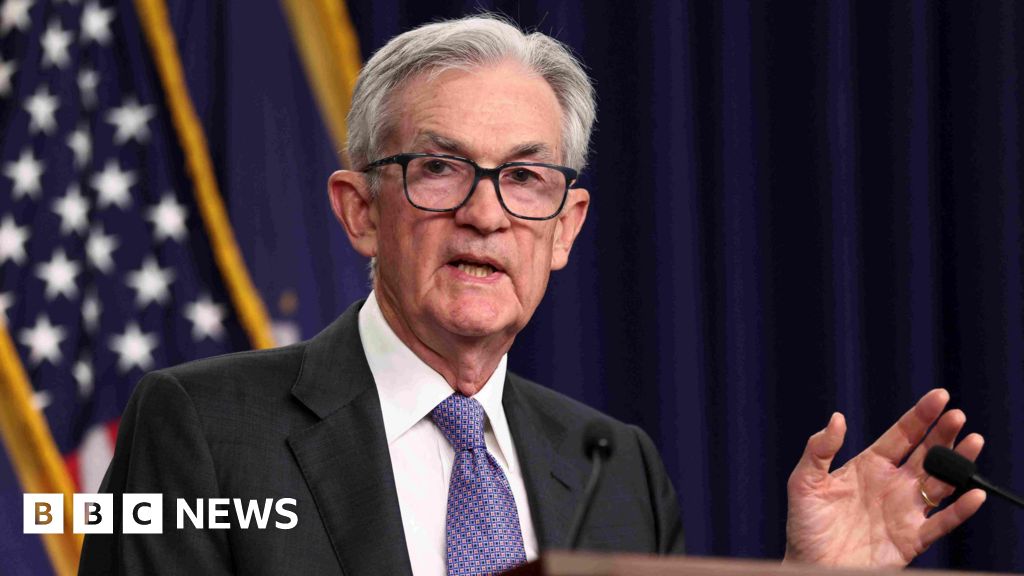
In a move anticipated by many, the US Federal Reserve delivered its third interest rate cut this year, nudging the federal funds rate target down once more. While seemingly a straightforward decision aimed at bolstering economic growth amid global uncertainties, the language accompanying the announcement from Chair Jerome Powell, specifically his emphasis on a 'wait and see' approach and the 'murky' outlook for future easing, has ignited a fresh wave of debate among economists and policymakers. This isn't just about a 25-basis-point reduction; it's about the delicate balancing act within the Fed, the diverging views on the economy's health, and the increasingly limited tools at its disposal.
The Rationale for Easing: Global Headwinds and Domestic Concerns
The Fed's earlier rate cuts this year were largely a response to mounting global trade tensions, sluggish manufacturing data, and persistently low inflation. Policymakers aimed to provide an insurance policy against a potential economic downturn, giving businesses and consumers more incentive to borrow and invest. Proponents of these cuts argued that acting preemptively could prevent a more severe recession, especially given the historical context of late policy responses. However, as the third cut rolled out, the internal consensus appears to be fraying.
Internal Divisions: Hawks vs. Doves at a Crossroads
While the overall decision to cut rates passed, it wasn't unanimous, highlighting the deep divisions within the Federal Open Market Committee (FOMC). A faction of 'hawks' within the Fed believes that the economy is fundamentally sound, with a robust labor market and resilient consumer spending. They worry that continued easing could overheat the economy, inflate asset bubbles, and deplete the Fed's ammunition for a true crisis. For them, these successive cuts might be sending the wrong signal, suggesting a weakness that isn't fully present.
Conversely, the 'doves' maintain that inflation remains stubbornly below the Fed's 2% target, and global risks, particularly from trade disputes and geopolitical instability, are far from resolved. They argue that proactive easing is essential to sustain the expansion and cushion against unforeseen shocks. Chair Powell's statements suggest an attempt to bridge this divide, acknowledging the current economic strength while leaving the door open – albeit narrowly – for future action if conditions worsen. This tightrope walk is evident in his 'significant shift' comment regarding the bar for future rate hikes, implying a higher threshold would be needed to reverse course.
Implications for the Road Ahead: A 'Wait and See' Economy
- Businesses: While lower borrowing costs are generally welcomed, the broader economic uncertainty may prevent a surge in investment. Businesses are likely to remain cautious, prioritizing efficiency over expansion until a clearer outlook emerges.
- Consumers: Mortgage rates and other loan products may see slight reductions. However, consumer spending, the backbone of the US economy, is more heavily influenced by job security, wage growth, and confidence in the future rather than marginal rate adjustments.
- Financial Markets: The initial market reaction tends to be positive to rate cuts. However, the 'murky' outlook could introduce volatility. Investors will be keenly watching future economic data for any signs that would push the Fed off its current 'wait and see' stance. The dollar's strength and global capital flows could also be impacted by this perceived policy shift.
- Global Economy: US monetary policy has significant spillover effects. A pause in US easing, coupled with continued easing by other central banks, could strengthen the dollar, potentially creating headwinds for export-oriented economies.
The Fed's Diminishing Ammunition
One of the underlying concerns is the dwindling policy space. With the federal funds rate now hovering in a historically low range, the Fed has less room to cut rates aggressively should a significant economic downturn materialize. This forces policymakers to consider unconventional tools, which carry their own set of risks and uncertainties. The current 'wait and see' posture might be an attempt to conserve ammunition, signaling that significant further easing would require a palpable deterioration of economic conditions.
Conclusion: Navigating Uncharted Waters
The Fed's third rate cut of the year represents more than just an adjustment to borrowing costs; it symbolizes the intricate challenge facing monetary policymakers. Amid a mix of resilient domestic demand and persistent global risks, the central bank is walking a tightrope, trying to maintain stability without overreacting or underperforming. The internal divisions underscore the genuine uncertainty about the economy's trajectory. As the 'NovaPress' analysis suggests, the future direction of US monetary policy remains profoundly uncertain, leaving businesses, consumers, and investors to navigate an economic landscape where clarity is a rare commodity. The coming months will be a critical test of the Fed's ability to adapt and communicate its strategy effectively in an increasingly complex world.