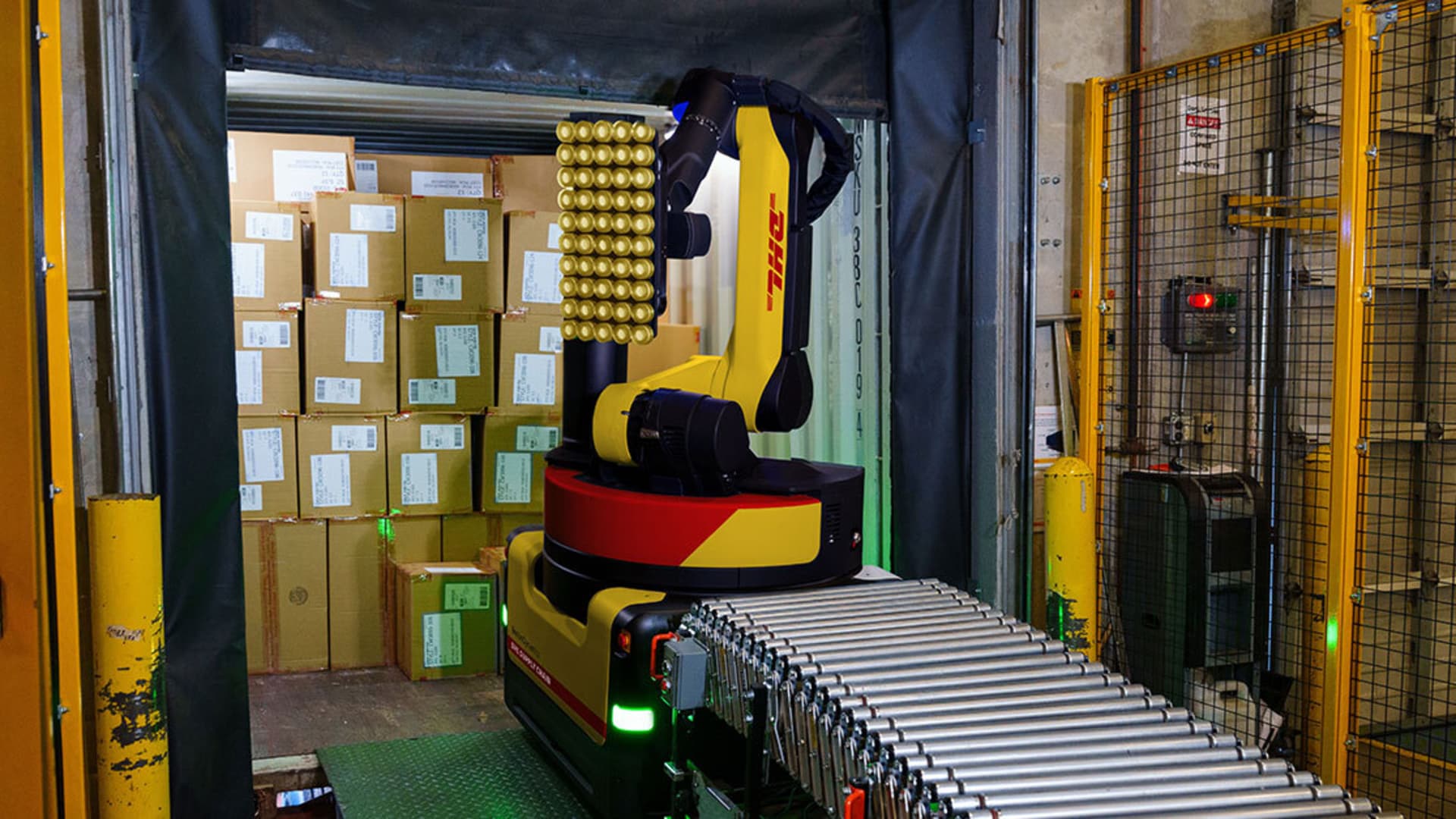
The intricate dance of global commerce relies heavily on an unseen hero: the warehouse. For decades, these massive hubs of activity have been powered by human hands and feet, a testament to sheer physical endurance and meticulous organization. Yet, a silent revolution is underway, driven by the relentless pursuit of efficiency and cost reduction. Giants like UPS, FedEx, and DHL are no longer just exploring automation; they are embedding it deep within the very fabric of their warehouse operations, fundamentally transforming how our goods move from production to doorstep.
The Human Marathon: A Pre-Automation Reality
Before the advent of widespread automation, a typical day for a warehouse worker at a major logistics company like DHL was an exercise in extreme physical exertion. It wasn't uncommon for employees to log distances equivalent to a half marathon each day. Imagine the repetitive motion of classifying packages, the constant bending and lifting to pick items, and the strenuous effort of moving them across football-field-sized facilities. This manual intensity, while building resilient workforces, also presented significant challenges:
- Physical Strain & Injury Risk: High potential for musculoskeletal injuries due to repetitive tasks and heavy lifting.
- Efficiency Ceilings: Human speed and endurance have natural limits, impacting throughput and scalability, especially during peak seasons.
- Labor Costs: Significant operational expenditure tied to wages, benefits, and managing a large, physically demanding workforce.
- Error Rates: Even the most diligent human can make mistakes, leading to mispicks, incorrect classifications, and delays.
Robots on the Rise: A New Era of Logistics
Today, the landscape is rapidly shifting. The image of the solitary human worker navigating vast aisles is increasingly being complemented, and in some cases replaced, by autonomous robot fleets. These intelligent machines are now performing tasks that were once the exclusive domain of human labor, working tirelessly, accurately, and without the need for breaks.
Companies are deploying a diverse array of automation technologies:
- Autonomous Mobile Robots (AMRs): Like the DHL Autonomous Robot mentioned, these intelligent vehicles navigate warehouse floors independently, transporting goods from one point to another, often working collaboratively with human counterparts.
- Automated Storage and Retrieval Systems (ASRS): Vertical storage units and robotic cranes that can store and retrieve items with incredible speed and density, maximizing cubic space utilization.
- Robotic Pickers: Advanced robotic arms equipped with computer vision and AI algorithms that can identify, grasp, and sort individual items with precision, even handling irregular shapes.
- Automated Guided Vehicles (AGVs): Similar to AMRs but often follow fixed paths, used for repetitive, high-volume material handling.
- AI-Powered Sorting and Classification: Sophisticated systems that use machine learning to rapidly scan, identify, and sort packages to their correct destinations, far surpassing human capabilities in speed and accuracy.
Beyond Efficiency: The Strategic Imperatives
While cost reduction and increased efficiency are primary drivers, the strategic motivations for adopting automation run deeper. The global supply chain faces unprecedented pressures: surging e-commerce demands, labor shortages, and the constant need for faster delivery times. Automation provides critical solutions:
- Scalability: Automated systems can be scaled up or down more easily to meet fluctuating demand, crucial during peak seasons like holidays.
- Accuracy & Reduced Errors: Robots perform repetitive tasks with near-perfect accuracy, significantly cutting down on mis-shipments and returns.
- 24/7 Operations: Machines don't tire, enabling round-the-clock operation and maximizing throughput.
- Improved Worker Safety: Shifting hazardous or physically demanding tasks to robots reduces workplace injuries, allowing humans to focus on supervision, maintenance, and more complex problem-solving.
- Data & Analytics: Automated systems generate vast amounts of operational data, offering unprecedented insights for continuous optimization and predictive maintenance.
The Future of Work: Evolution, Not Eradication
The rise of warehouse automation inevitably sparks conversations about the future of human labor. While some manual roles may diminish, the consensus among industry leaders is an evolution of the workforce, not its eradication. Workers previously engaged in strenuous physical tasks are being upskilled for roles in:
- Robot Maintenance & Repair: Technicians to keep the automated fleet operational.
- System Monitoring & Optimization: Overseeing automated processes, identifying bottlenecks, and refining algorithms.
- Data Analysis: Interpreting the data generated by automation to drive strategic decisions.
- Complex Problem Solving: Addressing unique situations that require human intuition and adaptability.
This shift allows logistics companies to retain valuable institutional knowledge while empowering their employees with more sophisticated, less physically demanding roles.
The Road Ahead: Smarter, Faster, More Resilient
The automation of warehouses is more than just a technological upgrade; it's a fundamental recalibration of the global supply chain. As e-commerce continues its meteoric rise and consumer expectations for speed and accuracy intensify, the logistical backbone must become smarter, faster, and more resilient. UPS, FedEx, DHL, and their peers are leading this charge, transforming sweat-soaked floors into meticulously orchestrated robotic ballets. The future of logistics promises not just packages delivered, but a paradigm shift in how goods flow across our interconnected world, powered by the silent, tireless work of machines.