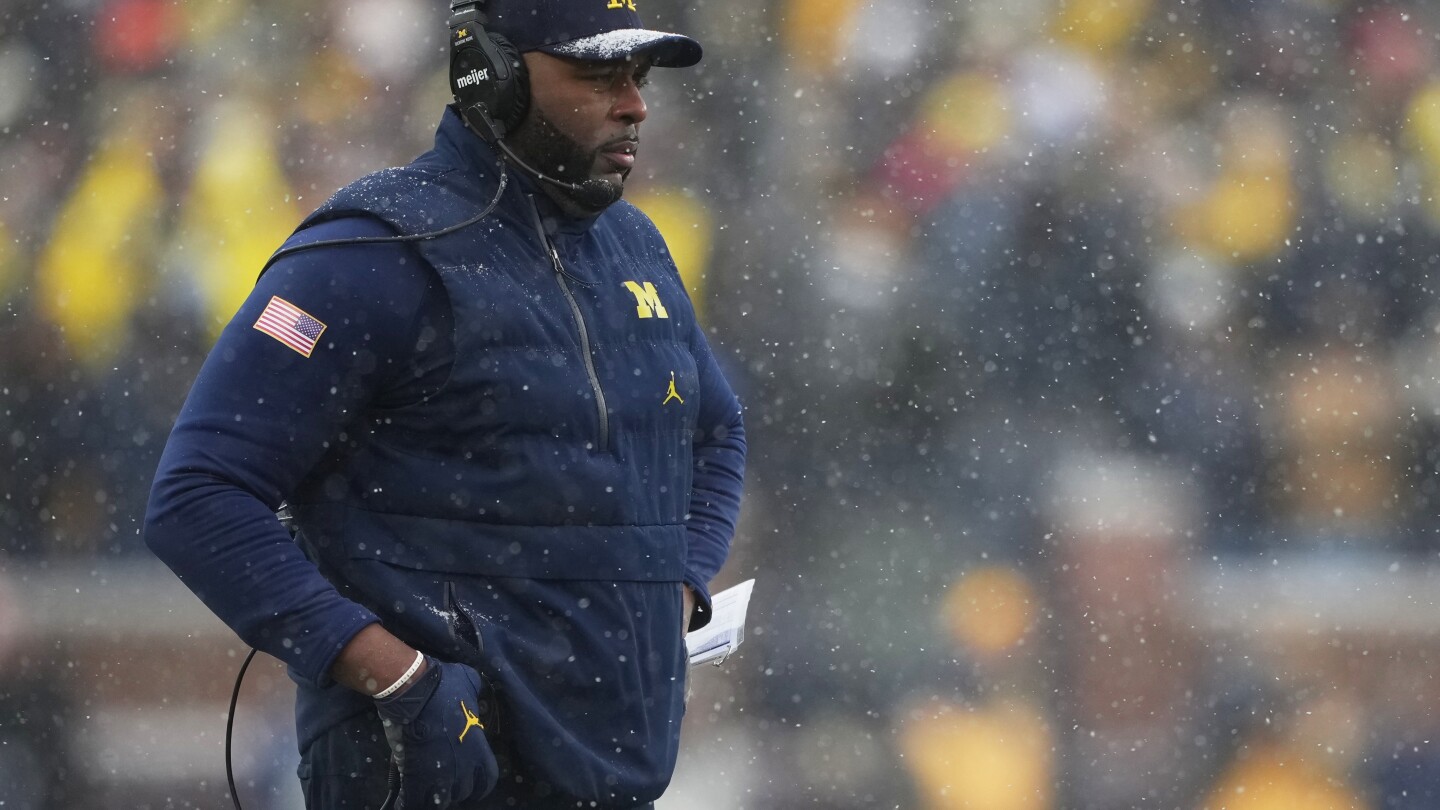
From the Sidelines to a Cell: The Shocking Downfall of Michigan's Sherrone Moore
By The NovaPress Editorial Board
ANN ARBOR, MI – In a stunning turn of events that has sent shockwaves through the collegiate sports world, former Michigan football coach Sherrone Moore was reportedly jailed on Wednesday, mere hours after the University of Michigan announced his termination. The swift and severe consequences underscore a deeper narrative of accountability and the precarious nature of high-profile positions within institutional frameworks.
The Immediate Aftermath: Firing and Detention
The initial announcement from the University of Michigan cited an “inappropriate relationship with a staff member” as the grounds for Moore's dismissal. While the university's statement was terse, the implications for an institution as prominent as Michigan are profound, raising immediate questions about workplace conduct, power dynamics, and ethical boundaries. Yet, even as the news of his firing began to circulate, a far more ominous development emerged: court records indicated Moore's detention, transforming a professional crisis into a potential legal one within the same day.
A Star's Trajectory Interrupted
Sherrone Moore had been a significant figure within the Michigan football program, having served in various coaching roles, most notably as the offensive coordinator. His contributions were instrumental in the team's recent successes, and many saw him as a rising star, potentially destined for a head coaching role. This rapid ascent makes his precipitous fall all the more dramatic, serving as a stark reminder that even those at the pinnacle of their careers are not exempt from the consequences of their actions, particularly when those actions cross established institutional lines.
The Nature of the Allegation: 'Inappropriate Relationship'
The term “inappropriate relationship with a staff member” is broad but typically encompasses a spectrum of conduct violations. In an academic and athletic environment, such relationships often raise concerns about conflicts of interest, abuse of power, and potential harassment, especially when one party holds a position of authority over the other. Universities are increasingly vigilant in enforcing strict policies to prevent such situations, driven by a commitment to maintaining a safe and equitable workplace, as well as adherence to federal regulations like Title IX, which prohibits sex-based discrimination.
The Legal Labyrinth: Beyond Employment Termination
While the university's decision addresses the employment aspect of the situation, Moore's reported jailing introduces a critical legal dimension. The specific charges or reasons for his detention were not immediately clear from the initial reports. However, being jailed suggests potential criminal allegations that extend beyond a mere breach of employment contract. This could range from issues directly related to the alleged relationship – if it involved elements like harassment, coercion, or non-consensual acts – to unrelated matters that have come to light. The legal proceedings that will undoubtedly follow will be crucial in illuminating the full scope of the situation and determining Moore's future.
Repercussions for Michigan Football and the University
For the University of Michigan and its storied football program, this incident creates significant challenges. Beyond the immediate staffing void, the scandal impacts institutional reputation, recruiting efforts, and team morale. High-profile incidents like these often lead to intense scrutiny from media, alumni, and prospective student-athletes. The university will need to navigate this public relations crisis meticulously, demonstrating a clear commitment to integrity and accountability to mitigate long-term damage.
Broader Context: Ethics in Collegiate Athletics
This event is a stark reminder of the ethical responsibilities inherent in leadership roles within collegiate athletics. Coaches, as figures of authority and public faces of their institutions, are held to exceptionally high standards of conduct both on and off the field. The Moore case underscores a broader trend of increased accountability for individuals in positions of power, reflecting a societal shift towards greater transparency and a reduced tolerance for misconduct, regardless of an individual's professional achievements.
The Road Ahead
The future for Sherrone Moore is now shrouded in uncertainty, his promising career trajectory abruptly halted. For the University of Michigan, the task ahead involves not only finding a replacement but also reinforcing its commitment to ethical conduct and safeguarding its community. As investigations unfold, the full story behind this dramatic downfall will undoubtedly emerge, leaving lasting lessons for individuals and institutions alike on the profound consequences of professional and personal misjudgment.