SpaceX's Bold Bet: Clearing the Way for Starship at Kennedy Space Center's Iconic Pad
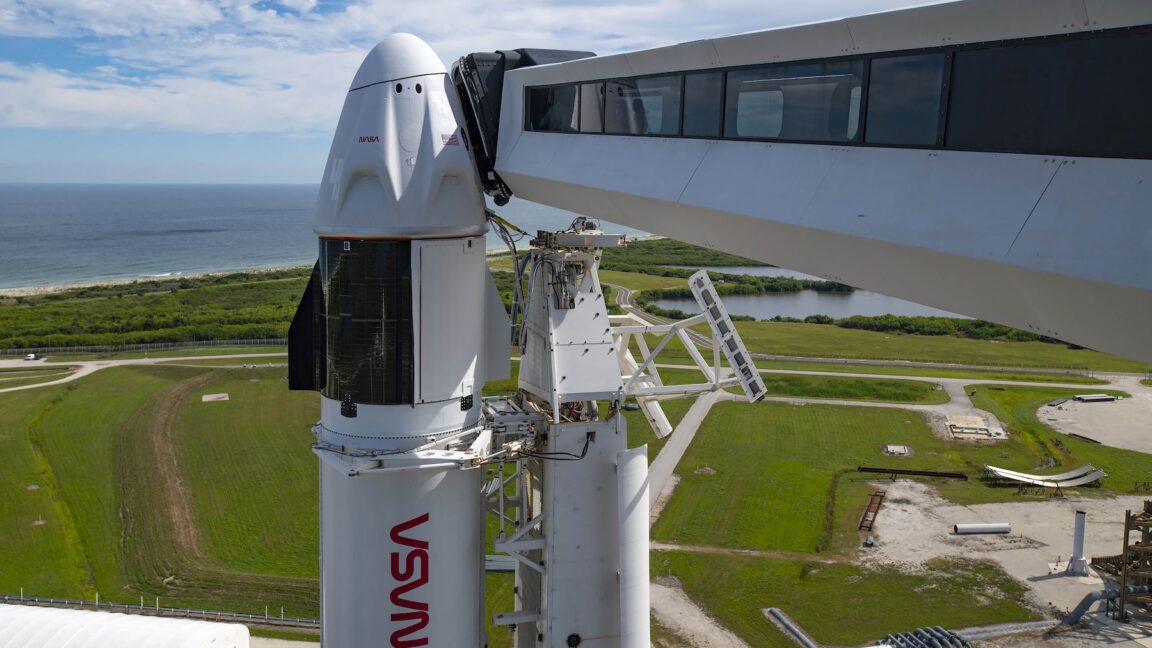
In a move that reverberates through the aerospace community, SpaceX has initiated a profound strategic shift at Florida's storied Space Coast. The dismantling of the Crew Dragon access arm at Launch Complex 39A (LC-39A) at Kennedy Space Center—the very same pad that hosted Apollo missions and Space Shuttle launches—signals an unmistakable message: Starship is now the undisputed priority for the site, ushering in an ambitious new chapter for human spaceflight and interplanetary exploration.
A Shifting Landscape: The End of an Era for LC-39A's Crew Dragon
For years, LC-39A has been the bustling nexus for SpaceX's human spaceflight endeavors, serving as the launchpad for numerous Crew Dragon missions that have ferried astronauts to the International Space Station. Its iconic fixed service structure, now devoid of the crew access arm, stood as a symbol of NASA's Commercial Crew Program's success and the resurgence of American human spaceflight capabilities. The decision to remove this critical piece of infrastructure is not merely an operational adjustment; it's a profound strategic recalibration, indicating that the future of LC-39A lies solely with Starship.
This move frees up the historic pad for the extensive modifications required to support Starship's gargantuan scale and operational needs. Unlike the Falcon 9 and Crew Dragon, Starship and its Super Heavy booster are an entirely different class of vehicle, demanding massive propellant storage, a dedicated launch tower with a "chopstick" arm for stacking and catching, and robust ground support systems capable of handling unprecedented fuel quantities. The "Dragon crew arm" removal is just the first, highly visible step in a multi-year transformation.
Starship's Ascent: Why LC-39A is Paramount
SpaceX's long-term vision hinges entirely on Starship. Designed to be a fully reusable, multi-planetary transport system, Starship is the vehicle intended to carry humans to the Moon, Mars, and beyond, fundamentally altering the economics and logistics of space travel. While Starship's primary development and testing site, Starbase, in Boca Chica, Texas, continues its rapid progress, establishing a redundant launch site in Florida is crucial for redundancy, increased launch cadence, and fulfilling critical contracts like NASA's Human Landing System for the Artemis program.
LC-39A offers significant advantages: established infrastructure, proximity to NASA and military ranges, and a different orbital inclination option. Dedicating this pad to Starship underscores SpaceX's unwavering commitment to scaling Starship's production and launch capabilities, demonstrating that no operational sacrifice is too great for the realization of its interplanetary ambitions.
Crew Dragon's New Home: Cape Canaveral Space Force Station
With LC-39A earmarked exclusively for Starship, SpaceX's Crew Dragon missions will transition to launching from Cape Canaveral Space Force Station (CCSFS). While the specific pad for future crewed missions hasn't been explicitly detailed in the public domain, speculation points towards modifications at Space Launch Complex 40 (SLC-40), which has historically hosted Falcon 9 cargo missions. This relocation requires significant investment in infrastructure at the new site, including crew access facilities, emergency egress systems, and robust ground support to meet NASA's stringent safety requirements for human spaceflight.
The move is a testament to SpaceX's operational flexibility and its ability to manage multiple complex projects simultaneously. It also highlights the growing demand for launch real estate on the Space Coast, as commercial space activities continue to surge. While a temporary inconvenience, establishing a dedicated crew launch facility at CCSFS could streamline operations and reduce potential conflicts with Starship's high-tempo testing schedule at KSC.
Future Implications: A New Era for Space Exploration
This bold reallocation of resources by SpaceX has far-reaching implications. Firstly, it cements Starship's position as the flagship project for the company, signaling a singular focus on bringing the mega-rocket to full operational status. Secondly, it transforms Florida's Space Coast into an even more diverse and critical hub for space exploration, hosting both the largest rocket ever conceived and continued regular human spaceflight.
The next few years will see a dramatic transformation of LC-39A, from its current state to a futuristic launch and landing complex designed for Starship. This monumental undertaking, coupled with the continued growth of Starbase in Texas, paints a clear picture of SpaceX's relentless pursuit of its audacious goals. As the Dragon crew arm comes down and Starship's future takes shape, humanity stands on the cusp of an unprecedented era of deep space exploration, spearheaded by a company unafraid to make bold bets on an even bolder future.