The Bitter Brew: Heineken's AI-Driven Layoffs Signal a New Era of Job Displacement
By NovaPress Editorial Team
Introduction
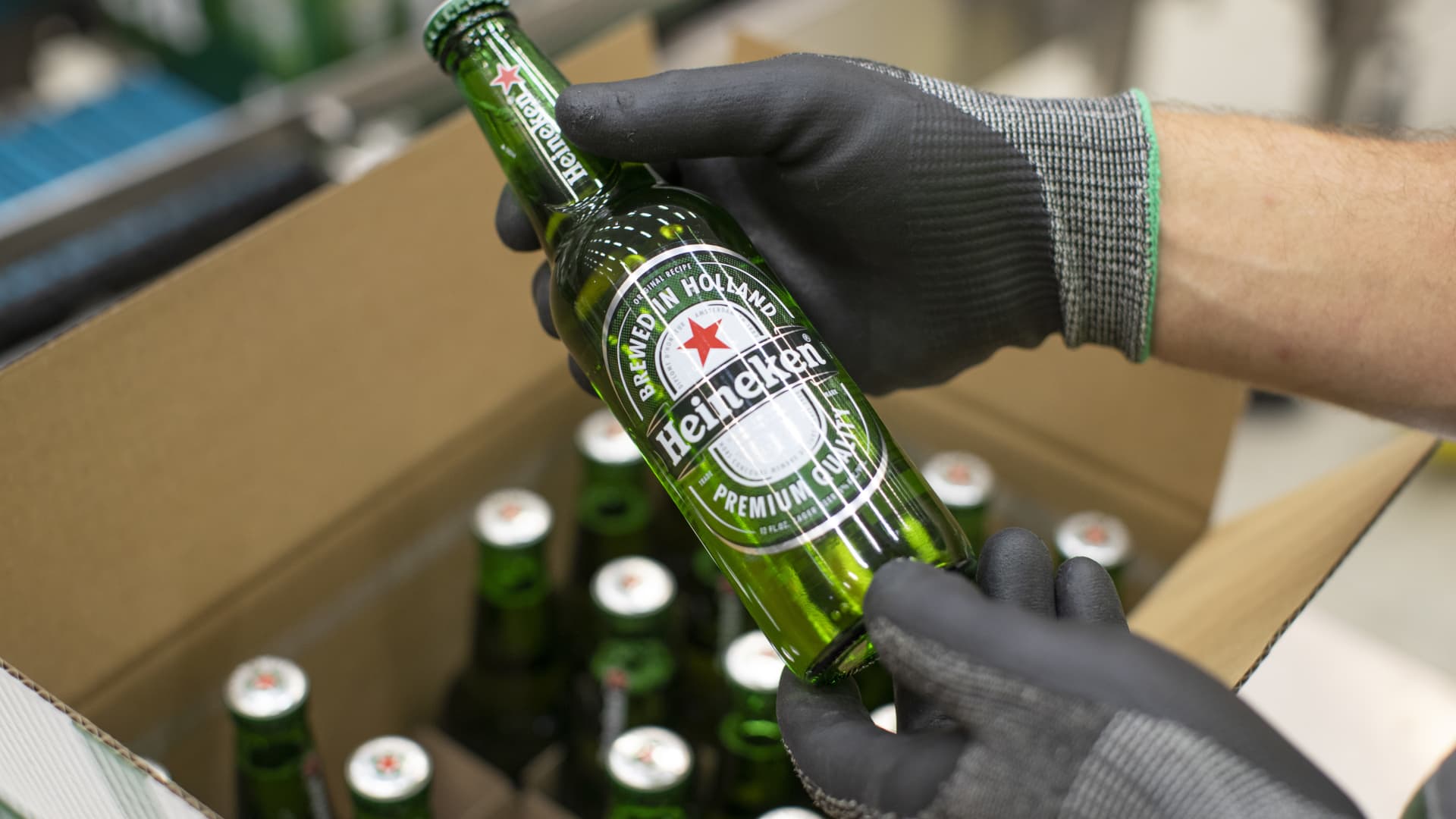
In a stark illustration of artificial intelligence's accelerating impact on the global workforce, Dutch brewing giant Heineken has announced plans to slash up to 6,000 jobs, or approximately 7% of its global workforce. The company's CEO explicitly cited "AI productivity savings" as an "important part of ongoing productivity savings," alongside a slump in beer sales, painting a sobering picture of how traditional industries are leveraging advanced technology to navigate economic headwinds. This move by one of the world's largest brewers serves as a potent harbinger of the profound shifts AI is set to unleash across various sectors, raising critical questions about the future of employment and corporate responsibility.
Context: The Economic Headwinds Facing a Brewing Behemoth
Heineken's decision isn't solely a narrative of technological adoption; it's also deeply rooted in challenging market conditions. The global beer industry has faced significant headwinds over the past year, marked by inflation, changing consumer preferences, and increased competition from craft brewers and alternative beverages. Weak sales figures have pressured Heineken to seek aggressive cost-saving measures to protect its profit margins and shareholder value. In this environment, AI emerges not just as a tool for innovation but as a strategic imperative for survival and efficiency, offering the promise of streamlined operations and reduced overheads.
AI's Double-Edged Sword: "Productivity Savings" and Job Displacement
The term "AI productivity savings" at a company like Heineken likely encompasses a broad range of applications. This could include sophisticated supply chain optimization, where AI algorithms predict demand more accurately, optimize logistics routes, and manage inventory more efficiently, thereby reducing waste and operational costs. Automation in administrative tasks, data analysis for marketing and sales strategies, and even predictive maintenance for brewing equipment could all fall under this umbrella. While these applications undoubtedly boost efficiency and provide a competitive edge, their direct consequence is often a reduced need for human intervention in tasks that can now be handled by algorithms or automated systems. The 6,000 jobs on the chopping block represent a significant human cost, a poignant reminder that the pursuit of technological efficiency often comes at the expense of livelihoods.
A Blueprint for Other Industries? The Broader Implications
Heineken's aggressive adoption of AI for job displacement is unlikely to be an isolated incident. As companies across various traditional sectors grapple with similar economic pressures and the imperative for digital transformation, many will undoubtedly look to emulate Heineken's strategy. From manufacturing and logistics to retail and finance, the potential for AI to automate tasks and optimize processes exists everywhere. This raises a crucial societal question: Are we witnessing the dawn of an era where AI becomes a primary driver of corporate restructuring, leading to widespread job losses that outpace the creation of new roles? The ethical dimensions of this shift – balancing shareholder returns with the well-being of the workforce – will become increasingly central to corporate governance.
The Future of Work: Adapting to the AI Revolution
For employees, Heineken's announcement underscores the urgent need for adaptability and continuous learning. Roles that involve repetitive tasks, data processing, or logistical coordination are most vulnerable to AI automation. The emphasis will increasingly shift towards uniquely human skills: creativity, critical thinking, complex problem-solving, emotional intelligence, and interpersonal communication. Governments and educational institutions will face immense pressure to develop robust reskilling and upskilling programs to prepare the workforce for an AI-augmented future. The challenge is not merely to mitigate job losses but to foster an environment where human ingenuity can thrive alongside technological advancement.
Conclusion: Navigating the New Economic Landscape
Heineken's decision to embrace AI-driven job cuts is a powerful signal that the future of work is here, and it’s arriving faster than many anticipated. While AI offers unprecedented opportunities for efficiency and innovation, it also presents profound challenges for employment, economic equality, and social cohesion. As societies grapple with this technological paradigm shift, the imperative for thoughtful policy-making, ethical corporate leadership, and a proactive approach to workforce development has never been greater. The bitter taste of job cuts at Heineken should serve as a wake-up call, urging us to carefully consider how we harness the power of AI to build a future that is both prosperous and equitable.