Australia's Subterranean Doppelgänger: Unraveling the Mystery of a Continent-Shaped Magnetic Anomaly
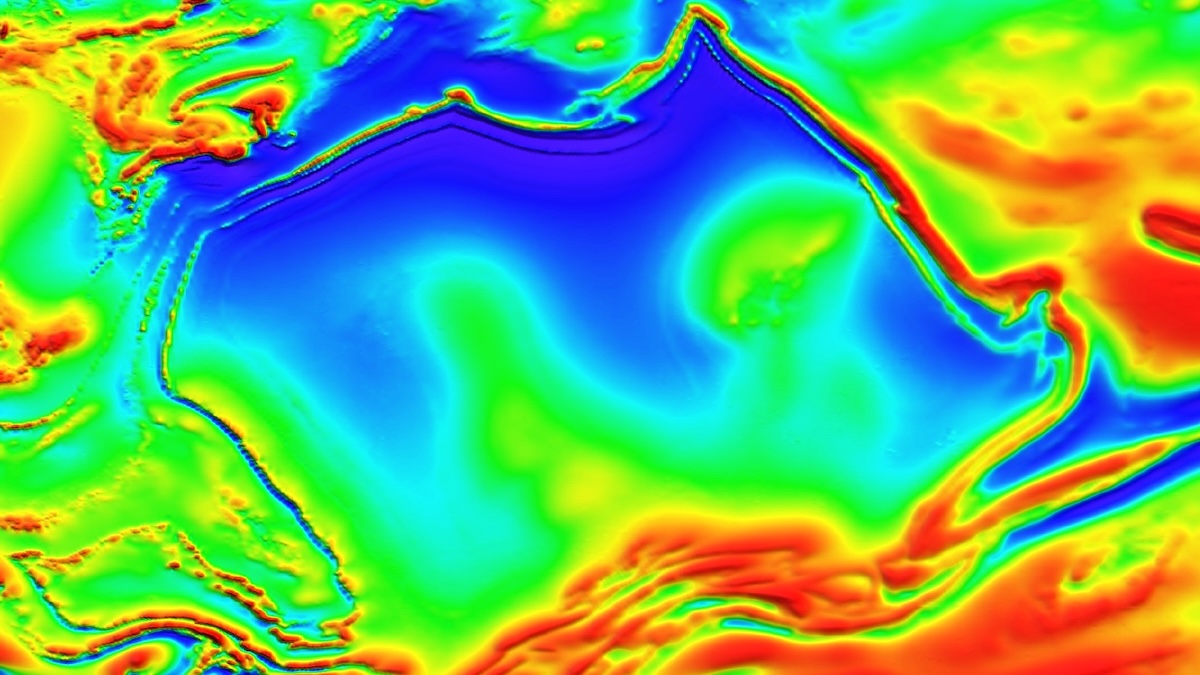
Beneath the vast and ancient landmass of Australia, geologists have unearthed a mystery that challenges our understanding of the continent's deep past. A newly mapped magnetic anomaly, a colossal region where Earth's magnetic field behaves strangely, has been discovered, and its most striking feature is an uncanny, almost identical resemblance to the very continent it lurks beneath. This remarkable finding, as reported by ScienceAlert, has ignited a flurry of scientific debate and speculation, promising to reshape our geological maps and potentially reveal secrets buried for eons.
What Exactly is a Magnetic Anomaly?
To appreciate the significance of this discovery, it's crucial to understand what a magnetic anomaly represents. Earth's magnetic field, generated by the convective motion of molten iron in its outer core, isn't uniform. Variations in the magnetism of rocks in the crust and upper mantle can cause localized deviations from the global field. These deviations, known as magnetic anomalies, are like geological fingerprints. They can indicate the presence of specific mineral compositions (especially iron-rich rocks), ancient volcanic activity, or deep tectonic structures that have magnetized over geological timescales. Geologists use highly sensitive magnetometers, often mounted on aircraft or ships, to detect and map these subtle magnetic fluctuations, painting an invisible picture of what lies beneath the surface.
The Uncanny Mirror Image: Australia Beneath Australia
The recent mapping efforts in Australia have revealed an anomaly that defies simple explanation. Instead of an amorphous blob or a linear feature, this magnetic signature remarkably mirrors the continental outline of Australia itself. Imagine an inverse silhouette, a subterranean echo of the land above. This astonishing coincidence immediately begs a profound question: Is this merely a geological fluke, or does it signify a deeper, intrinsic connection between the surface geology and the structure hundreds of kilometers below?
Leading Hypotheses for a Geological Doppelgänger:
- Remnant Tectonic Features: One compelling theory suggests that the anomaly could be a preserved relic of ancient tectonic processes. During the formation and breakup of supercontinents like Gondwana, immense stresses and movements occurred. This anomaly might represent a deeply buried, highly magnetic fragment of an old continental plate, a subducted slab, or a suture zone from a collision that imprinted its shape magnetically.
- Deep Crustal Magnetization: The Earth's crust isn't uniformly magnetic. Certain rock types, particularly those rich in iron-bearing minerals like magnetite, possess stronger magnetic properties. It's possible that a vast, deeply rooted body of such magnetic rock formed in a shape congruent with the continent's later development, or perhaps was shaped by the same geological forces that sculpted the continent above.
- Mantle-Crust Interaction: The interaction between the overlying crust and the convective forces of the Earth's mantle could also play a role. Upwellings or downwellings of mantle material might have caused temperature and pressure changes that altered the magnetic properties of deep crustal rocks in a continent-shaped pattern.
- Forgotten Sub-Continental Lithospheric Mantle (SCLM): The SCLM, the deepest part of a continent's tectonic plate, can extend hundreds of kilometers deep and preserve ancient structures. This anomaly could be a magnetic expression of an unusually coherent and stable SCLM keel that has maintained its shape over billions of years, influencing the crust above it.
Implications for Earth Sciences and Beyond
This discovery has far-reaching implications. Firstly, it could provide unprecedented insights into the geodynamic evolution of Australia, a continent known for its ancient and complex geology. Understanding how such a deep, continent-shaped magnetic structure formed could refine models of plate tectonics, continental assembly, and the long-term stability of cratonic (ancient and stable) areas.
Secondly, it challenges our assumptions about the relationship between surface topography and deep Earth structure. The idea that such a profound mirroring could exist at vastly different depths suggests a more integrated, possibly causally linked, geological system than previously thought. Could similar anomalies exist beneath other continents, awaiting discovery?
Finally, while not directly tied to immediate resource discovery, magnetic anomalies are often precursors or indicators of mineral deposits. A better understanding of this large-scale structure might guide future exploration efforts by providing a deeper context for regional geology.
The Road Ahead: Deeper Probes and New Questions
The mapping of this anomaly is just the beginning. The next steps will involve more detailed geophysical surveys, including seismic imaging to create a 3D picture of the anomaly's depth and composition. Advanced computational models will be crucial to simulate its formation under various geological scenarios. Scientists will also be looking for similar patterns globally, potentially using this Australian discovery as a template for new investigations elsewhere.
The bizarre magnetic anomaly beneath Australia stands as a testament to the Earth's enduring capacity to surprise us. It’s a compelling reminder that even on a continent as thoroughly studied as Australia, profound mysteries still lie hidden beneath our feet, waiting for the ingenuity of science to bring them to light. This subterranean doppelgänger promises to be a focal point for geological research for years to come, pushing the boundaries of what we thought possible in understanding our dynamic planet.