Astronomy & Space
Celestial Spectacle: What the Texas Fireball Reveals About Our Cosmic Neighborhood
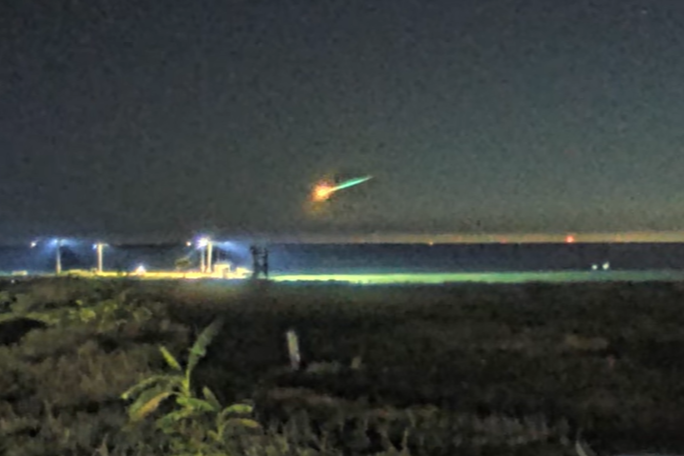
The night sky, an eternal canvas of stars, occasionally treats us to fleeting, dramatic displays. This past Tuesday night, a spectacle of truly colossal proportions unfolded above six U.S. states, including a significant traverse across Texas. What began as an ordinary evening quickly transformed into a moment of collective awe and wonder as a brilliant, electric streak of light—a massive fireball meteor—tore across the darkness, momentarily turning night into day. Captured vividly by entities like Saltwater Recon, this event was far more than just a transient flash; it was a profound reminder of the dynamic, ever-changing cosmos we inhabit.
Understanding the Phenomenon: Not Just a Shooting Star
While often colloquially referred to as "shooting stars," what millions witnessed was technically a bolide—a particularly bright type of meteor that often explodes in the atmosphere. Meteors are fragments of space rock, typically originating from asteroids or comets, that enter Earth's atmosphere at incredibly high speeds. The intense friction generated causes them to heat up to incandescent temperatures, creating the dazzling light show we observe. What made Tuesday's event remarkable was its sheer size and luminosity, visible across such a vast geographical area, indicative of a larger object than most atmospheric entries.
The Science Behind the Spark: Atmospheric Entry and Composition
When a meteoroid—the object before it hits the atmosphere—encounters Earth's protective blanket, it begins its fiery descent. The composition of the meteoroid, often rocky or metallic, dictates its behavior. As it decelerates rapidly due to atmospheric drag, the kinetic energy is converted into heat and light. The different colors observed in meteor trails can even hint at the chemical elements burning up: green often indicates magnesium, yellow sodium, and blue-violet iron. A bolide like the one seen over Texas is typically a larger fragment, capable of surviving longer and penetrating deeper into the atmosphere before disintegrating, or sometimes even fragmenting into multiple pieces.
Witnessing the Unseen: Public Reaction and Scientific Value
Eyewitness accounts from across Texas, Oklahoma, Louisiana, and beyond spoke of surprise, exhilaration, and in some cases, a momentary sense of unease at the sudden, powerful celestial event. Social media lit up with videos and descriptions, showcasing the pervasive impact of such a visible natural phenomenon. For scientists, these events are invaluable. Networks of cameras and sensors, including those operated by NASA and various university programs, constantly monitor the skies. Data from these observations, combined with public reports, help researchers track meteoroid streams, study their origins, and even predict future events. The Texas fireball offers a rich dataset for further analysis, potentially shedding light on the composition of specific asteroid belts or cometary debris.
The Broader Context: Planetary Defense and Cosmic Vigilance
While most meteors burn up harmlessly, the colossal nature of this event serves as a subtle, yet potent, reminder of Earth's vulnerability to cosmic impacts. The Chelyabinsk meteor event in 2013, which injured over a thousand people in Russia, underscored the necessity of robust planetary defense strategies. Programs like NASA's Planetary Defense Coordination Office work diligently to detect and track Near-Earth Objects (NEOs) that could pose a threat. The Texas fireball, while not a threat, reinforces the continuous need for vigilance and investment in space surveillance technologies. Every bright streak across the sky, harmless as it may be, contributes to our understanding of the cosmic ballet and improves our ability to detect and, potentially, mitigate future risks.
An Enduring Awe: Connecting Humanity to the Universe
Ultimately, events like the Texas fireball transcend scientific data; they reawaken a primal sense of wonder within us. They connect us to the vastness of the universe and the dynamic forces at play far beyond our terrestrial concerns. For a moment, millions looked up, united by a shared spectacle, reminded that Earth is but a small vessel sailing through a vast and spectacular cosmic ocean. As researchers continue to analyze the remnants of this brilliant visitor, the memory of its fiery passage will undoubtedly continue to inspire curiosity and fuel the exploration of our universe's endless mysteries.