Echoes from the Deep: How Autonomous Robotics Rescued a WWII Legend from Oblivion off Malta
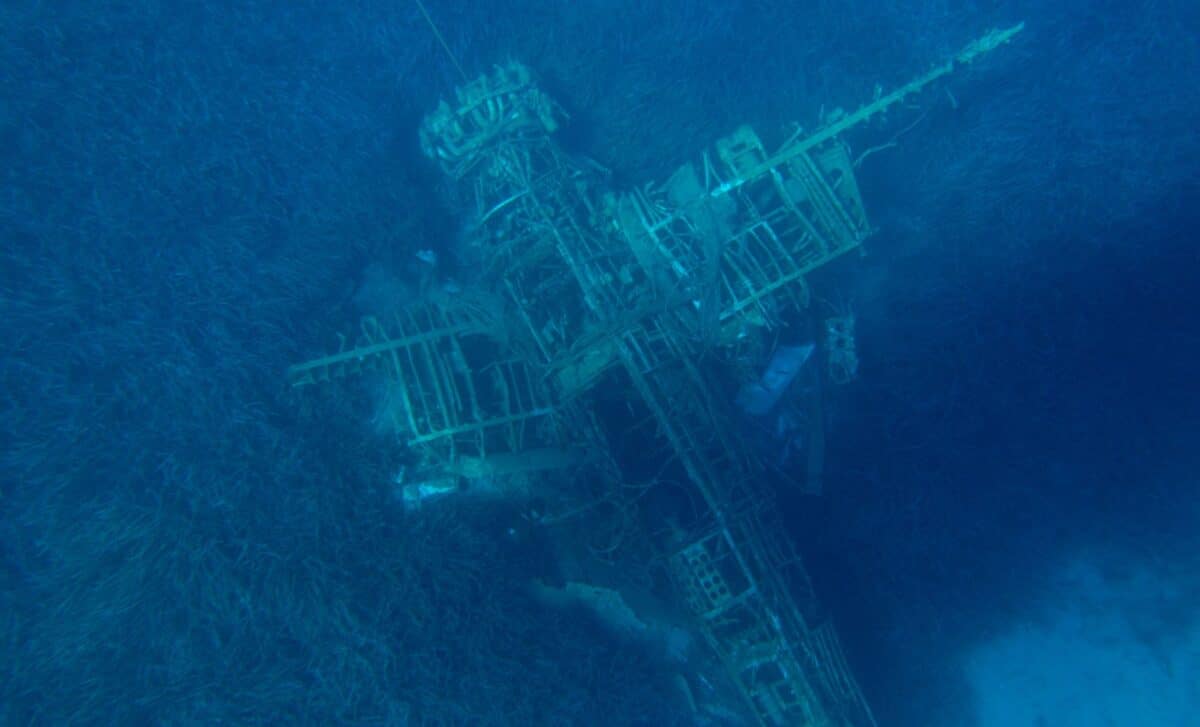
The silent depths of the Mediterranean Sea have long guarded secrets, remnants of history swallowed by waves and time. Yet, a recent mission off the coast of Malta, originally intended for routine exploration, has shattered decades of silence, bringing to light a remarkable piece of Second World War history. An underwater robot, a marvel of modern engineering, unexpectedly stumbled upon the long-lost wreckage of a Fairey Swordfish bomber, a legendary aircraft whose disappearance had been etched into the annals of wartime mystery.
A Ghost from the Past: The Fairey Swordfish and Malta's Wartime Crucible
To understand the significance of this discovery, one must first appreciate the role of the Fairey Swordfish and Malta during the Second World War. Known affectionately as the "Stringbag" due to its biplane design and fabric covering, the Swordfish was an improbable hero. Despite its seemingly anachronistic design for the 1940s, it proved to be a formidable torpedo bomber and reconnaissance aircraft, playing a crucial role in many naval operations, including the Battle of Taranto and the pursuit of the Bismarck. Its slow speed and agility, combined with the bravery of its crews, often made it surprisingly effective against faster, more modern adversaries.
Malta, strategically located in the heart of the Mediterranean, was a linchpin in the Allied war effort. Enduring relentless Axis bombardment, it became one of the most heavily bombed places on Earth, a vital base for Allied air and sea power that continually harassed supply lines to North Africa. Many aircraft, including numerous Swordfish, met their fate in the waters surrounding the island, either shot down in fierce dogfights or lost to mechanical failure during perilous missions.
The Autonomous Revolution: Robots Unlocking History
This discovery is not just a tale of historical recovery; it's a testament to the transformative power of autonomous underwater vehicles (AUVs). Traditional marine archaeology often relies on manned submersibles or remotely operated vehicles (ROVs) controlled by surface vessels, which can be limited by human endurance, cost, and risk. AUVs, however, are programmed for independent operation, navigating complex underwater terrains, collecting data, and mapping vast areas without direct human intervention.
Equipped with advanced sonar, high-resolution cameras, and sophisticated navigation systems, these robots can systematically survey the seabed with unparalleled precision and efficiency. The "unexpected turn" in the Malta mission highlights a key advantage: AUVs can uncover anomalies that might be missed by human observers or during targeted searches. Their ability to cover extensive ground and operate in extreme depths opens up entirely new frontiers for archaeological exploration, turning once inaccessible regions into potential treasure troves of history.
The Moment of Discovery and Future Implications
The moment the robot's sensors identified the distinct silhouette of a Fairey Swordfish, decades of mystery began to unravel. While the specifics of the bomber's final flight remain to be fully pieced together, its discovery provides invaluable data for historians and archaeologists. Each rivet, each twisted piece of metal, tells a story of a fierce struggle and the ultimate sacrifice.
This find off Malta's coast is more than just another wreck. It underscores the vital role underwater robotics will play in preserving our shared heritage. As wrecks deteriorate and become increasingly vulnerable to natural forces and human interference, the ability of AUVs to quickly and accurately document them becomes paramount. Future implications include:
- Enhanced Historical Understanding: Providing tangible links to past conflicts and cultures.
- Technological Advancements: Pushing the boundaries of robotics, AI, and sensor technology for challenging environments.
- Conservation Efforts: Enabling better strategies for protecting underwater cultural heritage sites.
- Educational Outreach: Bringing history to life in new, engaging ways for global audiences.
While recovery of such delicate artifacts is often complex and expensive, the immediate benefit lies in the meticulous documentation and virtual preservation of the site. This allows researchers to study the wreck without disturbing its resting place, respecting the sanctity of what is often a war grave.
A New Era of Exploration
The unexpected finding of the Fairey Swordfish bomber is a powerful reminder that history is not static; it is constantly being unearthed, often in the most unexpected places and by the most cutting-edge means. As "NovaPress" continues to chronicle the intersection of technology and human endeavor, this discovery stands as a beacon: autonomous robots are not just tools for industry or scientific research, but increasingly, crucial partners in piecing together the intricate tapestry of our past. The oceans still hold countless secrets, and with each autonomous dive, we move closer to understanding them.