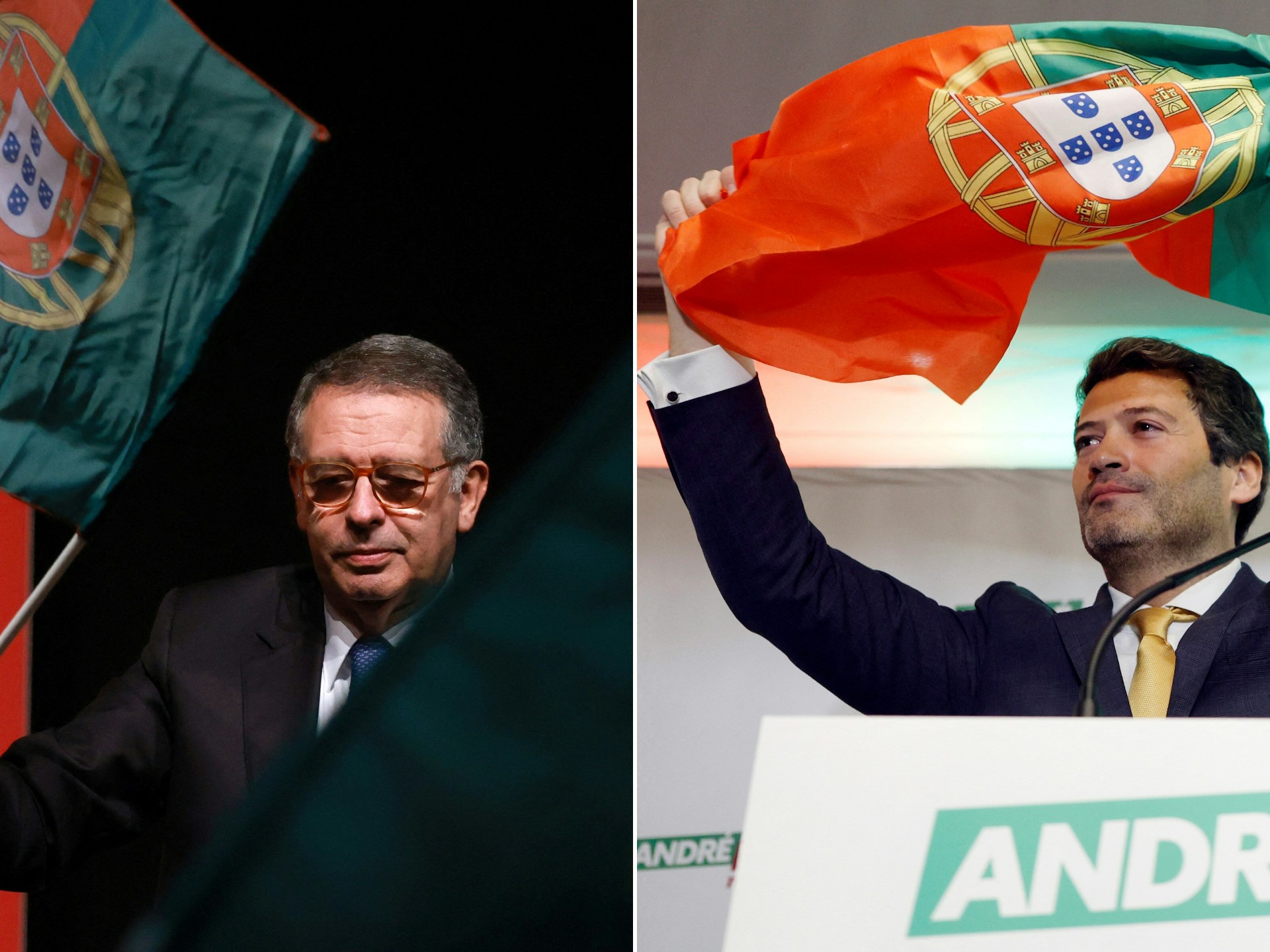
Portugal at a Crossroads: Stormy Skies and a Shifting Political Tide
As polls opened in the second round of Portugal's presidential election, the nation braced not only for the relentless lashing of heavy storms but also for a potentially seismic shift in its political landscape. This election is far more than a routine democratic exercise; it's a high-stakes referendum on the country's future, pitting established socialist forces against a resurgent far-right movement.
A Nation on Edge: The Stakes of the Second Round
The initial round of voting left a clear, albeit unsettling, picture. While the socialist candidate maintained a lead, the unexpectedly strong performance of the far-right contender sent ripples of concern across the political spectrum. The second round, therefore, is not just about who wins the presidency, but by how much, and what that margin signifies for the direction of Portuguese democracy. It's a choice that could redefine Portugal's national identity and its role within the European Union.
For decades, Portugal has largely been a bastion of centrist and socialist politics since its transition to democracy following the Carnation Revolution. This long period of stability and social-democratic governance has shaped the country's institutions and societal norms. However, like many nations across Europe, Portugal is now grappling with economic anxieties, migration debates, and a growing disillusionment with traditional political parties, creating fertile ground for alternative, often more extreme, voices.
The Echoes of a Resurgent Far-Right
The rise of the far-right in Portugal is not an isolated phenomenon. It mirrors a broader trend seen across the continent, from France to Italy, Sweden to the Netherlands. What makes Portugal's situation particularly noteworthy is the speed and intensity of this resurgence, especially given the country's relatively recent history of authoritarian rule under António de Oliveira Salazar. The historical memory of fascism was long thought to inoculate Portugal against such movements, yet current events suggest that no democracy is entirely immune to the siren song of populism.
Analysts are closely scrutinizing the demographics and motivations behind the far-right's growing support. Is it primarily a protest vote from disaffected youth, a response from rural communities feeling left behind, or a more fundamental shift in ideological alignment? Understanding these factors is crucial for both the winning party and for future political stability, as ignoring these underlying grievances could lead to deeper polarization.
Implications for Europe and Beyond
A strong showing for the far-right in Portugal holds significant implications not just for Lisbon, but for Brussels. The European Union has been grappling with the rise of nationalist and anti-EU sentiments within its member states for years. A shift in Portugal's political balance could empower like-minded parties across the bloc, potentially complicating EU policy-making on critical issues ranging from climate change to fiscal policy and immigration. It could also weaken the united front that the EU aims to project on the global stage.
Conversely, a decisive victory for the socialist candidate, particularly one that significantly diminishes the far-right's perceived mandate, could offer a counter-narrative, demonstrating the resilience of mainstream democratic values in the face of extremist challenges. The outcome in Portugal will undoubtedly be watched closely by political strategists and citizens alike across the continent, serving as a barometer for the health of European democracy.
Looking Ahead: Navigating the Political Storm
Regardless of who ultimately clinches the presidency, the election has laid bare deep divisions and anxieties within Portuguese society. The next president will face the immediate challenge of uniting a fractured electorate and addressing the root causes of discontent that have fueled the far-right's ascent. This will require not just astute political leadership but also a renewed commitment to inclusive policies and robust public discourse.
As the heavy storms eventually subside, the political climate in Portugal will remain charged. The long-term trajectory of the nation will depend on its ability to navigate these turbulent waters, reconcile its internal differences, and uphold the democratic principles that have guided it for nearly half a century. The eyes of Europe, and indeed the world, are on Portugal, waiting to see which path it will choose.