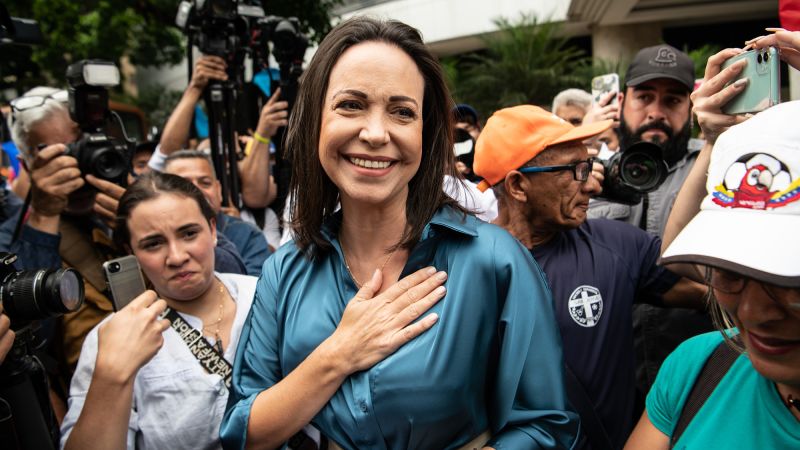
A Seat Unclaimed: María Corina Machado's Nobel Absence Echoes Venezuela's Silenced Dissent
Oslo, Norway – The international spotlight briefly turned to Oslo, not just for the prestigious Nobel Peace Prize ceremony, but for the stark absence of one of its most compelling laureates: Venezuelan opposition leader María Corina Machado. Norwegian public broadcaster NRK confirmed what many feared – Machado would not be attending Wednesday's award ceremony, a development that speaks volumes about the precarious state of democracy and human rights in Venezuela.
The Power of an Empty Chair
Machado's inability to travel to Oslo is no mere scheduling conflict; it is a profound symbol of the political persecution she and countless others face in Venezuela. While the specific details surrounding her travel restrictions remain guarded, the broader context is clear: she is a prominent voice of dissent in a country where the ruling regime has systematically dismantled democratic institutions, stifled opposition, and employed various tactics to silence critics.
A former legislator and a fiery critic of the Venezuelan government, Machado has long been at the forefront of the country's opposition movement. Her recognition by the Nobel Committee underscores the international community's acknowledgment of her courageous, albeit often perilous, fight for democratic principles, free elections, and an end to authoritarian rule. Her presence in Oslo would have served as a powerful platform, not just for her own message, but for the collective cry of a nation grappling with economic collapse, humanitarian crisis, and political repression.
Venezuela's Deepening Crisis of Democracy
Machado's forced absence is a chilling reminder of Venezuela's trajectory under its current leadership. Over the past decade, the country has witnessed a dramatic erosion of fundamental freedoms: electoral processes have been undermined, independent media outlets shut down, and opposition figures often face arbitrary arrests, travel bans, or disqualification from holding public office. The government's actions against Machado fit a well-established pattern designed to neutralize any credible challenge to its power.
"When a Nobel Peace Prize laureate cannot leave their own country to accept an award for peace, it is not merely an individual tragedy; it is a global alarm bell about the state of human rights and democracy," said an unnamed human rights observer close to NovaPress.
This repression extends beyond high-profile leaders to activists, journalists, and ordinary citizens. The international community, while often vocal in its condemnation, has struggled to find effective mechanisms to compel the Venezuelan government to respect democratic norms and human rights. Machado's empty seat at the Nobel ceremony serves as a vivid, tangible manifestation of this struggle.
Future Implications: A Test for International Resolve
The implications of Machado's non-attendance are far-reaching. Domestically, it reinforces the perception among the opposition that the path to genuine political change remains fraught with obstacles orchestrated by the state. It tests the resilience of a movement that, despite persistent setbacks, continues to advocate for a democratic transition.
Internationally, Machado's absence places renewed pressure on governments and multilateral organizations. It highlights the hypocrisy of a regime that seeks international legitimacy while simultaneously suppressing its most prominent critics. The Nobel Committee's decision to honor Machado, despite the political risks, was a powerful statement. Her inability to accept it in person amplifies that statement, transforming what could have been a moment of celebration into a poignant demonstration of ongoing oppression.
Moving forward, the international community must grapple with how to effectively support democratic forces within Venezuela without inadvertently strengthening the very regime it seeks to challenge. Machado's plight is a stark reminder that diplomatic statements alone may not be enough. The world watches, and her empty seat asks a silent but profound question: What will be done?
A Symbol of Unwavering Resolve
While María Corina Machado may not physically be in Oslo, her spirit and the cause she represents undoubtedly resonate within the walls of the Nobel ceremony. Her absence, rather than diminishing her message, ironically amplifies it, making her an even more potent symbol of unwavering resolve in the face of tyranny. The unclaimed seat is not just a void; it is a powerful indictment, a beacon for freedom, and a testament to the enduring struggle for democracy in Venezuela.