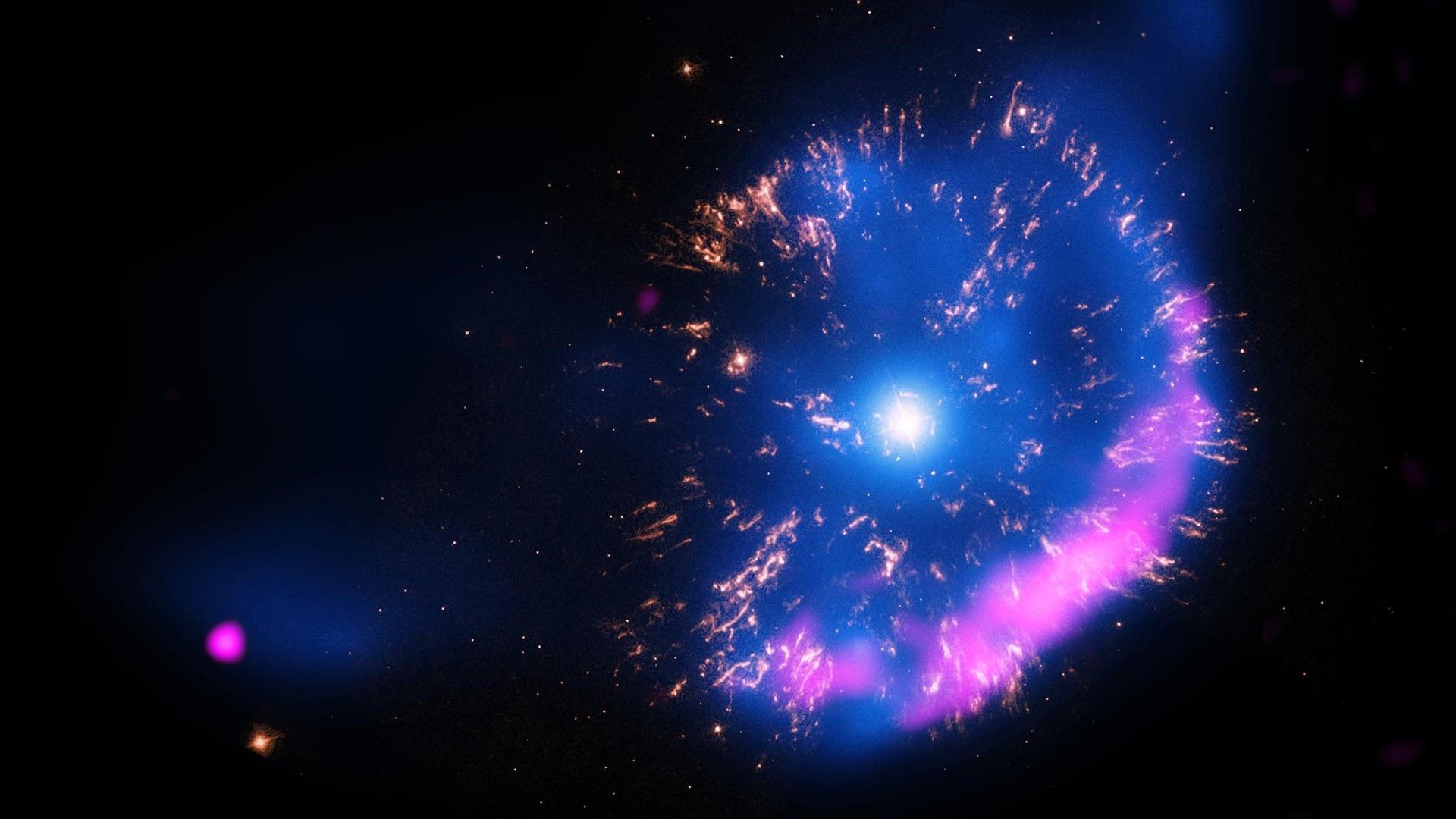
The Cosmic Countdown: V Sagittae, The Binary Star System Primed to Blaze in Earth's Daytime Sky
Imagine a new beacon appearing in our sky, so brilliant it outshines Venus and is visible even at noon. This isn't science fiction; it's a cosmic event that astronomers predict could unfold within the next century, courtesy of the enigmatic binary star system known as V Sagittae (V Sge).
A Celestial Enigma: Unraveling V Sagittae
For decades, V Sagittae has baffled astronomers with its peculiar behavior. Located in the constellation Sagitta (the Arrow), this isn't just one star but a dynamic duo: a compact white dwarf relentlessly siphoning matter from a much larger, main-sequence companion star. This incessant cosmic cannibalism fuels its extraordinary luminosity and frequent, unpredictable outbursts, making it one of the brightest known persistent novae in our galaxy.
The white dwarf, the super-dense remnant of a Sun-like star, pulls hydrogen-rich gas from its bloated partner, forming an ever-growing accretion disk around itself. Periodically, this accumulated hydrogen reaches critical temperature and pressure, igniting in powerful thermonuclear explosions on the white dwarf's surface. These are not true supernovae but recurrent novae, spectacular flashes that temporarily boost V Sge's brightness thousands of times. It’s a process that has puzzled researchers, who now believe these recurring mini-explosions are merely the dramatic prelude to an even grander finale.
The Ticking Time Bomb: From Nova to Supernova
New research suggests that V Sagittae is not just a recurrent nova but a ticking cosmic time bomb. Its relentless mass transfer is pushing the white dwarf dangerously close to the Chandrasekhar limit – the maximum mass a white dwarf can sustain before collapsing. Once this threshold is breached, the white dwarf is expected to undergo a catastrophic runaway nuclear fusion reaction, resulting in a Type Ia supernova.
What makes V Sge unique is the astonishingly short timescale for this impending event. While cosmic timelines typically span millions or billions of years, astronomers predict V Sagittae could go supernova within the next 100 years. This timeframe, practically instantaneous in astronomical terms, places the event potentially within the lifetime of many living today, offering humanity a front-row seat to one of the universe's most violent and luminous spectacles.
The Spectacle: A Daytime Star
When V Sagittae finally erupts, its brilliance is projected to be immense, potentially outshining every star in our night sky. More astonishingly, models suggest it could become bright enough to be visible to the naked eye during the day, even in sunlit skies. For weeks or even months, it could appear as a new, incredibly bright 'star' competing with the Sun, a phenomenon rarely witnessed throughout human history.
Historical records mention events like Tycho's Supernova of 1572 and Kepler's Supernova of 1604, both visible during the day for a period. However, these were unexpected. V Sagittae offers a unprecedented opportunity: a predicted supernova, allowing scientists to prepare and observe the critical precursor events with advanced instrumentation, gathering data that has been impossible to obtain until now.
Profound Implications for Science and Humanity
The impending supernova of V Sagittae represents a goldmine for astrophysics. Observing the final stages of a Type Ia supernova's progenitor star could provide invaluable insights into the mechanisms that drive these 'standard candles' of the universe – events crucial for measuring cosmic distances and understanding the expansion of the cosmos. It could refine our models of stellar evolution, accretion processes, and the ultimate fate of binary star systems.
Beyond the scientific community, V Sagittae's eventual explosion promises to be a global cultural phenomenon. It would serve as a powerful reminder of the dynamic and awe-inspiring nature of our universe, inspiring a new generation of scientists and rekindling humanity's innate curiosity about the cosmos.
A Watchful Eye on the Arrow
As we enter this cosmic countdown, observatories worldwide will undoubtedly keep a watchful eye on V Sagittae. Its progression offers a unique window into stellar death, a spectacular harbinger of cosmic change. Whether it explodes next year or in ninety-nine years, the knowledge that this incredible event is not just a theoretical possibility but a near-future certainty transforms our understanding of the universe and our place within its grand, unfolding drama. The Arrow points to a future where our daytime sky may hold a brand new, transient star – a final, brilliant testament to the life and death of stars.