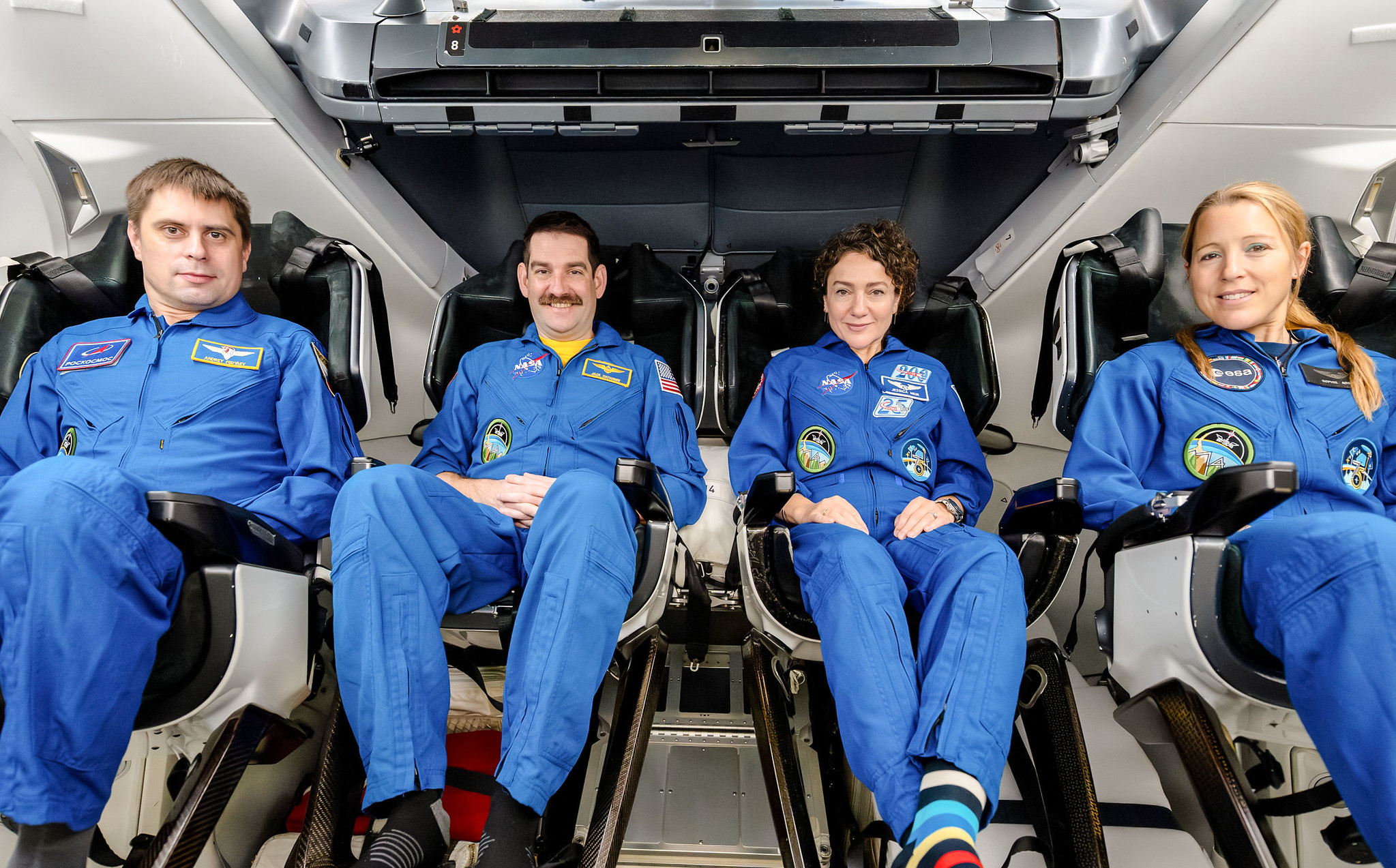
Crew-12 Mission: A Deep Dive into NASA, SpaceX, and the Future of Human Spaceflight
The cosmos continues to beckon, and with each launch, humanity inches closer to unraveling its mysteries. The upcoming SpaceX Crew-12 mission, under the auspices of NASA, represents another pivotal moment in this ongoing odyssey. As NovaPress, we delve beyond the headlines to analyze the profound implications of this mission, not just for the International Space Station (ISS) but for the broader narrative of human space exploration and the burgeoning commercial space industry.
A New Era of Collaboration: NASA and SpaceX
For decades, human spaceflight was primarily a domain of government agencies. However, the dawn of the 21st century ushered in a transformative era of public-private partnerships. The Commercial Crew Program, initiated by NASA, was a bold move to foster innovation and efficiency by contracting private companies to transport astronauts to the ISS. SpaceX, with its reusable Falcon 9 rockets and Crew Dragon capsules, has emerged as a frontrunner, fundamentally reshaping how we access low Earth orbit.
The Crew-12 mission is not merely another flight; it is a testament to the enduring success and evolving maturity of this collaborative model. Each mission refines the technology, streamlines operations, and builds a robust pipeline for sustained human presence in space. This partnership liberates NASA to focus its resources on deeper space exploration initiatives, such as the Artemis program aimed at returning humans to the Moon and eventually Mars, while ensuring the vital lifeline to the ISS remains robust.
The Significance of Crew-12 to the International Space Station
The ISS, a marvel of international engineering and cooperation, serves as humanity's orbiting laboratory, conducting groundbreaking scientific research across diverse fields – from biology and physics to material science and astrophysics. Crew-12's primary objective is to ferry a new cohort of astronauts to the station, ensuring continuous staffing for these critical experiments and vital maintenance tasks. The research conducted aboard the ISS is instrumental in understanding the effects of microgravity on the human body, developing advanced materials, and refining technologies that benefit life on Earth.
Beyond science, the ISS embodies international diplomacy, fostering collaboration between nations in a shared pursuit of knowledge. Missions like Crew-12 underscore the global commitment to this unique outpost and its role as a precursor for future multinational endeavors in space.
Technological Prowess and Operational Excellence
The mechanics of a human spaceflight launch and docking are a ballet of precision engineering and meticulous planning. From the "no earlier than" launch window, which accounts for myriad factors like weather, orbital mechanics, and spacecraft readiness, to the complex rendezvous and docking procedures, every step is critical. The Falcon 9’s booster landing, a routine yet still awe-inspiring feat, exemplifies the reusability paradigm that is driving down the cost of space access. The Crew Dragon's autonomous docking capability, backed by human oversight, further showcases the advancements in space systems.
NASA's commitment to live streaming these events – from prelaunch briefings to the final docking – reflects a dedication to transparency and public engagement. This accessibility transforms complex engineering feats into shared human experiences, inspiring future generations of scientists, engineers, and explorers.
Looking Beyond Low Earth Orbit: Future Implications
The success of each commercial crew mission lays crucial groundwork for ambitions far beyond the ISS. By demonstrating reliable, cost-effective access to low Earth orbit, these missions pave the way for:
- Lunar Exploration: The technologies and operational expertise gained are directly transferable to missions like Artemis, which aims to establish a sustainable human presence on the Moon.
- Mars Missions: The ISS serves as a testbed for long-duration human spaceflight, preparing astronauts for the rigors of interplanetary travel and the eventual journey to Mars.
- Commercial Space Stations: With the eventual retirement of the ISS, private companies are already planning commercial space stations. Reliable transport like Crew Dragon will be indispensable for these ventures.
- Economic Growth: The commercial space industry is a rapidly expanding sector, fostering innovation, job creation, and new market opportunities, from space tourism to in-orbit manufacturing.
NovaPress's Perspective: A Universe of Possibilities
At NovaPress, we view the Crew-12 mission not just as a launch event, but as a chapter in humanity's unfolding story among the stars. It encapsulates scientific endeavor, technological triumph, and international cooperation. As NASA and SpaceX continue to push the boundaries, we stand ready to cover every launch, every docking, and every discovery, illuminating the path forward into a universe brimming with possibilities. The live coverage ensures that the public is an integral part of this journey, fostering a shared sense of wonder and collective ambition.