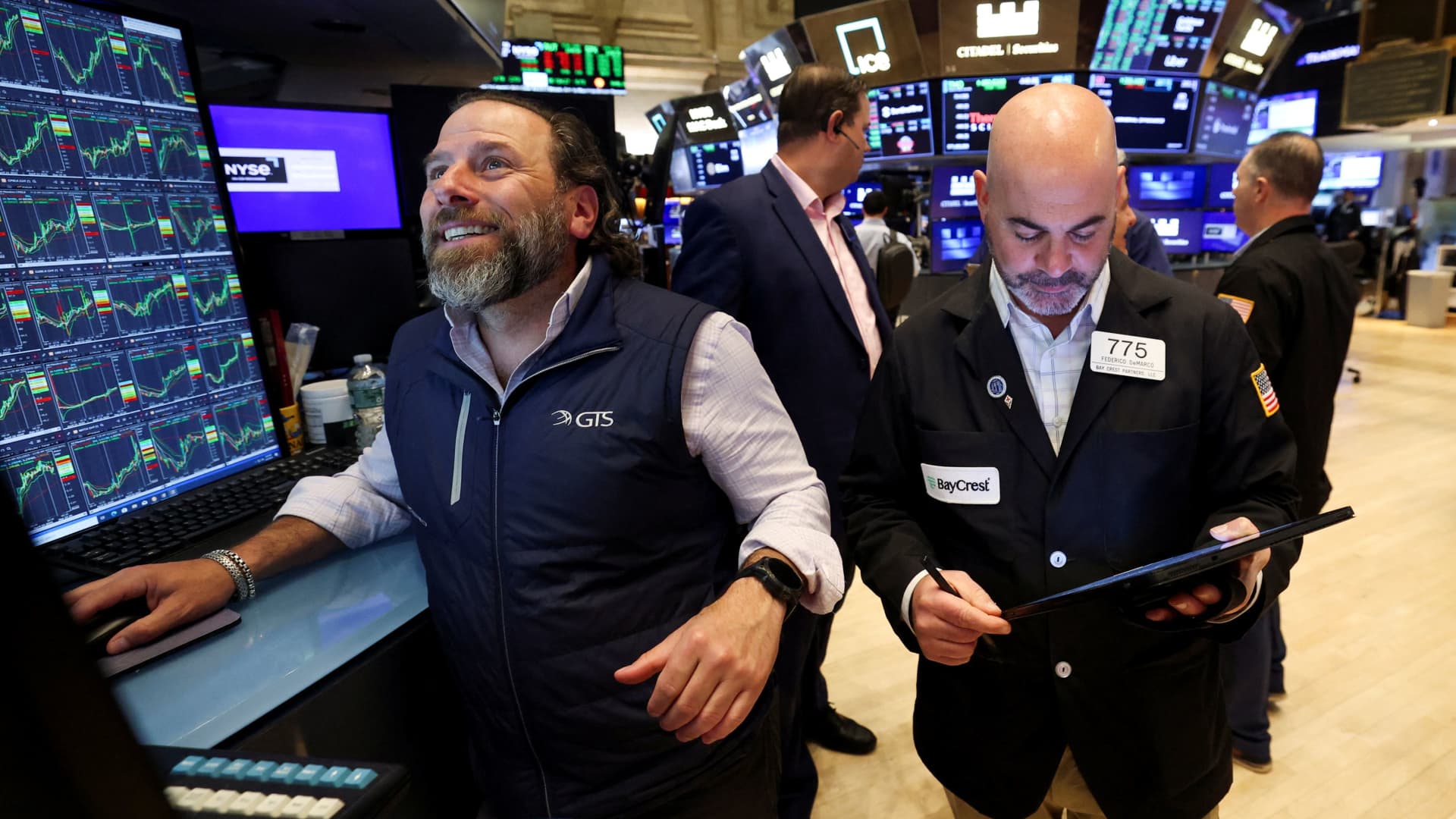
In a dramatic turn of events that sent shockwaves through global financial markets, the Dow Jones Industrial Average surged by over 1,000 points on Friday, breaching the monumental 50,000 mark for the first time in its illustrious history. This unprecedented milestone arrived as a powerful snapback, directly contrasting several days of intense selling pressure that had plagued the technology sector and sent Bitcoin tumbling. The rally has ignited fervent debate: is this a genuine turning point, a testament to underlying economic resilience, or merely a temporary reprieve in an increasingly volatile landscape?
The Anatomy of a Rout: Why Markets Were on Edge
For much of the preceding week, market sentiment had been decidedly bearish. High-growth technology stocks, often seen as bellwethers for innovation and future earnings potential, had endured a brutal sell-off. Concerns over rising interest rates, potential inflation, and rich valuations had prompted investors to pull back, leading to significant corrections across the tech-heavy Nasdaq and broader indices. This fear was not confined to equities; the cryptocurrency market, particularly Bitcoin, also experienced a significant rout, highlighting a broader risk-off sentiment permeating across various asset classes.
Analysts pointed to a confluence of factors contributing to the tech sector's vulnerability: a rotation out of growth stocks into value plays, profit-taking after extended bull runs, and worries about regulatory scrutiny. The fear of a sustained correction loomed large, with many pundits speculating on the potential for a deeper, more protracted downturn. The psychological impact of these consecutive down days created a tense atmosphere, making Friday's sudden reversal all the more remarkable.
The Phoenix Rises: Understanding Friday's Explosive Rally
Friday's extraordinary rebound was a multi-faceted event. At its core, it represented a robust recovery in the very technology stocks that had been battered. This recovery was likely fueled by a combination of factors:
- Bargain Hunting: After several days of steep declines, many high-quality tech stocks became attractive at lower valuations, enticing institutional and retail investors alike to buy the dip.
- Short Covering: Traders who had bet against the market (short sellers) were forced to buy back shares to limit their losses as prices unexpectedly reversed upwards, further accelerating the rally.
- Positive Economic Signals: While specific triggers are still being analyzed, underlying economic data may have provided a renewed sense of confidence, suggesting resilience despite recent market jitters.
- Psychological Shift: Market sentiment can turn rapidly. A critical mass of positive momentum can create a self-reinforcing cycle, leading to widespread buying.
The resurgence of Bitcoin alongside traditional equities also underscored a broader shift in risk appetite. As a highly speculative asset, Bitcoin's recovery often mirrors a renewed willingness among investors to embrace higher-risk, higher-reward opportunities, a sentiment that had been notably absent in the preceding days.
Dow 50,000: A Symbolic Milestone and Its Broader Implications
Reaching 50,000 points is more than just a number; it's a potent symbol of market strength and economic growth. For many, it signifies the enduring power of American corporations and the resilience of the global financial system. However, its context within the recent volatility cannot be ignored. This milestone arrives after a period of intense sector rotation and investor anxiety, suggesting that while the long-term trend may be upwards, the path remains anything but smooth.
The key question now for investors and analysts is whether this surge represents a definitive end to the tech rout or merely a significant "dead cat bounce"—a temporary recovery before another leg down. Future implications depend heavily on several factors:
- Inflation Outlook: Continued concerns about inflation could prompt central banks to tighten monetary policy, potentially dampening future growth prospects for high-valuation stocks.
- Corporate Earnings: Strong, sustained corporate earnings will be crucial to justify current valuations and maintain investor confidence.
- Geopolitical Stability: Global events continue to cast a shadow, and any significant geopolitical instability could quickly reverse positive sentiment.
- Investor Behavior: The interplay between institutional flows and the increasing influence of retail investors will continue to shape market dynamics.
Looking Ahead: Navigating the New Volatility
The Dow's historic leap to 50,000 is undoubtedly a headline-grabbing event, offering a powerful counter-narrative to the recent gloom. It reminds us of the market's capacity for rapid reversals and its inherent ability to find new highs. Yet, the underlying currents of uncertainty – from inflation fears to interest rate hikes and ongoing supply chain issues – suggest that volatility is likely to remain a defining characteristic of the coming months.
For "NovaPress" readers, this moment calls for a balanced perspective. While celebrating the new milestone, prudence dictates a close watch on economic indicators, corporate performance, and central bank communications. The journey to Dow 50,000 was thrilling; the path beyond it promises to be equally compelling, demanding agility and informed decision-making from all market participants.