The $650 Billion AI Arms Race: How Big Tech is Reshaping Our Future
In an unprecedented display of financial might and strategic foresight, four of the largest US technology companies are poised to collectively pour approximately $650 billion into capital expenditures by 2026. This staggering sum, primarily earmarked for the expansion of data centers and the advanced hardware they house, signals not just a competitive surge but a fundamental re-architecture of global technological infrastructure. At the heart of this colossal investment lies the intensifying artificial intelligence race, a pursuit that promises to redefine industries, economies, and indeed, daily life itself.
The Driving Force: AI's Insatiable Appetite
The shift towards AI-first computing is the primary catalyst for this monumental spending spree. Developing, training, and deploying sophisticated AI models — from large language models to advanced image recognition systems — requires immense computational power. This power is not just about faster processors; it demands entirely new classes of hardware, primarily Graphics Processing Units (GPUs) and Application-Specific Integrated Circuits (ASICs), along with vast, resilient data centers to house them. These facilities are not mere server farms; they are the nerve centers of the future, designed for extreme computational density, energy efficiency, and low-latency data access.
The competitive landscape among these tech giants — often speculated to include Amazon, Microsoft, Google, and Meta — ensures that no company can afford to lag. Dominance in AI today translates to market leadership tomorrow, driving a strategic imperative to build out capabilities at an accelerated pace, regardless of the astronomical costs involved.
Beyond Silicon: The Infrastructure Revolution
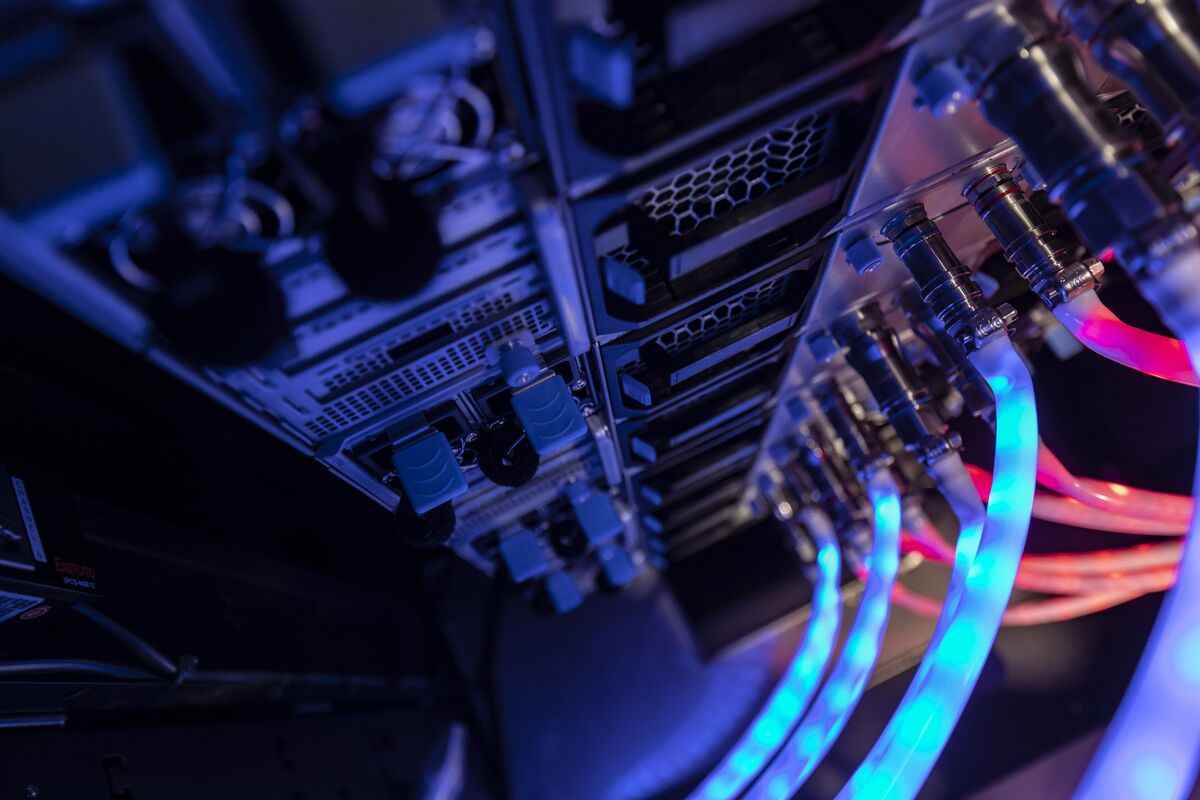
While specialized chips are a critical component, the $650 billion investment extends far beyond silicon. It encompasses the construction of sprawling new data center campuses, often requiring massive tracts of land and access to abundant, reliable power sources. This includes advancements in cooling technologies, network infrastructure capable of handling unprecedented data volumes, and sophisticated security systems. The scale of these projects demands significant innovation in design, construction, and operational efficiency, pushing the boundaries of engineering and project management.
Furthermore, the energy demands of these next-generation AI data centers are immense, raising critical questions about sustainability and the future of energy grids. Companies are increasingly investing in renewable energy sources and innovative power management solutions to mitigate their environmental footprint, adding another layer of complexity and cost to their infrastructure buildouts.
Economic Ripple Effects and Future Implications
The projected capital expenditure of $650 billion by 2026 will send significant ripple effects throughout the global economy. It will fuel job creation across construction, engineering, manufacturing, and software development sectors. Supply chains for everything from fiber optics to specialized cooling systems will see increased demand. However, it also raises concerns about market concentration and the potential for these tech behemoths to further consolidate power and influence, potentially stifling competition and innovation from smaller players.
For consumers and businesses, this investment promises an acceleration in AI capabilities, leading to more intelligent products, services, and breakthroughs across medicine, science, and education. We can expect even more seamless interactions with AI, more powerful analytical tools, and entirely new categories of applications that are currently unimaginable. Yet, it also brings into sharper focus discussions around data privacy, algorithmic bias, and the ethical governance of increasingly powerful AI systems.
Conclusion: A New Era of Digital Transformation
The $650 billion capital expenditure by big tech is more than just a financial forecast; it's a declaration of intent. It signifies the dawn of a new era, one where AI is not merely an add-on feature but the foundational layer of future technology. As these companies race to build the infrastructure of tomorrow, the implications for society, economy, and the very definition of human-computer interaction will be profound. The AI arms race is truly intensifying, and its reverberations will be felt for decades to come, ushering in a transformative period unlike any we have witnessed before.