Beyond Scales: Ancient Iguanodontian Unveils Unique Spiked Defenses, Rewriting Dinosaur Skin Evolution
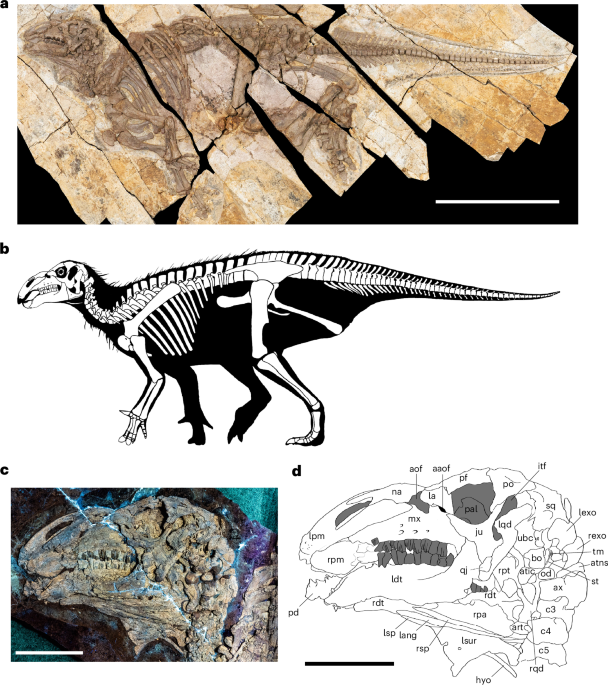
For decades, our mental image of dinosaurs has been largely shaped by the skeletal remains they left behind. While we’ve made incredible strides in understanding their anatomy, locomotion, and even coloration, the intricate details of their skin – the very first line of defense and interaction with their environment – have often remained elusive. But a groundbreaking discovery, detailed in Nature, is forcing paleontologists to fundamentally rethink what we thought we knew about dinosaur integument. A juvenile iguanodontian from the Early Cretaceous of China has revealed not just scales, but remarkably preserved cutaneous spikes, unlike anything previously documented in non-avian dinosaurs or even modern reptiles.
The Unveiling of Ancient Armor: A Juvenile's Secret
The fossil in question, a juvenile iguanodontian unearthed from the rich fossil beds of Lower Cretaceous China, presents an extraordinary case of preservation. What makes this specimen particularly revolutionary is the cellular-level fidelity of its skin impressions. Beyond the typical impressions of reptilian scales, researchers have identified distinct, conical spikes protruding from the skin. These aren't merely osteoderms – the bony plates found in crocodiles or some armored dinosaurs like ankylosaurs – but rather true integumentary structures, akin to horn-like growths or specialized epidermal projections.
The differentiation is critical: osteoderms are dermal bone, developing within the skin. These newly discovered spikes appear to be epidermal, originating from the skin's surface layer, much like claws, horns in mammals, or the spines on an echidna. This distinction places them in a unique category, suggesting a previously unrecognized form of integumentary specialization within dinosaurs.
A Defensive Edge in a Dangerous World
The study suggests that these novel spikes likely served a defensive function. For a juvenile iguanodontian – a herbivorous dinosaur that, in adulthood, could reach formidable sizes but in its youth would have been highly vulnerable – such specialized protection would have been invaluable. The Early Cretaceous was a brutal landscape, teeming with formidable predators. Sharp, spiky skin would have provided a deterrent against hungry theropods, making a young iguanodontian a much less appealing meal.
This discovery adds another layer to our understanding of predator-prey dynamics in Mesozoic ecosystems. It highlights the diverse evolutionary strategies employed by dinosaurs to survive, whether through sheer size, herd behavior, or, as now evidenced, through an unexpected form of dermal armor.
Rewriting the Integumentary Playbook
Prior to this find, our knowledge of iguanodontian skin was largely inferred from partial impressions or comparisons to other ornithischian groups. While hadrosaurids, close relatives of iguanodontians, are known for their varied scales and occasional elaborate crests, these distinct epidermal spikes represent a truly novel addition to the dinosaur integumentary lexicon. They are notably different from the integumentary structures seen in other non-avian dinosaurs and stand apart from the scale patterns of modern squamates (lizards and snakes).
This research underscores the incredible diversity that likely existed in dinosaur skin, a feature often overlooked in favor of skeletal morphology. It pushes us to question whether other dinosaur groups also possessed unique, non-bony epidermal structures that have simply been lost to the ravages of fossilization or overlooked in less perfectly preserved specimens.
Implications for Evolution and Future Research
The presence of such advanced and unique defensive structures on a juvenile opens new avenues for evolutionary research. Did these spikes diminish with age, or did they become more prominent as the animal matured? Were they present across all iguanodontian species, or were they a specific adaptation for this particular lineage and environment? This discovery begs for a re-examination of existing iguanodontian fossils, potentially revealing similar structures that were previously misinterpreted or simply not preserved to this exquisite degree.
Furthermore, the cellular-level preservation offers an unprecedented opportunity to study the microscopic biology of extinct animals. Understanding the cellular composition of these spikes could provide clues about their developmental biology and their relationship to other keratinous structures in both extinct and extant vertebrates.
The NovaPress Takeaway
This remarkable find from China is more than just another dinosaur fossil; it's a testament to the continuous unveiling of Earth's ancient history. It shatters preconceived notions about dinosaur skin, revealing a world of unsuspected complexity and defensive ingenuity. The juvenile iguanodontian with its unique spikes challenges paleontologists to dig deeper, both literally and figuratively, into the evolutionary tapestry of these magnificent creatures. At NovaPress, we celebrate such discoveries that not only expand our knowledge but ignite our imagination about the truly diverse forms of life that once roamed our planet.