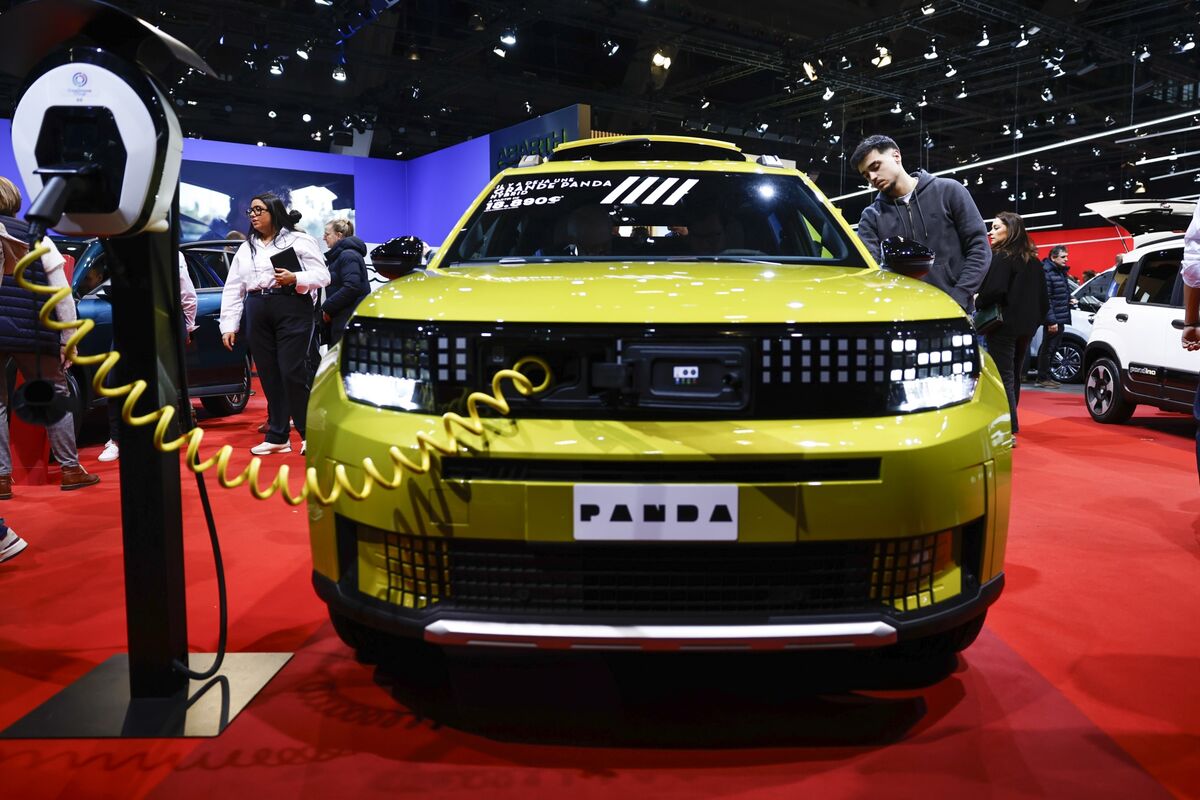
The automotive world was sent into a collective shockwave this week as Stellantis NV, the colossal parent company behind iconic brands like Jeep, Fiat, Peugeot, and Chrysler, announced an staggering €22 billion ($26 billion) in charges. This colossal financial hit is primarily attributed to a dramatic reversal in its electric vehicle (EV) strategy, a move that immediately triggered a record plunge in the company's shares and sent tremors across the global auto industry. This isn't merely a strategic adjustment; it's a profound re-evaluation of the pace and viability of the EV transition, forcing a hard look at market realities versus ambitious green targets.
The Unprecedented Pivot: From Full Speed Ahead to Strategic Re-evaluation
For years, the narrative in the automotive sector has been one of an inexorable march towards an all-electric future. Manufacturers poured billions into R&D, re-tooling factories, and aggressive marketing campaigns, often under the immense pressure of regulatory mandates and environmental goals. Stellantis, like many of its peers, had outlined an ambitious roadmap, aiming for a significant portion of its sales to be fully electric by the end of the decade.
However, this €22 billion charge signals a stark departure from that unwavering commitment. While the full details of the 'reversal' are still being dissected by analysts, it strongly suggests a recalibration of investment priorities, potentially scaling back on certain pure-EV projects, re-evaluating platform commonality, or perhaps even a more significant shift towards hybrid technologies as a bridge solution. This move is less about abandoning EVs entirely and more about acknowledging the complexities and costs associated with a rapid, widespread transition.
Why the Brake? Unpacking the Market Realities
Several factors are likely driving Stellantis's drastic decision. Firstly, the pace of consumer adoption of EVs has not been as uniformly rapid as initially projected in all segments and geographies. While demand remains strong for certain premium models, mainstream adoption faces hurdles such as high upfront costs, range anxiety, and insufficient charging infrastructure, particularly outside of urban centers.
Secondly, profitability challenges are becoming increasingly apparent. Developing new EV platforms, securing battery supplies, and establishing charging networks are incredibly capital-intensive endeavors. Many legacy automakers are finding that while EV sales numbers are growing, the margins on these vehicles are often thinner than on their traditional internal combustion engine (ICE) counterparts, or even negative. The competitive landscape, with aggressive pricing from new EV entrants and established players alike, further squeezes profitability.
Supply chain volatility, particularly concerning critical raw materials for batteries, has also played a role, driving up costs and creating production bottlenecks. This unpredictable environment makes long-term, fixed-strategy investments incredibly risky.
Ripple Effects: A Precedent for the Industry?
Stellantis is not alone in facing these headwinds, though their financial charge is uniquely massive. Other automakers have recently expressed caution, adjusting production targets, and signaling a renewed interest in hybrid models. General Motors, Ford, and even some European counterparts have subtly shifted their rhetoric, emphasizing flexibility and adapting to market demand rather than adhering strictly to rigid EV timelines.
This move by Stellantis could serve as a critical precedent, potentially emboldening other major players to publicly reassess their own EV timelines and investments. It signals a potential slowing of the 'EV gold rush' mentality and a more pragmatic, measured approach to electrification across the board. The implications for suppliers, charging infrastructure companies, and even government policy on emissions targets are substantial.
What's Next for Stellantis and the Global EV Transition?
For Stellantis, the immediate aftermath will involve navigating investor skepticism and clearly articulating its revised strategy. The €22 billion charge will significantly impact its financial performance, but a well-communicated pivot that promises long-term sustainable profitability could eventually reassure the market. The company will likely focus on optimizing its existing EV offerings, exploring more cost-effective battery technologies, and potentially emphasizing hybrid powertrains to bridge the gap while full EV adoption matures.
Globally, this event underscores a crucial reality: the transition to electric vehicles is not a linear, unfaltering path. It's a complex, multi-faceted challenge influenced by technological advancements, economic cycles, geopolitical stability, and consumer behavior. While the long-term trajectory towards electrification remains undeniable due to environmental pressures and technological progress, the speed and specific pathways may be far more diverse and nuanced than previously envisioned. The Stellantis charge is a stark reminder that even the biggest players are subject to the unforgiving forces of market economics and strategic necessity.