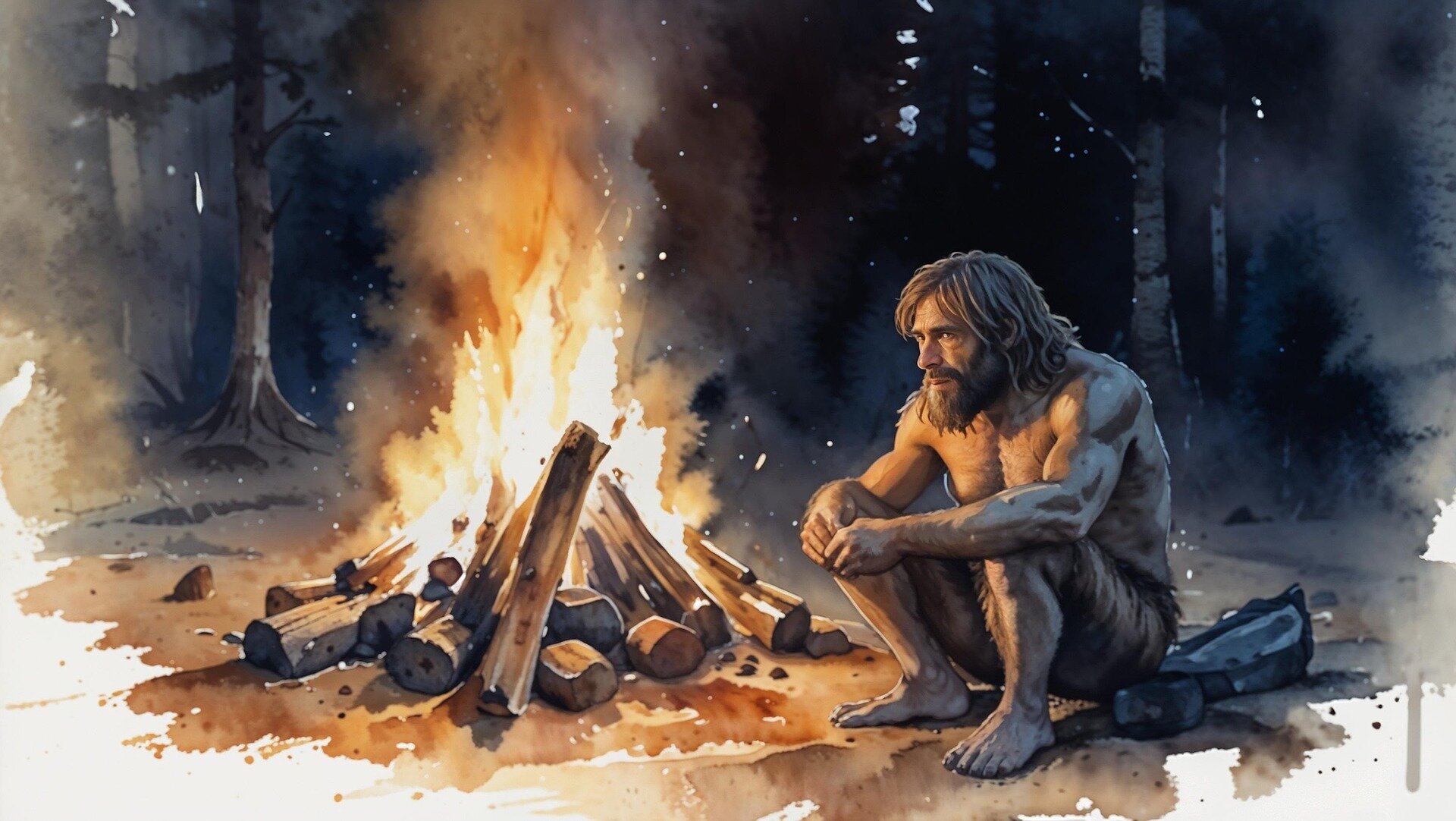
The Fiery Crucible: How Burn Injuries Forged Human Evolution and Our Biological Destiny
For millennia, humanity's relationship with fire has been seen as a cornerstone of our ascent – a tool for warmth, cooking, protection, and crafting. Yet, new research presented by Phys.org casts a more complex, even fiery, shadow on this narrative. It suggests that our intimate, often dangerous, exposure to high-temperature burn injuries wasn't merely a byproduct of progress but a profound evolutionary pressure, intricately shaping our biology, from our healing mechanisms to our immune responses and even our social structures.
The Ancient Dance with Fire
The controlled use of fire is arguably one of humanity's most significant technological leaps, dating back hundreds of thousands, if not millions, of years. It allowed early hominins to expand their diet, deter predators, and venture into colder climates. However, this revolutionary tool came with an inherent danger. Living in close proximity to open flames, cooking over rudimentary fires, and accidental contact during hunting or tool-making would have made burn injuries a common and often catastrophic occurrence. Unlike many other injuries, burns are insidious, not only causing immediate tissue damage but also opening the body to rampant infection, dehydration, and prolonged debilitation. In a world without modern medicine, a severe burn was often a death sentence.
Burns: A Relentless Evolutionary Pressure
The new study posits that the constant threat of burns exerted intense selective pressure on our ancestors, favoring individuals with biological traits that enhanced survival against such trauma. This isn't merely about surviving the initial injury, but enduring the arduous recovery.
Shaping Our Healing Mechanisms
Consider the intricate process of wound healing. Our bodies possess remarkable capabilities for skin regeneration, scar tissue formation, and clotting. While these mechanisms are vital for all types of injury, burns present unique challenges – widespread tissue destruction, loss of protective skin layers, and significant fluid loss. The evolution of efficient inflammatory responses, rapid re-epithelialization, and robust collagen deposition for scar formation might have been accelerated by the need to quickly seal off large burn wounds. Those individuals whose genetic makeup allowed for faster, more effective healing would have had a distinct advantage in surviving the acute phase of a burn.
The Immune System Under Siege
Perhaps the most critical evolutionary battle fought in the wake of a burn was against infection. A large burn effectively strips away the body's primary defense barrier, leaving internal tissues exposed to a relentless onslaught of bacteria, fungi, and other pathogens. The study suggests that our sophisticated innate and adaptive immune systems, particularly their ability to mount rapid, intense responses against opportunistic infections, may have been honed by this constant threat. Genes associated with inflammation regulation, antimicrobial peptide production, and immune cell recruitment could have been strongly selected for, shaping our immune architecture to withstand not just everyday pathogens but the unique challenge of a compromised integumentary system.
Pain, Avoidance, and Social Cohesion
Beyond physiology, burns likely influenced behavior and social evolution. The exquisite pain associated with burns serves a clear evolutionary purpose: to deter future contact with high heat. This powerful sensory feedback loop would have promoted careful fire management and taught crucial safety lessons. Moreover, the prolonged convalescence required after a severe burn would have fostered communal care. An injured individual, unable to hunt or forage, would rely heavily on their group for survival. This dependency could have reinforced altruistic behaviors, empathy, and the development of proto-medical practices, further cementing the bonds within early human societies.
The Genetic Blueprint of Resilience
Ultimately, the cumulative effect of these pressures would have left an indelible mark on our genome. Researchers are now exploring specific genetic loci and pathways involved in wound healing, inflammation, pain perception, and infection response. By comparing these genes across primate species and studying human genetic variation, we might uncover the direct molecular fingerprints of fire's evolutionary legacy, revealing how certain alleles or regulatory elements became prevalent due to their protective effects against burns.
Implications for Modern Humanity and Medicine
Understanding this deep evolutionary history of burn injuries has profound implications for contemporary medicine. It could shed light on why certain individuals respond differently to burns, why chronic inflammatory conditions persist, or why our bodies sometimes fail to heal effectively. By appreciating the ancient evolutionary compromises and adaptations, scientists might develop more targeted therapies for burn victims, improve infection control strategies, and even design regenerative medicine approaches that leverage our inherent, fire-forged resilience.
Conclusion: A Scarred Yet Resilient Legacy
The story of human evolution is often told through the lens of tool-making, brain expansion, and bipedalism. This new research adds a raw, visceral chapter: that the searing pain and life-threatening consequences of burn injuries were not merely obstacles to overcome, but powerful architects of our biological destiny. Our ability to heal, to fight infection, and even our capacity for empathy and social support may all bear the ancient, indelible scars of our ancestors' fiery crucible. It’s a testament to resilience, reminding us that even our vulnerabilities can become the forge of strength.