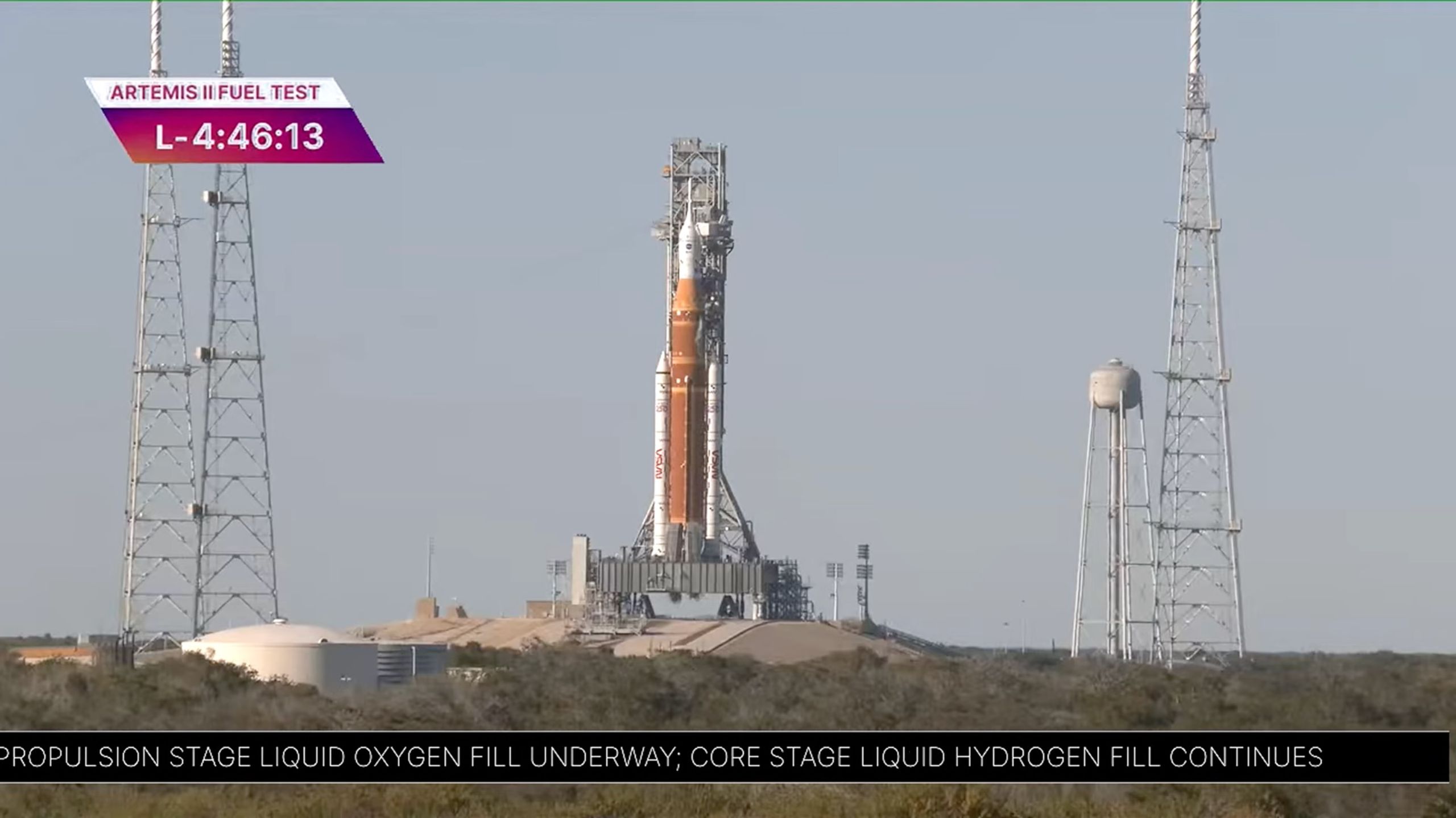
The Leaky Giant: Unpacking NASA's Artemis 2 Rocket, Its Fueling Test, and the Path to Lunar Return
In the high-stakes world of space exploration, precision and perfection are often considered non-negotiable. Yet, as NASA prepares its colossal Space Launch System (SLS) rocket for the pivotal Artemis 2 mission, a curious detail has emerged: the rocket, while mighty and ambitious, has a tendency to 'leak a little bit.' Following a crucial fueling test on February 2nd, the space agency is now assessing whether this minor imperfection will clear the path for astronauts to embark on humanity's next deep-space journey, potentially as early as February 8th.
Artemis 2: A Stepping Stone to the Stars
The Artemis program represents NASA's ambitious endeavor to return humans to the Moon, establish a sustainable lunar presence, and ultimately, use our closest celestial neighbor as a proving ground for missions to Mars. Artemis 1, an uncrewed test flight, successfully orbited the Moon in late 2022, demonstrating the SLS rocket's immense power and the Orion capsule's capabilities. Artemis 2 is the program's critical next phase: a crewed test flight that will send four astronauts on a lunar flyby, pushing the boundaries of human spaceflight further than ever before. This mission is not just about reaching the Moon; it's about validating the systems, procedures, and human endurance required for sustained deep-space travel.
The 'Leak': A Common Challenge, A Critical Concern
The 'leak' in question primarily involves liquid hydrogen, a super-chilled propellant notoriously difficult to contain. Hydrogen atoms are tiny, making it challenging to seal perfectly, especially in dynamic systems under extreme temperature differentials. While alarming to the uninitiated, minor hydrogen leaks are not entirely uncommon in complex cryogenic rocket systems. The Space Shuttle program, for instance, often encountered similar issues, which engineers learned to manage within acceptable safety parameters. The challenge for NASA with Artemis 2 isn't merely detecting the leak, but understanding its nature, rate, and whether it falls within the operational limits deemed safe for a crewed mission.
The Crucial Fueling Test: A Litmus Test for Readiness
The February 2nd fueling test was far more than a simple tank-filling exercise. It was a comprehensive dress rehearsal designed to push the SLS rocket's systems to their operational limits. Engineers meticulously filled the massive core stage and upper stage with super-cold liquid hydrogen and liquid oxygen, simulating launch day conditions. This test allowed NASA to assess the integrity of fuel lines, valves, and seals under pressure, identify any anomalies, and precisely characterize the leak's behavior. The data gathered is now undergoing rigorous analysis, providing engineers with the crucial information needed to determine if the rocket, despite its minor flaw, is operationally sound and safe for its precious human cargo.
Weighing Risk and Readiness: NASA's Deliberate Calculus
The decision to proceed with a launch, especially a crewed one, involves an incredibly complex calculus of risk assessment, engineering tolerances, and mission objectives. NASA operates with stringent safety protocols, and any decision regarding a 'leaky' system will be made with the utmost caution. It's plausible that the observed leak falls within pre-established acceptable limits, perhaps mitigated by redundant systems or specific operational procedures. Alternatively, it might necessitate further repairs, testing, or a re-evaluation of the launch window. The agency's commitment to safety is paramount, often leading to delays if even the slightest doubt exists. The question isn't just 'Can it fly?' but 'Can it fly safely and reliably with astronauts on board?'
Future Implications: Pushing the Boundaries of Deep Space
The outcome of this evaluation will have significant implications not only for the immediate Feb 8th launch window but also for the broader Artemis program and future deep-space endeavors. Successfully managing such engineering challenges demonstrates NASA's adaptive problem-solving capabilities and its commitment to learning and evolving with each mission. It also underscores the inherent difficulties in pushing the technological envelope for interplanetary travel. Every minor issue, every successful mitigation, adds to the cumulative knowledge base that will one day enable humans to venture even further, perhaps to Mars. The 'leaky giant' of Artemis 2, therefore, becomes a symbol of the nuanced, often imperfect, yet ultimately relentless pursuit of humanity's cosmic aspirations.