Beyond the Veil: Unveiling Venus's Hidden Depths and a Revolution in Planetary Science
Venus, often dubbed Earth's "twin" due to its similar size and mass, has always been a planet of profound mystery and stark contrasts. While our home planet teems with life and a relatively temperate climate, Venus hides beneath a perpetual shroud of thick, sulfuric acid clouds, enduring unimaginable surface temperatures that could melt lead and atmospheric pressures 92 times greater than Earth's. For decades, this infernal landscape has defied direct observation, keeping its deepest secrets locked away. Now, groundbreaking new data is beginning to pierce that veil, hinting at the existence of massive, previously unimagined underground structures that could fundamentally rewrite our understanding of Venus's tumultuous history and, by extension, the evolution of terrestrial planets.
A Planet Veiled in Fire and Acid
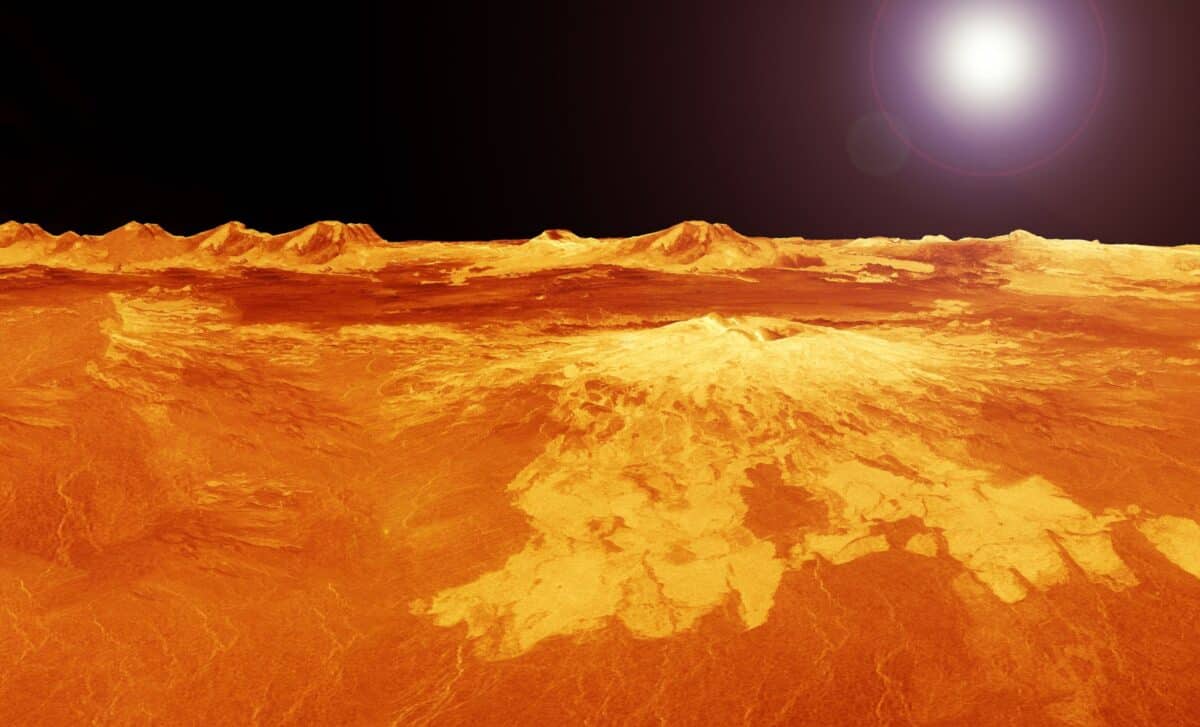
The challenge of studying Venus is immense. Its dense atmosphere, composed primarily of carbon dioxide, creates an extreme greenhouse effect, rendering conventional optical observation of its surface nearly impossible. Missions like NASA's Magellan in the early 1990s utilized radar to map a significant portion of the surface, revealing a world dominated by volcanic plains, intricate lava flows, and unique geological features like "coronae" – large, ring-like structures believed to be formed by upwellings of magma. Yet, these surface features only told part of the story, leaving much to speculation about what lay beneath.
The new findings, though still emerging, suggest a paradigm shift. Reports from various scientific endeavors point towards anomalies detected beneath Venus's scorched crust. While the precise nature of the "data points" is still under intensive scientific scrutiny and likely involves sophisticated radar interferometry, gravimetric measurements, or advanced seismic modeling based on subtle surface deformities, the implications are staggering: colossal structures hidden from plain sight, hinting at a geological past far more complex and dynamic than previously theorized.
Unearthing the Unseen: What Could Lie Beneath?
The term "massive underground structures" opens a Pandora's Box of scientific hypotheses. Could these be vast caverns carved out by ancient geological processes? Are they remnants of colossal tectonic plates that once moved across Venus's surface, now fossilized beneath later volcanic effusions? Or, more exotically, could they be evidence of giant subsurface magma chambers, active or dormant, far larger and more extensive than any observed on Earth? The presence of winding channels and extensive volcanic plains on the surface has long indicated a planet with a rich and violent volcanic history. These new subsurface insights could provide the missing pieces to that puzzle, explaining the mechanisms driving such extensive resurfacing events.
Implications for Planetary Dynamics and Habitability
If confirmed, these structures would force a complete re-evaluation of Venus's internal structure and thermal evolution. For instance, the presence of large subsurface voids or anomalous densities could signify a unique form of mantle convection or even a different type of core-mantle interaction compared to Earth. On Earth, plate tectonics plays a crucial role in regulating our climate and enabling geological activity. Venus, famously lacking clear evidence of Earth-like plate tectonics, might possess an entirely different, perhaps equally powerful, subsurface engine.
Furthermore, while the surface of Venus is unequivocally hostile to life as we know it, the prospect of subsurface structures raises intriguing, albeit speculative, questions about astrobiology. Subsurface environments, shielded from surface radiation and extreme temperatures, are often considered potential refuges for extremophilic life on other celestial bodies. While the current data doesn't directly point to life, understanding these structures could inform future investigations into Venus's deep past, when conditions might have been more clement.
The Road Ahead: Future Missions and New Perspectives
This discovery arrives at a pivotal moment for Venus exploration. Missions like NASA's VERITAS and DAVINCI+, and ESA's EnVision, all slated for launch later this decade, are specifically designed to delve deeper into Venus's atmospheric and geological mysteries. These missions will deploy advanced radar systems, atmospheric probes, and spectrometers, offering unprecedented views and data collection capabilities. The knowledge of potential massive subsurface structures will undoubtedly guide their scientific objectives, prompting more focused investigations into specific regions and types of anomalies.
The scientific community is abuzz with the possibilities. This new data not only challenges established models of Venusian geology but also broadens our understanding of planetary diversity. Every terrestrial planet in our solar system – Mercury, Venus, Earth, and Mars – has followed its own unique evolutionary path. By uncovering Venus's hidden depths, we gain invaluable insights into the myriad ways rocky planets can form, evolve, and sustain geological activity, potentially shedding light on exoplanets far beyond our solar system.
Conclusion: A New Era for Venus Exploration
The whispers from beneath Venus's infernal shroud are growing louder, promising to unveil a world far more complex and dynamic than previously imagined. The identification of massive underground structures is more than just a scientific curiosity; it's a potential Rosetta Stone for understanding planetary evolution, a testament to the enduring mysteries of our solar system, and a powerful impetus for the next generation of space exploration. As NovaPress, we will continue to follow these developments closely, eager to report on the revelations that could truly rewrite planetary history.