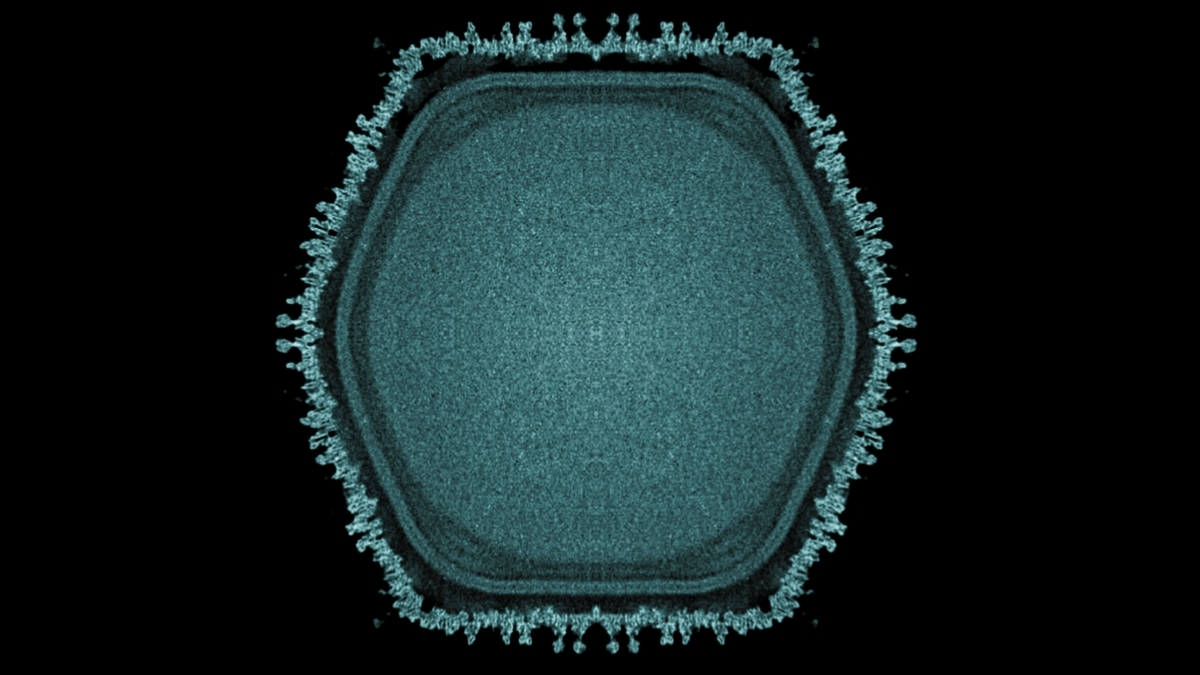
Unveiling 'Pandora's Box': How a New Giant Virus Discovery in Japan Could Rewrite Evolutionary History
A serene pond in Japan has just become the unlikely stage for a scientific revelation that could profoundly reshape our understanding of life itself. Scientists have announced the discovery of a previously unknown giant virus, a find that not only adds a new enigmatic member to an already mysterious viral category but also promises to offer unprecedented insights into one of biology's most fundamental questions: the origins of multicellular life on Earth.
The Enigmatic World of Giant Viruses
For decades, viruses were largely defined by their diminutive size and relatively simple genetic makeup. They were considered mere parasites, incapable of independent metabolism, existing on the fringes of what we call 'life.' However, the turn of the millennium brought forth a paradigm shift with the discovery of 'giant viruses' – a class of viruses so large and genetically complex that they challenge these long-held definitions. With genomes often larger than some bacteria and containing genes previously thought exclusive to cellular organisms (like those involved in protein synthesis or DNA repair), giant viruses blur the lines between viral and cellular life.
These colossal entities, often visible under a light microscope, possess a 'virocell' lifestyle, effectively taking over host cells to serve as viral factories. Their existence has led scientists to ponder whether they represent a 'fourth domain of life,' an ancient lineage that evolved parallel to bacteria, archaea, and eukarya, or perhaps even precursors to cellular life forms. The discovery of this new Japanese giant virus further underscores the vast, unexplored diversity within this already fascinating group, hinting at even greater complexity hidden within our planet's ecosystems.
Japan's Discovery: A New Piece in the Evolutionary Puzzle
While specific details of the newly discovered virus are still emerging, its identification in a Japanese pond highlights the global reach and diverse habitats of giant viruses, often found in aquatic environments, soil, and even inside amoebae. What makes this particular discovery so compelling, beyond its novelty, is its potential to unlock secrets about the very dawn of complex life. Researchers believe this virus could offer critical clues regarding the evolutionary leap from single-celled organisms to the intricate world of multicellularity.
How could a virus, traditionally seen as an agent of disease, be a key to understanding such a monumental evolutionary transition? The answer lies in their unique genetic content and their profound interactions with host cells. Giant viruses are known for their ability to engage in extensive gene exchange with their hosts and other microorganisms. This promiscuous genetic sharing could have played a vital role in the early evolutionary landscape, providing nascent cellular life with novel genetic toolkits necessary for developing new functions, including those that might have facilitated cellular aggregation and specialization – the very hallmarks of multicellularity.
Viruses as Architects of Evolution?
The hypothesis that viruses, and giant viruses in particular, may have been instrumental in the genesis of multicellular life is gaining traction among evolutionary biologists. One theory suggests that certain viral infections might have prompted single-celled organisms to form colonies for protection, eventually leading to permanent multicellular structures. Another perspective is that giant viruses, with their vast and often redundant genetic material, could have acted as ancient genetic reservoirs, transferring crucial genes that enabled complex cellular processes or communication pathways vital for multicellular development.
"This discovery challenges our simplistic views of viruses and positions them not just as pathogens, but as potential architects of life's grandest evolutionary transitions," a NovaPress science editor noted.
The newly found virus in Japan could possess specific genetic sequences or structural characteristics that provide direct evidence for such ancient interactions. Its study could reveal novel gene families that shed light on gene transfer events between viruses and early eukaryotes, or even illuminate how viral proteins might have been co-opted by hosts to serve new, multicellular functions.
Future Implications and the Search for Life Beyond Earth
Beyond its immediate implications for understanding Earth's past, this discovery has broader ramifications for astrobiology and the search for extraterrestrial life. If giant viruses represent a fundamental, ancient form of life or life-like entity, their potential existence on other planets or moons expands the scope of what we might expect to find. Moreover, if viruses were crucial catalysts for complex life here, they might play similar roles in the cosmos.
Researchers will now embark on extensive genomic sequencing and functional studies of the new Japanese giant virus. They will seek to map its genetic landscape, understand its replication strategies, and determine its ecological niche. By comparing its genome with known giant viruses and cellular organisms, they hope to trace its evolutionary lineage and identify any genetic 'fossils' that could link it to the origins of multicellularity.
The discovery from this unassuming Japanese pond is a powerful reminder that the microscopic world holds macroscopic secrets. It pushes the boundaries of virology, challenges our preconceived notions of life, and invites us to reconsider the profound and often unexpected ways that different life forms – even viruses – have shaped the tapestry of evolution. The journey to decode the full story of this giant virus has only just begun, promising a thrilling new chapter in the saga of life on Earth.